In addition to the gift items mentioned in last week’s eblast, you will also have the opportunity to purchase Womanswork Arm Saver Gloves, Green Gorilla Tubs and Marseilles Grapefruit Mini Soap. Remember Mother’s Day is coming!
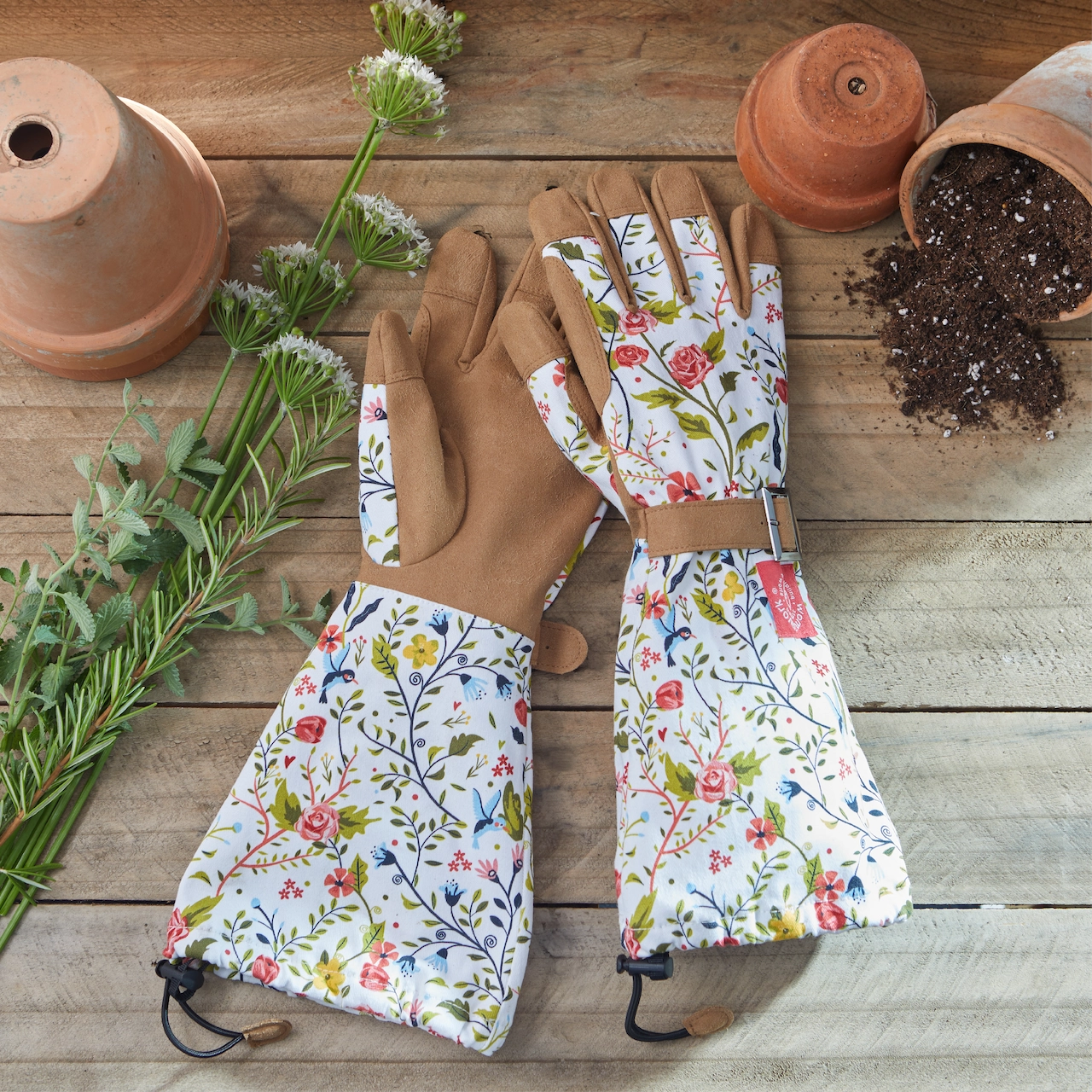
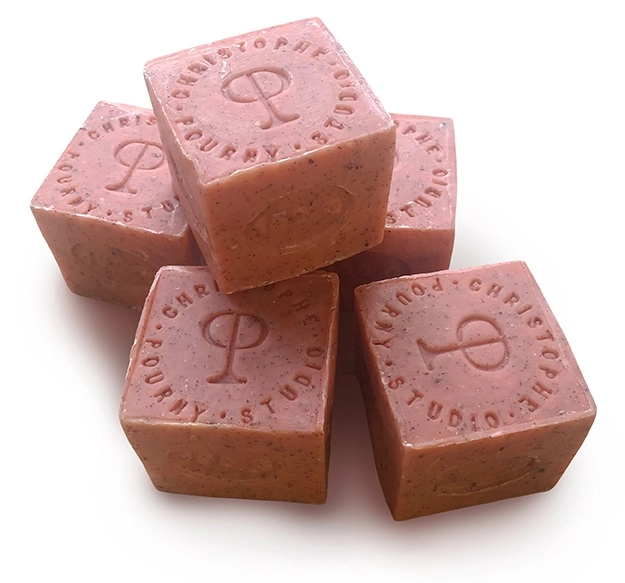

In addition to the gift items mentioned in last week’s eblast, you will also have the opportunity to purchase Womanswork Arm Saver Gloves, Green Gorilla Tubs and Marseilles Grapefruit Mini Soap. Remember Mother’s Day is coming!
Aesculus pavia (Red Buckeye), a species of deciduous, flowering small tree native to the eastern parts of the United states. Aquilegia canadensis ‘Little Lanterns’ (Little Lanterns Columbine), a dwarf selection of our native Columbine with downward facing red and yellow flowers, great for a shade or woodland garden and attracts hummingbirds! Last, but not least, Phlox subulata ‘Drummond’s Pink’ (Drummond’s Pink Creeping Phlox), a low growing, mat forming perennial that can reach 4-6″ high with a spread of 18-24″. The foliage makes a great evergreen groundcover.
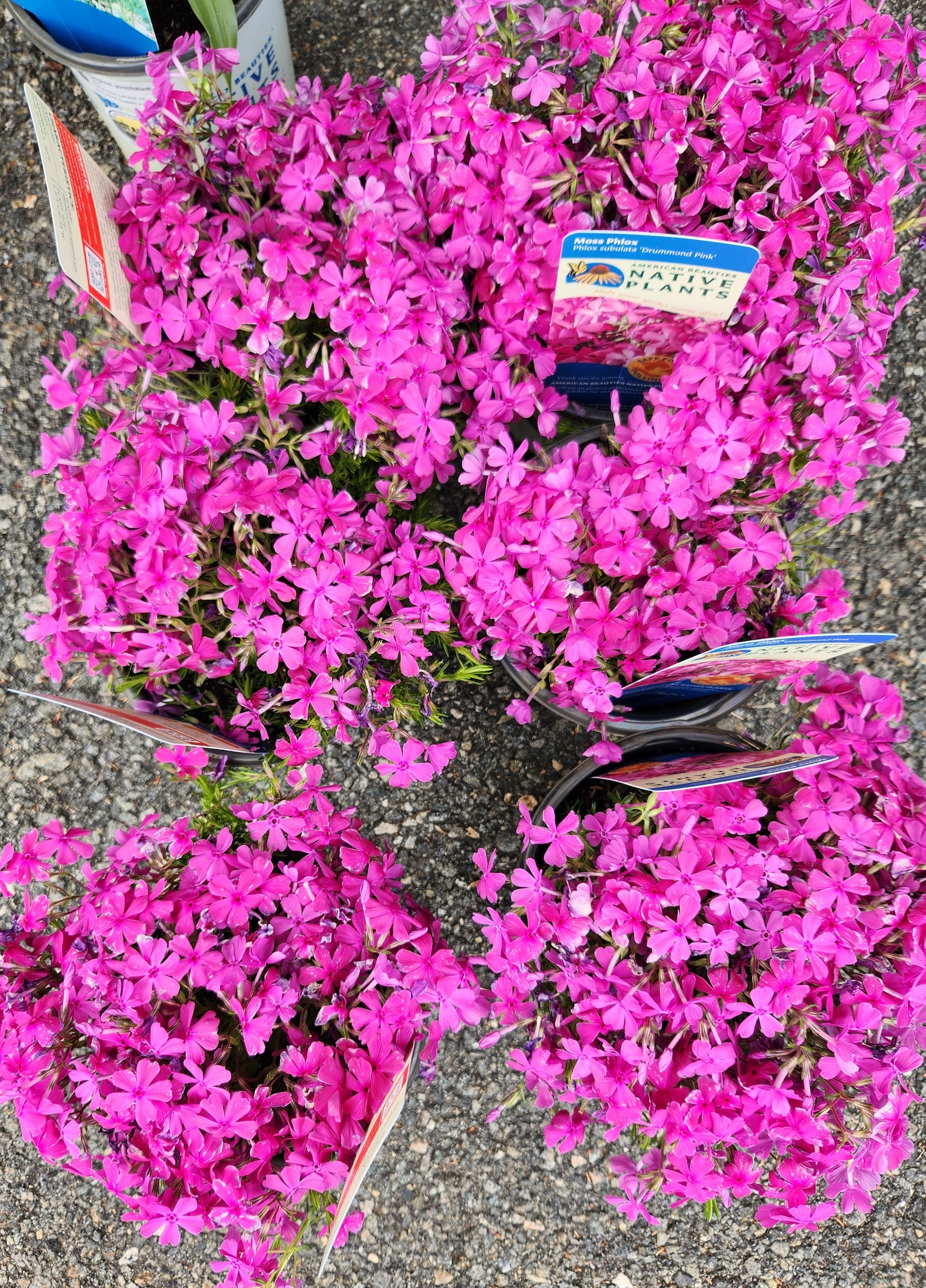
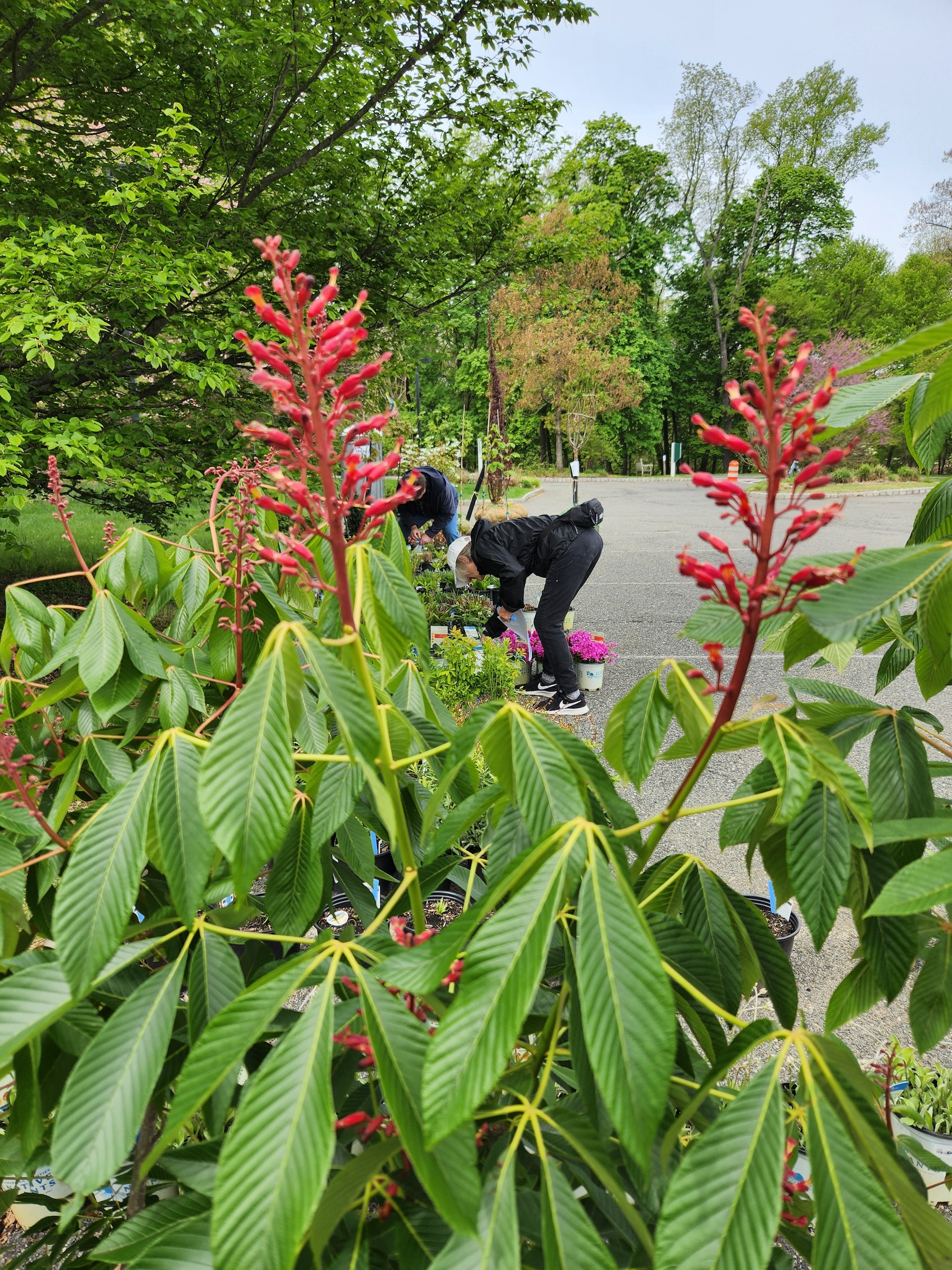
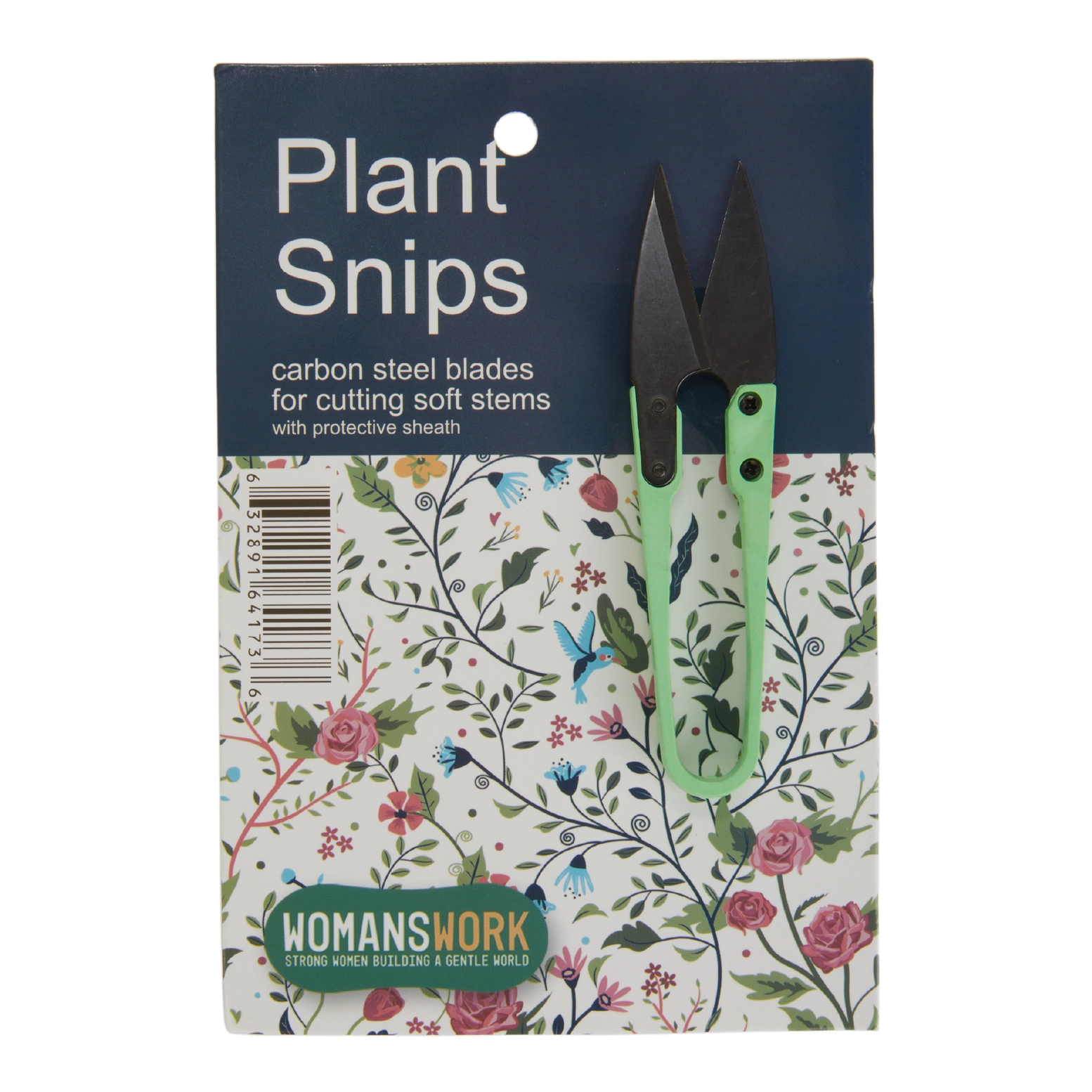
A variety of gardening related gifts will be available for purchase at the Plant Sale, i.e., Womanswork Pink Weeder Gloves, Womanswork Plant Snips in green or pink, Gorilla Tubs medium or large, Very Dirty Hands Soap etc. These make wonderful Mother’s Day gifts or gifts for any lucky gardener!



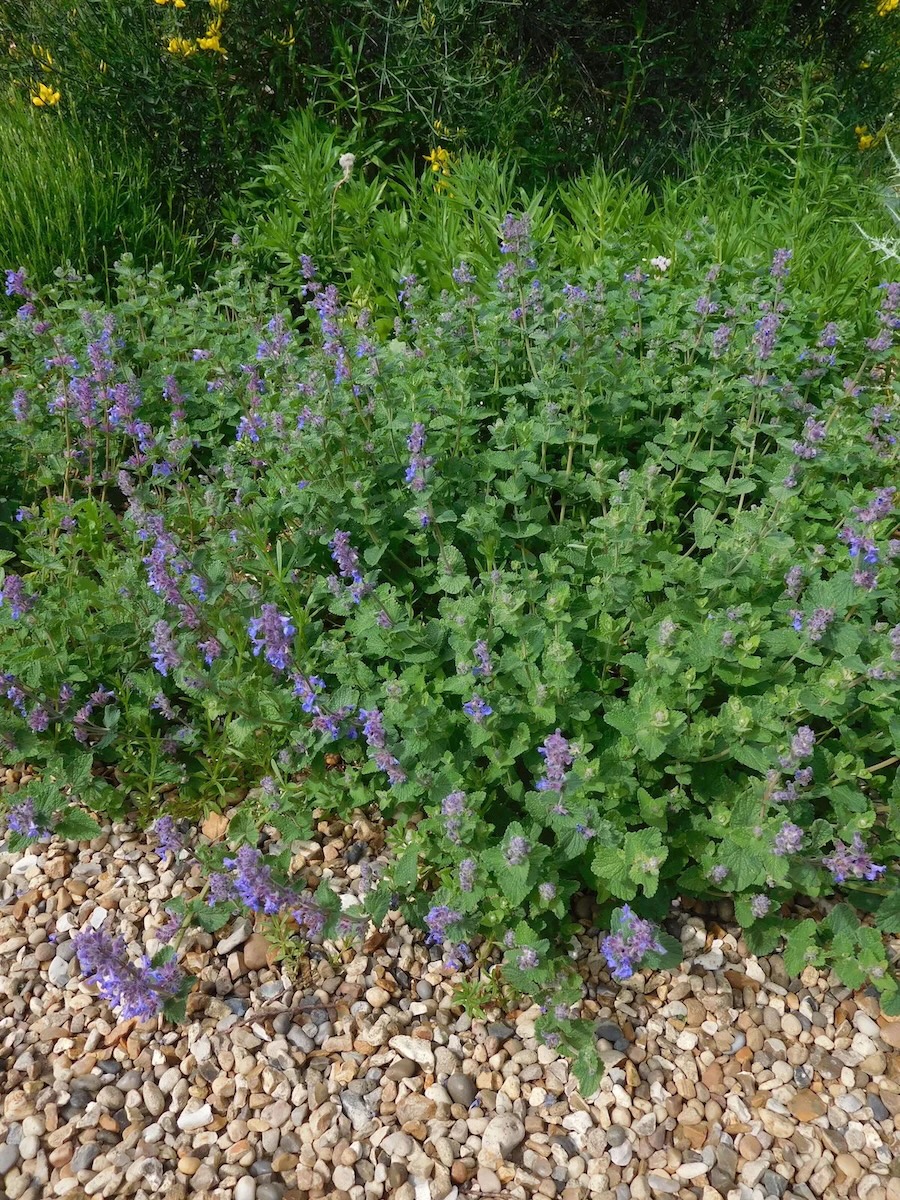
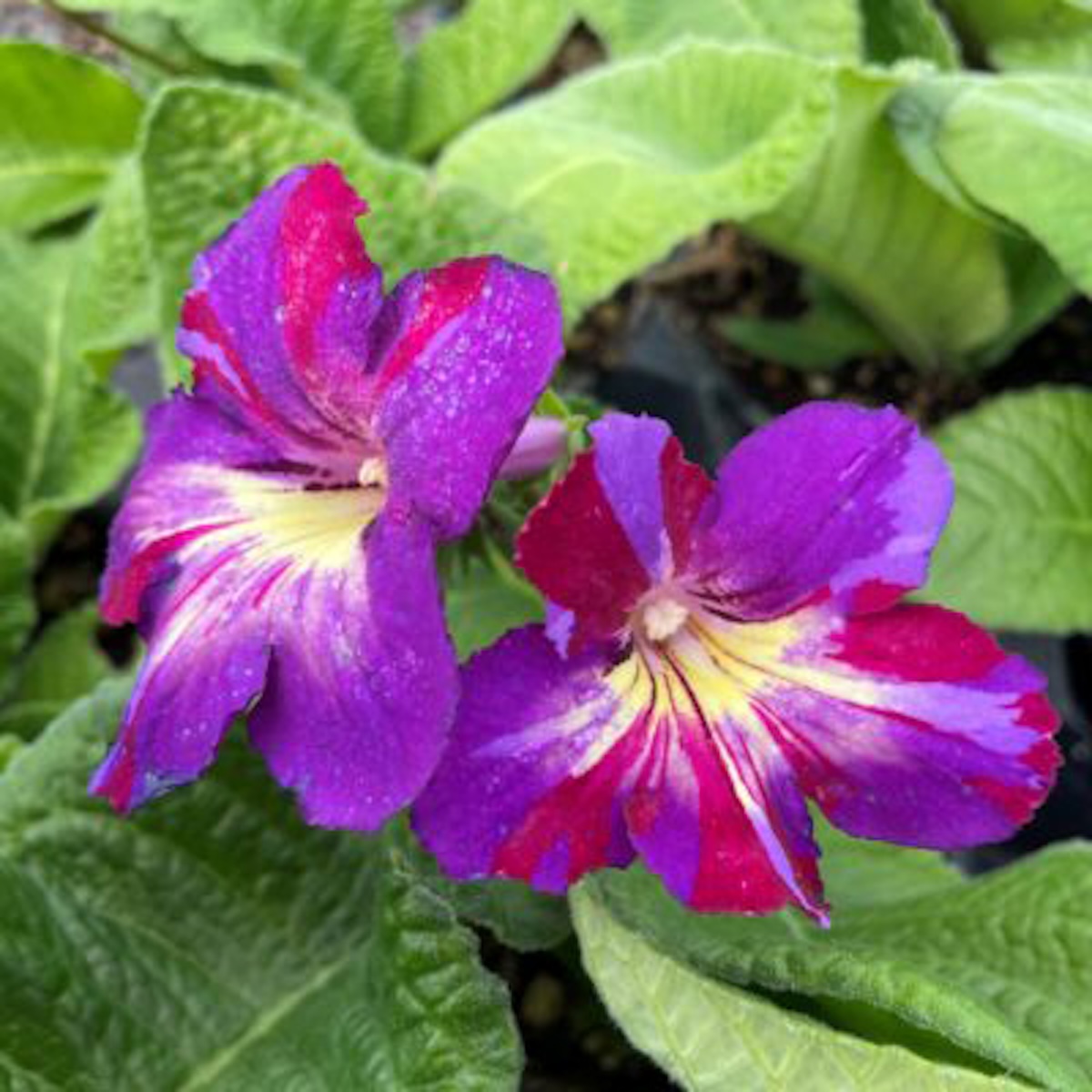
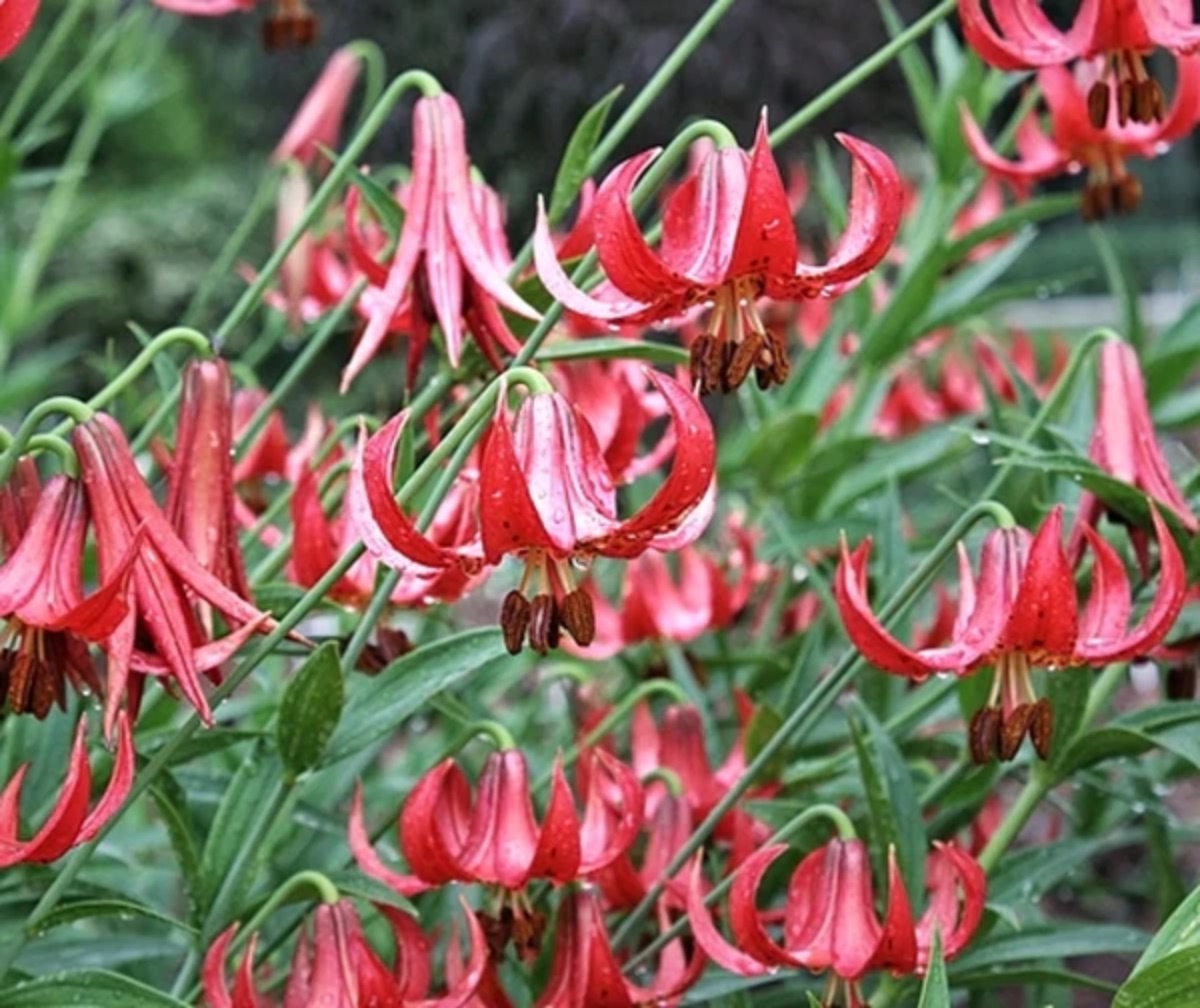
Here’s a preview of some of the rare and unusual beauties that will be available at this year’s Plant Sale: Bletilla Yokohama (Ground Orchid) sports some lovely star shaped lavender flowers; Caryopteris x clandonensis ‘White Surprise’ (White Surprise False Blue Spirea) with lovely white edged leaves and small blue flowers; Fragaria variegata (Variegated Alpine Strawberry), another white edged leaf plant producing crops of sweet flavorful fruit; Gladiolus dalenii ‘Boone’ (Boone Hardy Gladiolus) this is a cold hardy gladiolus with gorgeous apricot colored flowers; Lilium ‘Springville’ (Springville Lily) a natural hybrid of two North American native lilies, the pendent scarlet red flowers are each spotted brown toward the throat. Nepeta racemosa ‘Little Titch’ (Little Titch Catmint) a compact Catmint growing up to 10″ tall with masses of fragrant, tubular lavender flowers; Streptocarpus ‘Spin Art’ (Cape Primrose) makes an excellent houseplant for a low light area, with royal purple flowers streaked with red.
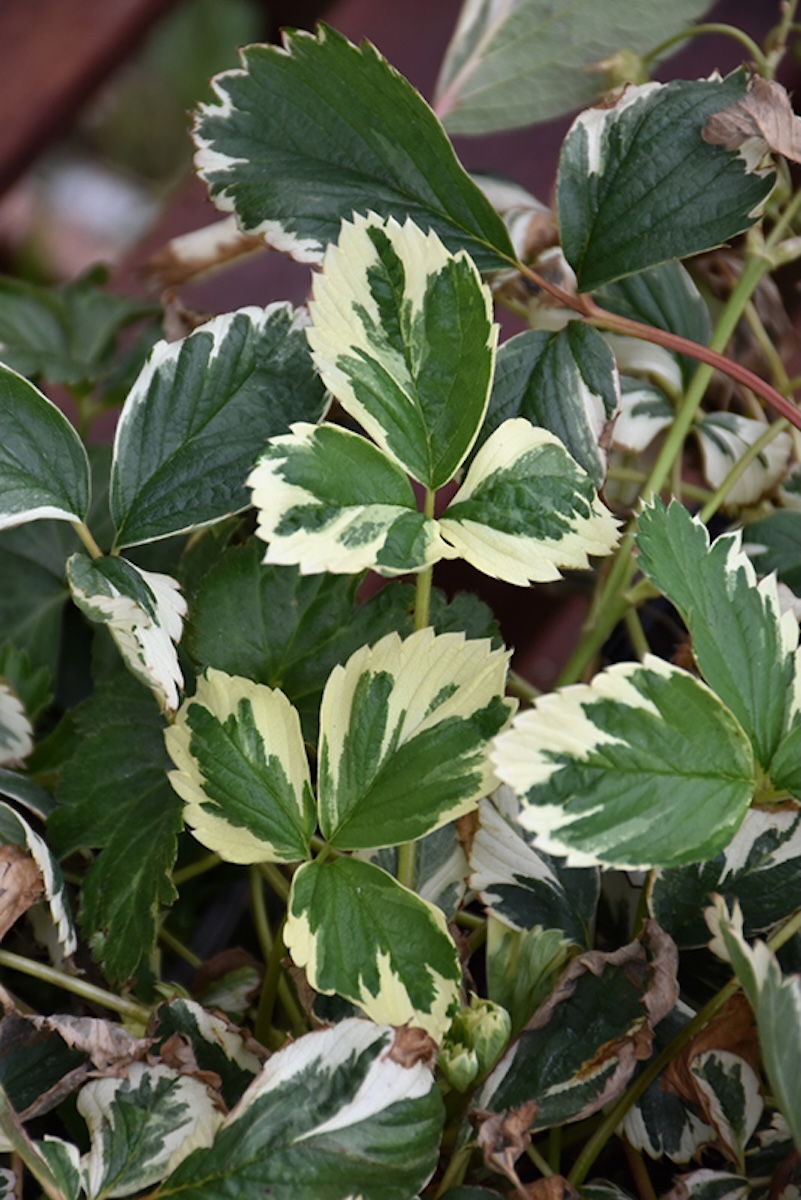
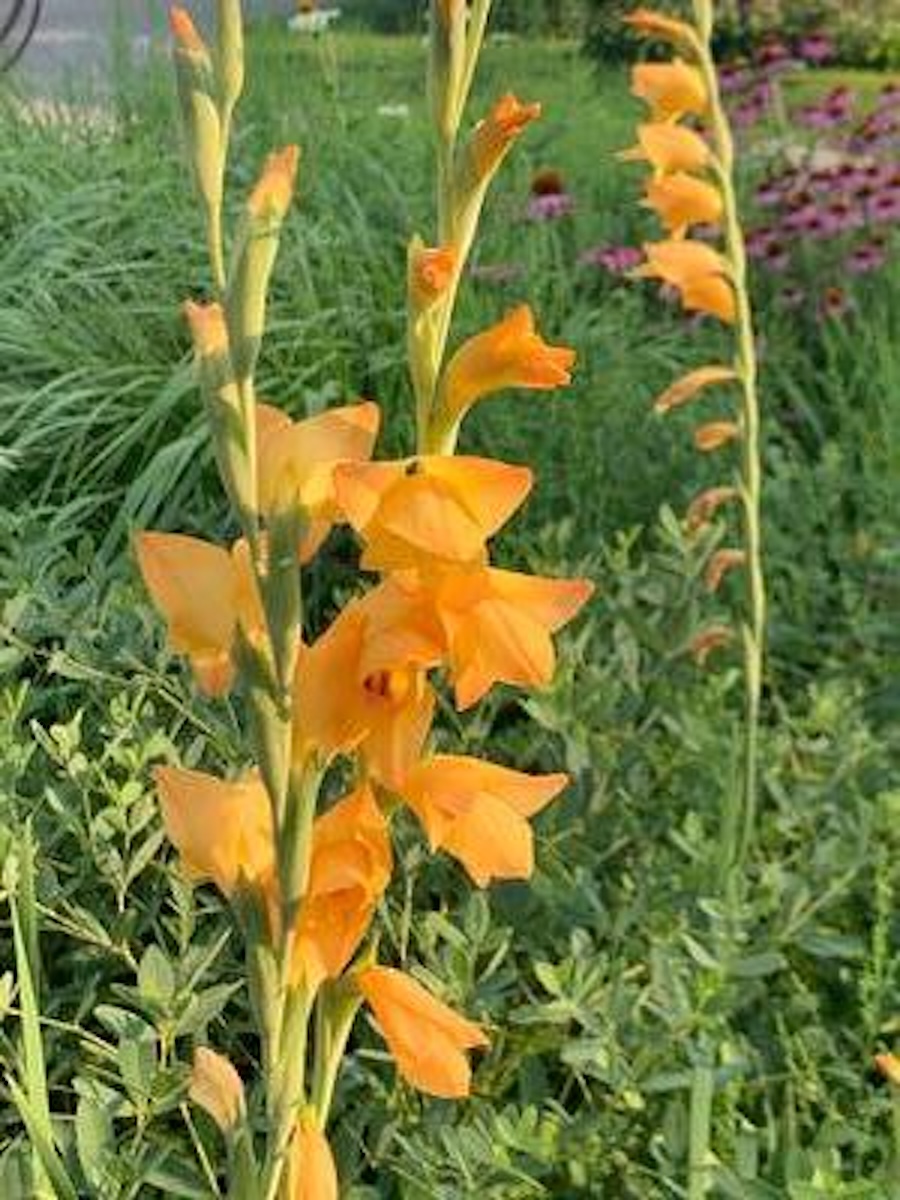
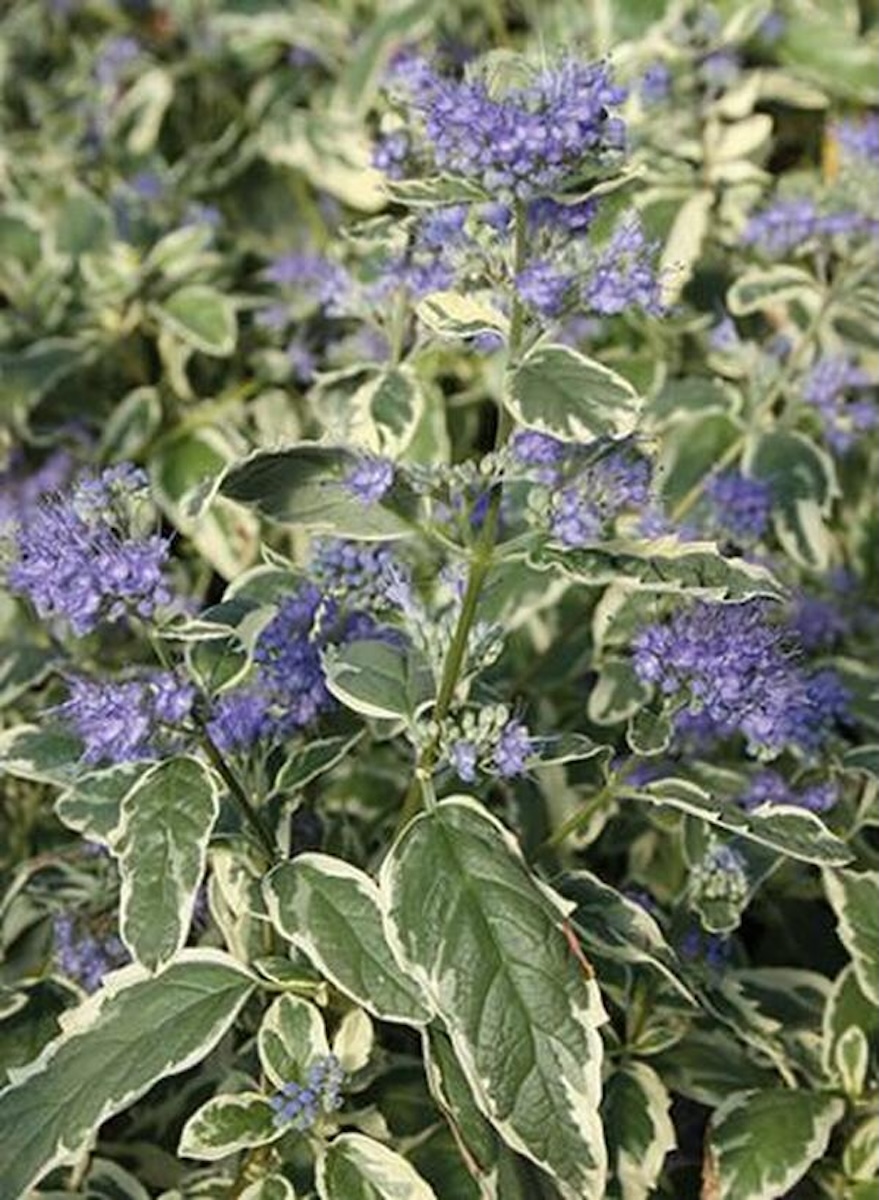
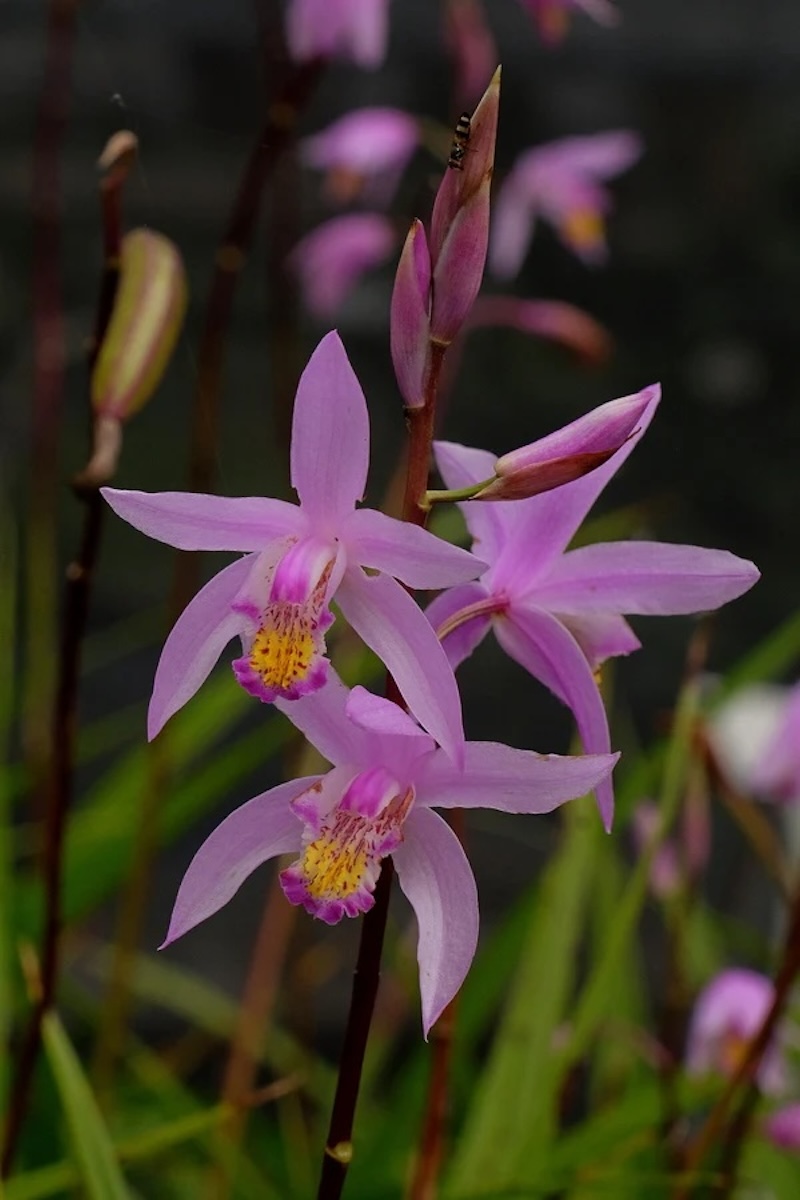
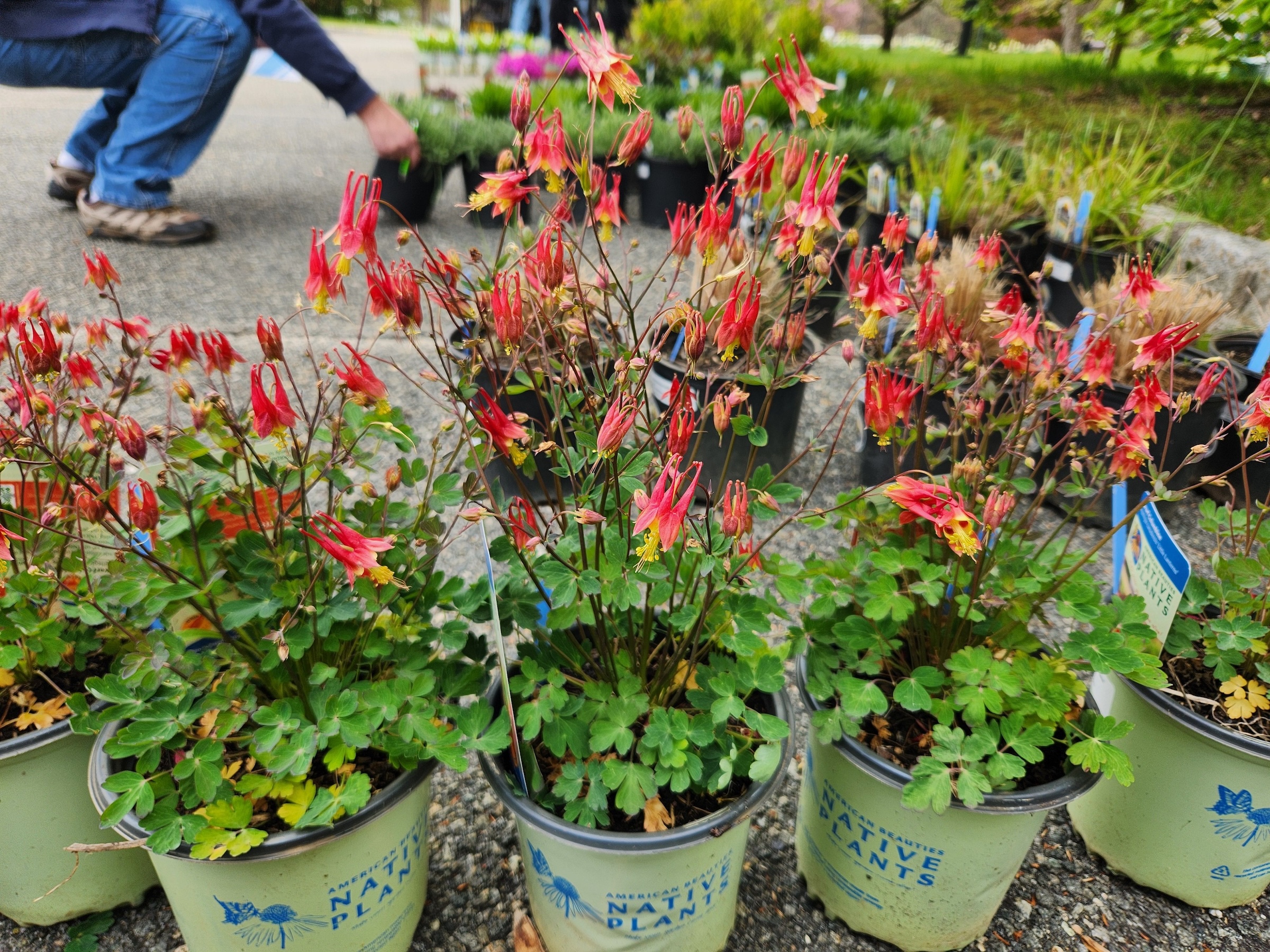
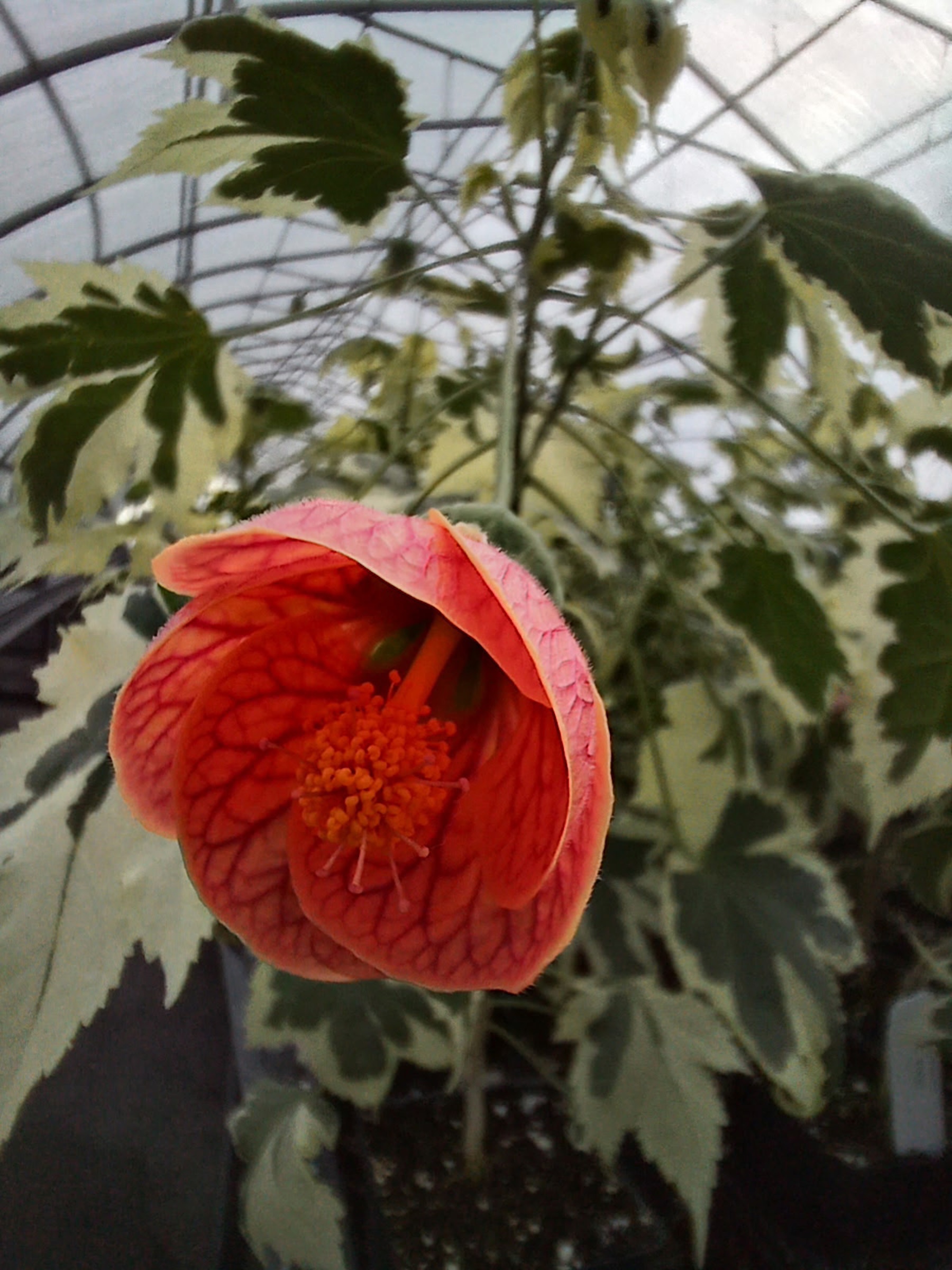
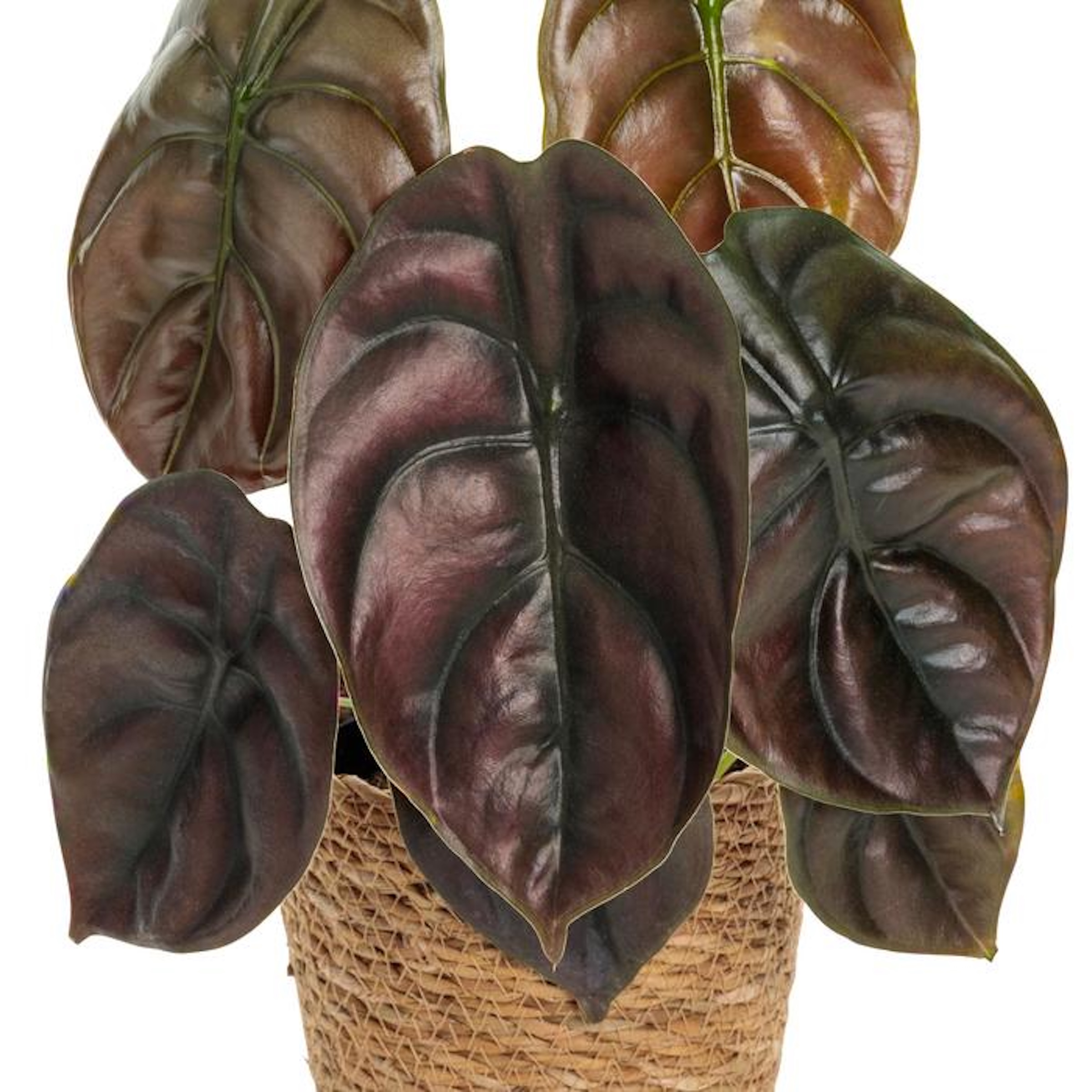
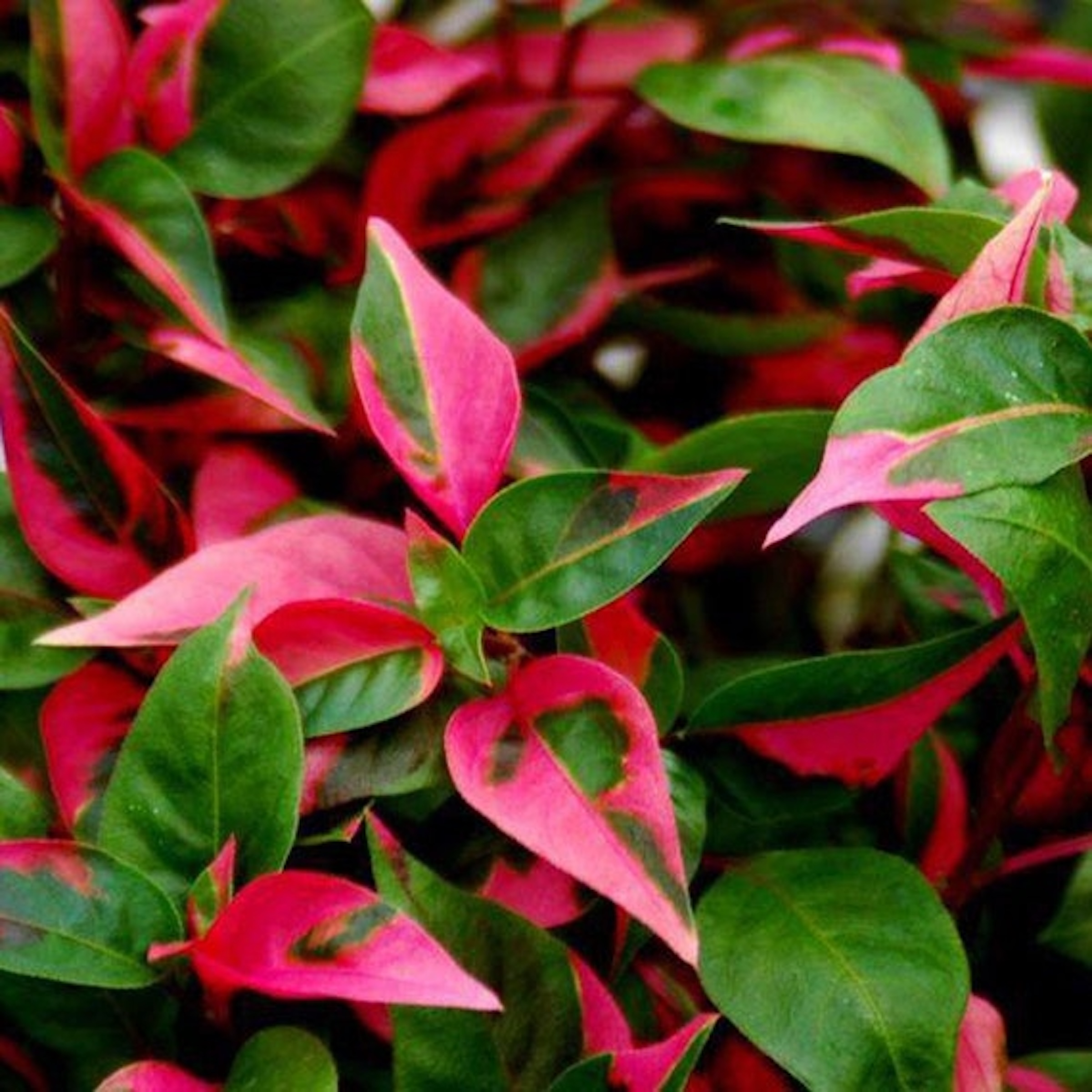
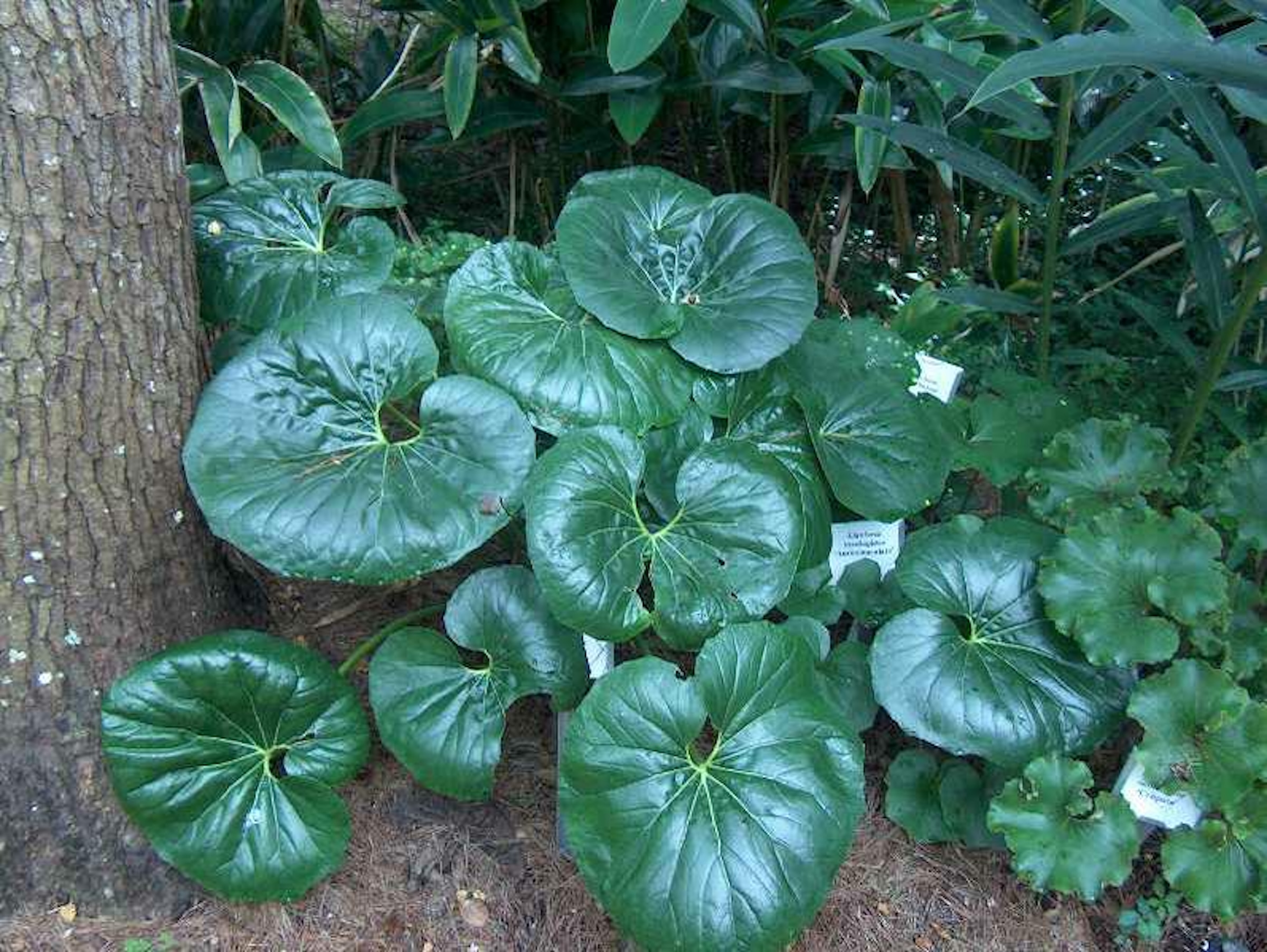
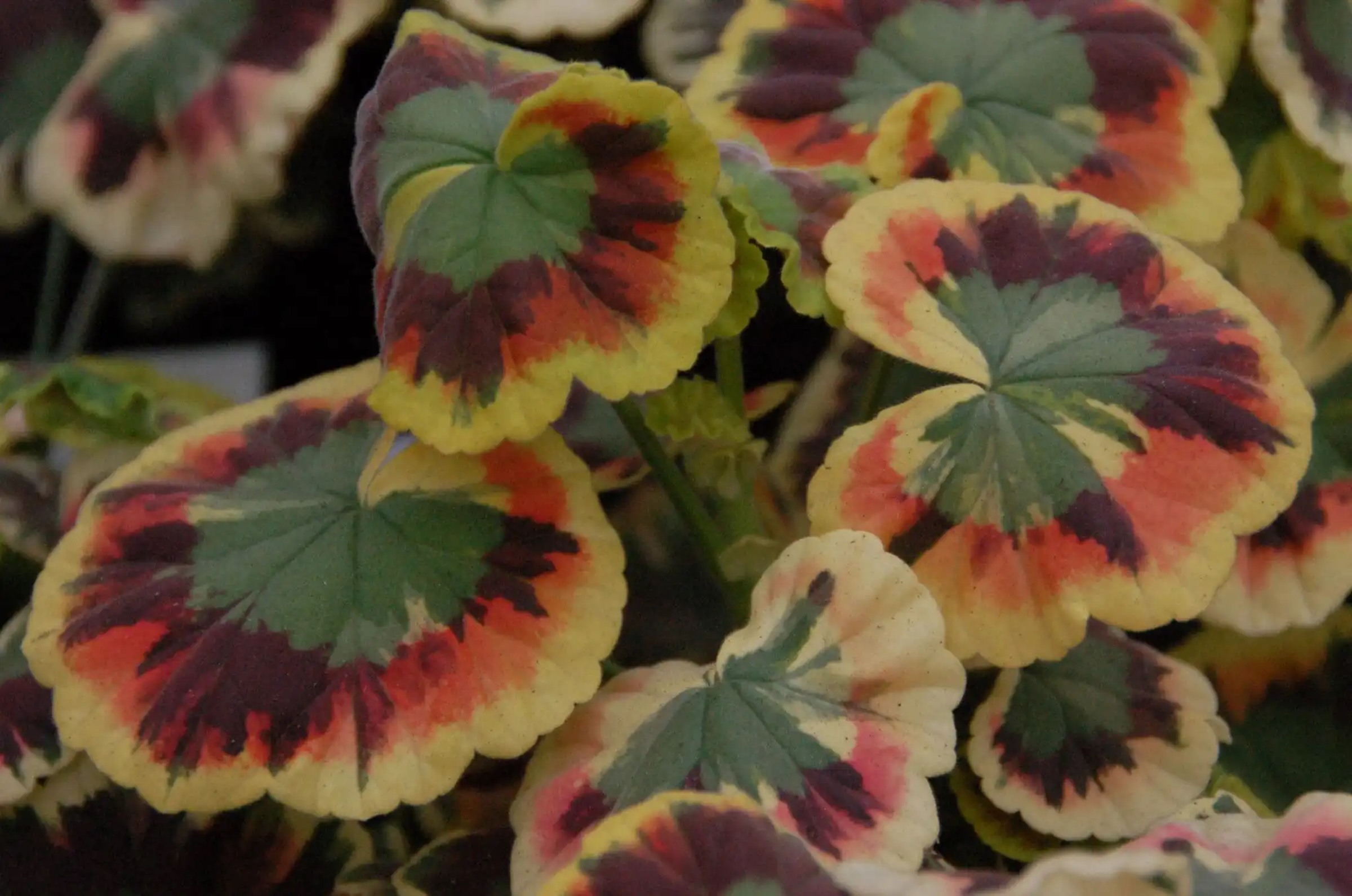
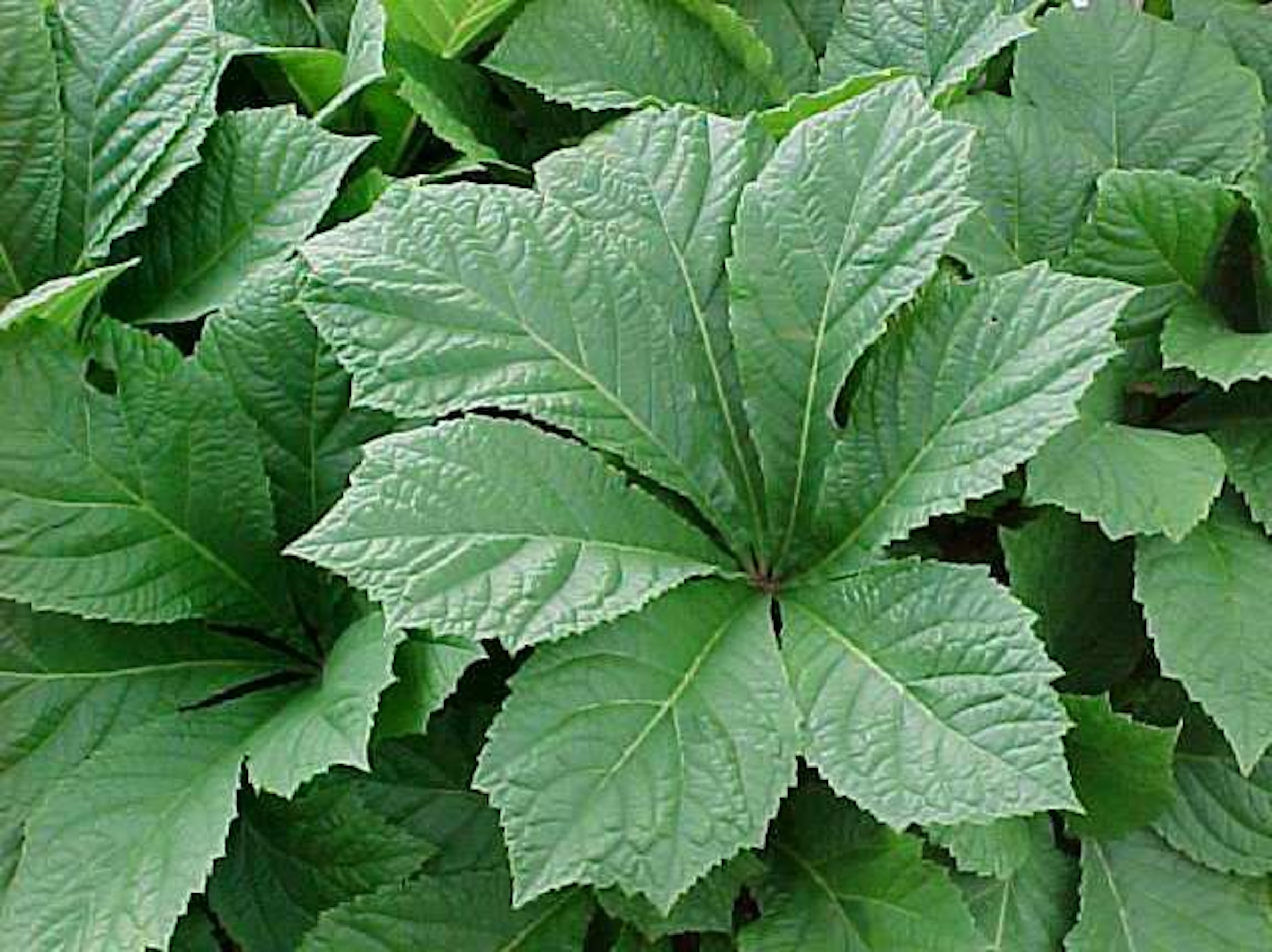
Most of these are tender perennials, so they will look great in containers and/or as house plants: Abutilon savitzii (Variegated Flowering Maple), Alternanthera ficoidea ‘Party Time’ (Joseph’s coat). Farfugium japonicum var. giganteum (Giant Leopard Plant), Pelargonium ‘Mr. Henry Cox’ (Henry Cox Geranium), Rodgersia pinnata ‘Superba’ (Rodger’s Flower) and Alocasia cuprea ‘Red Secret’ (Elephant Ear).
All of these gorgeous plants will be available at this year’s Plant Sale!
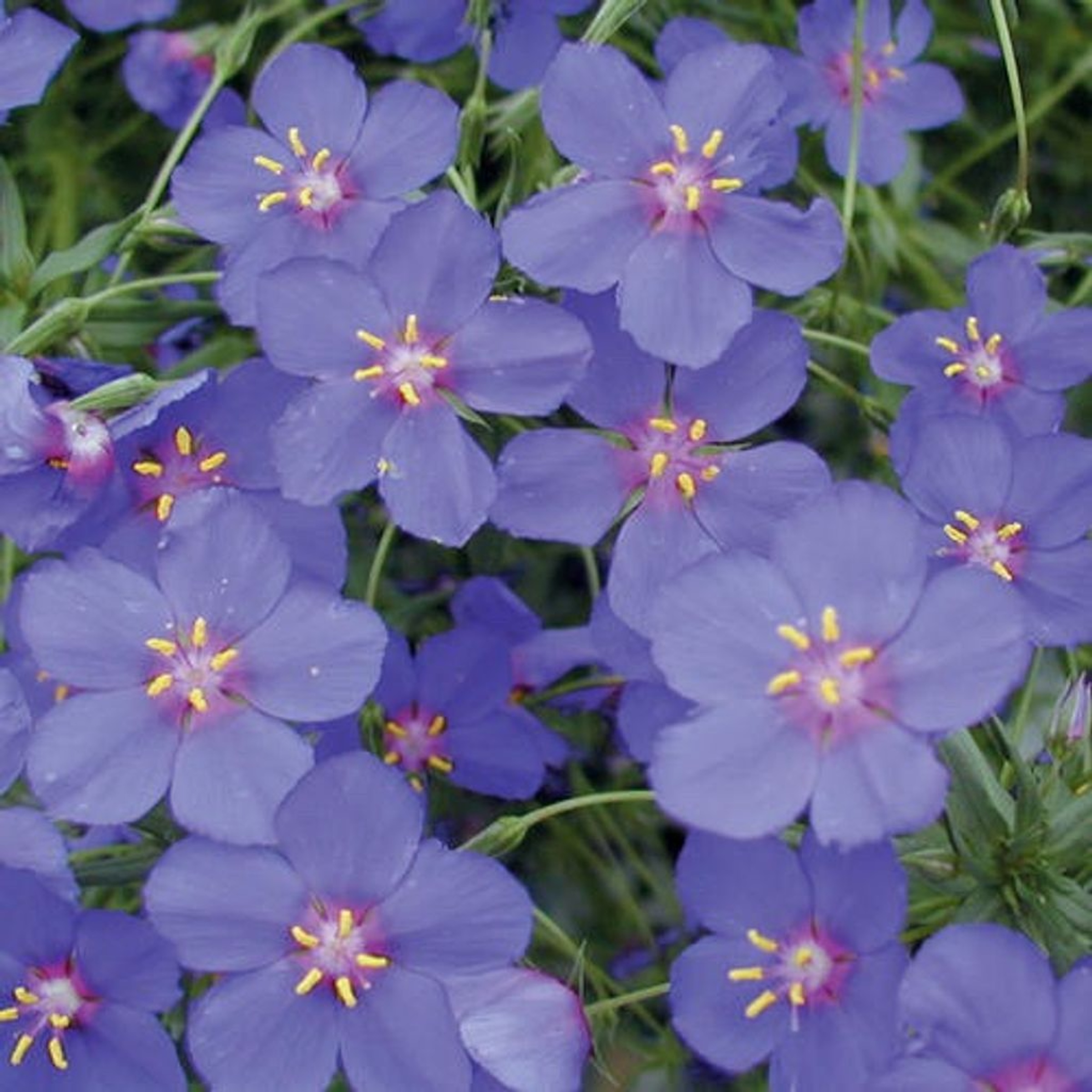
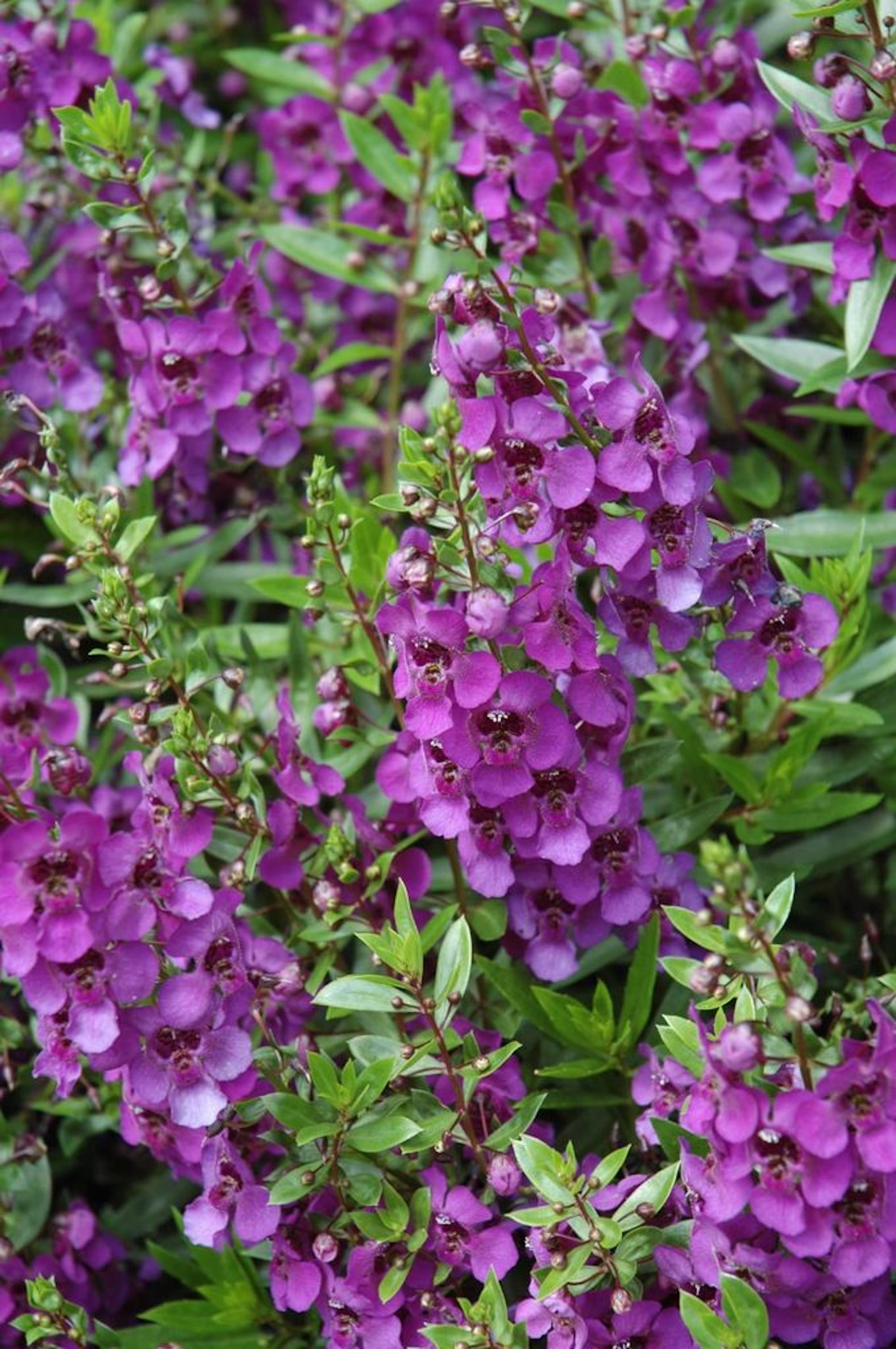
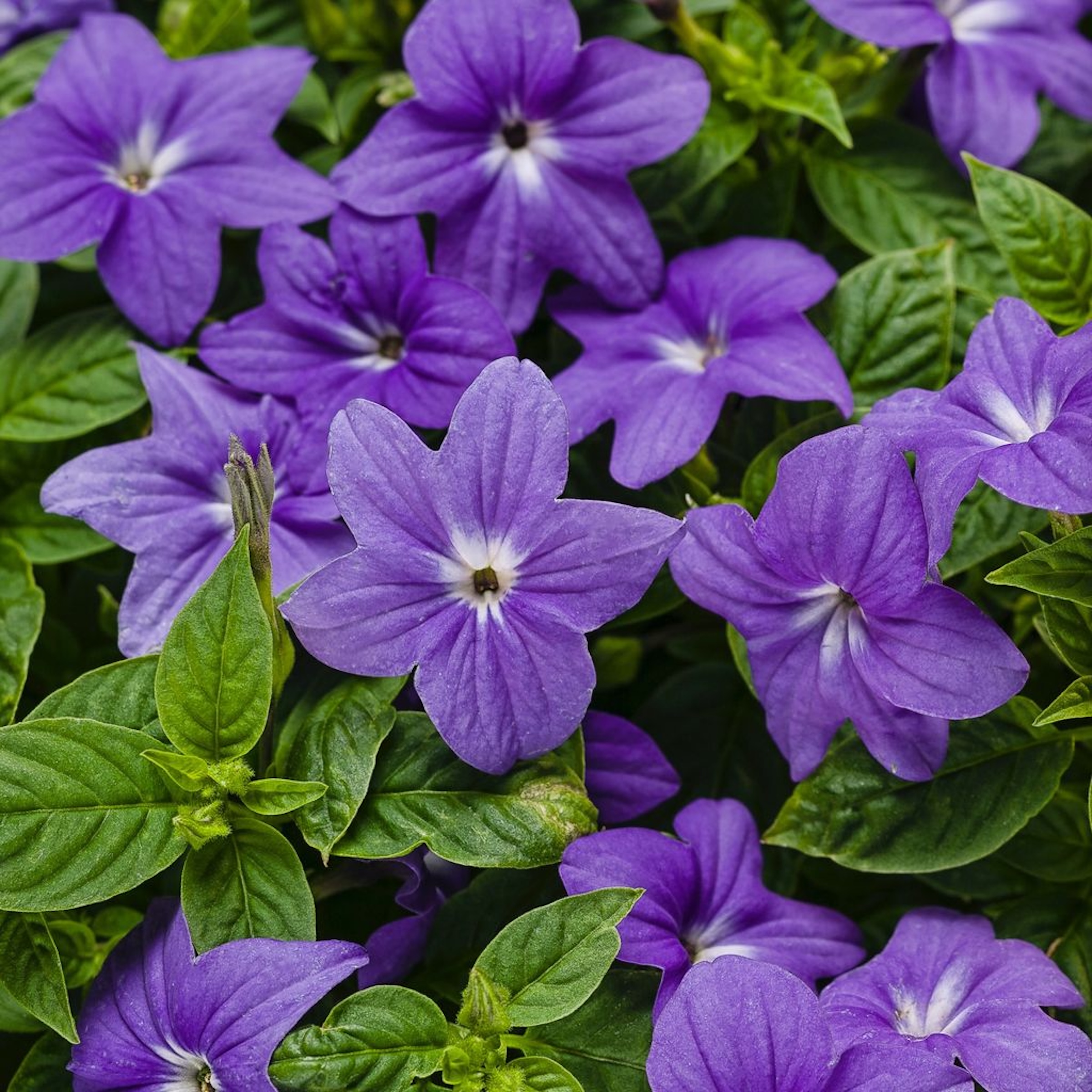
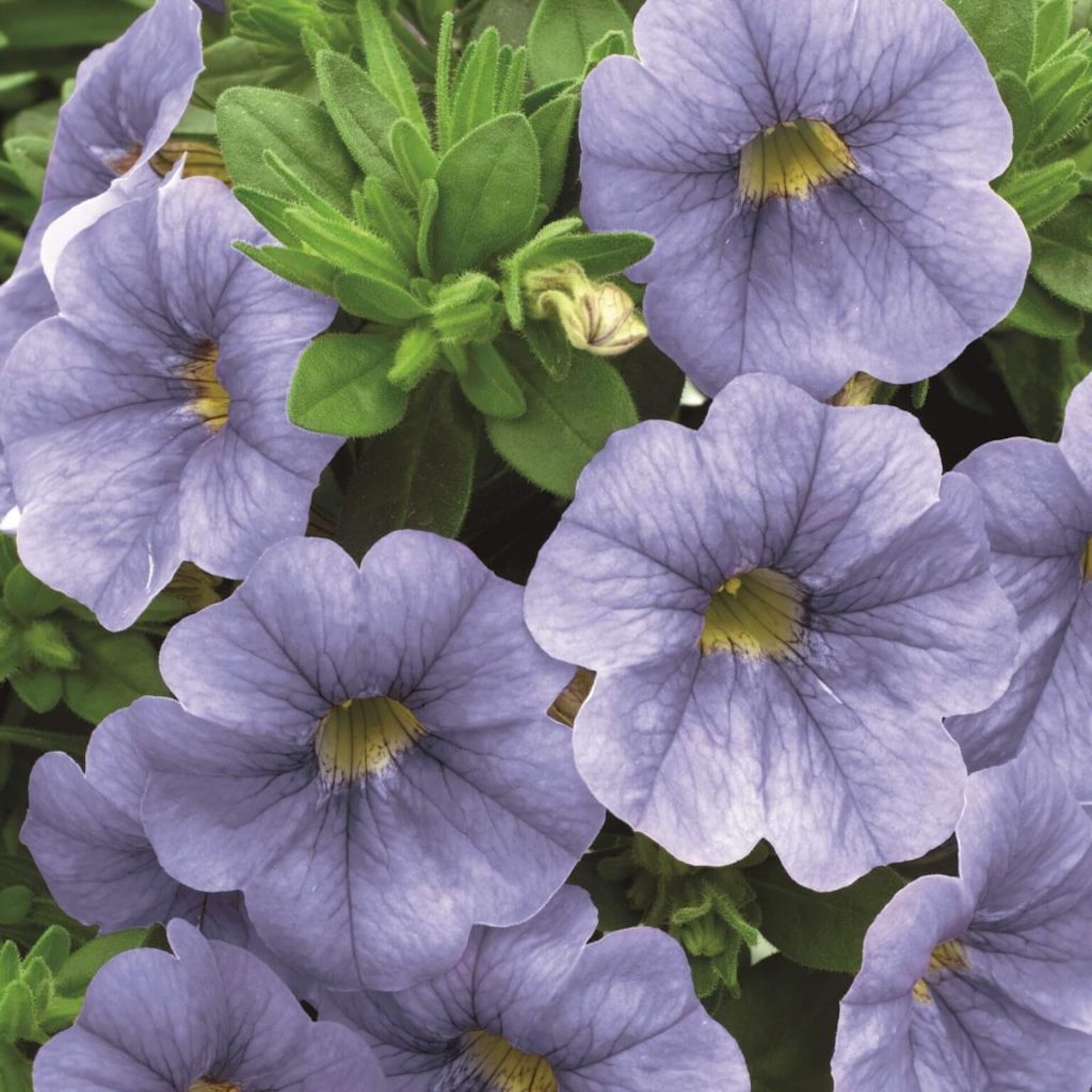
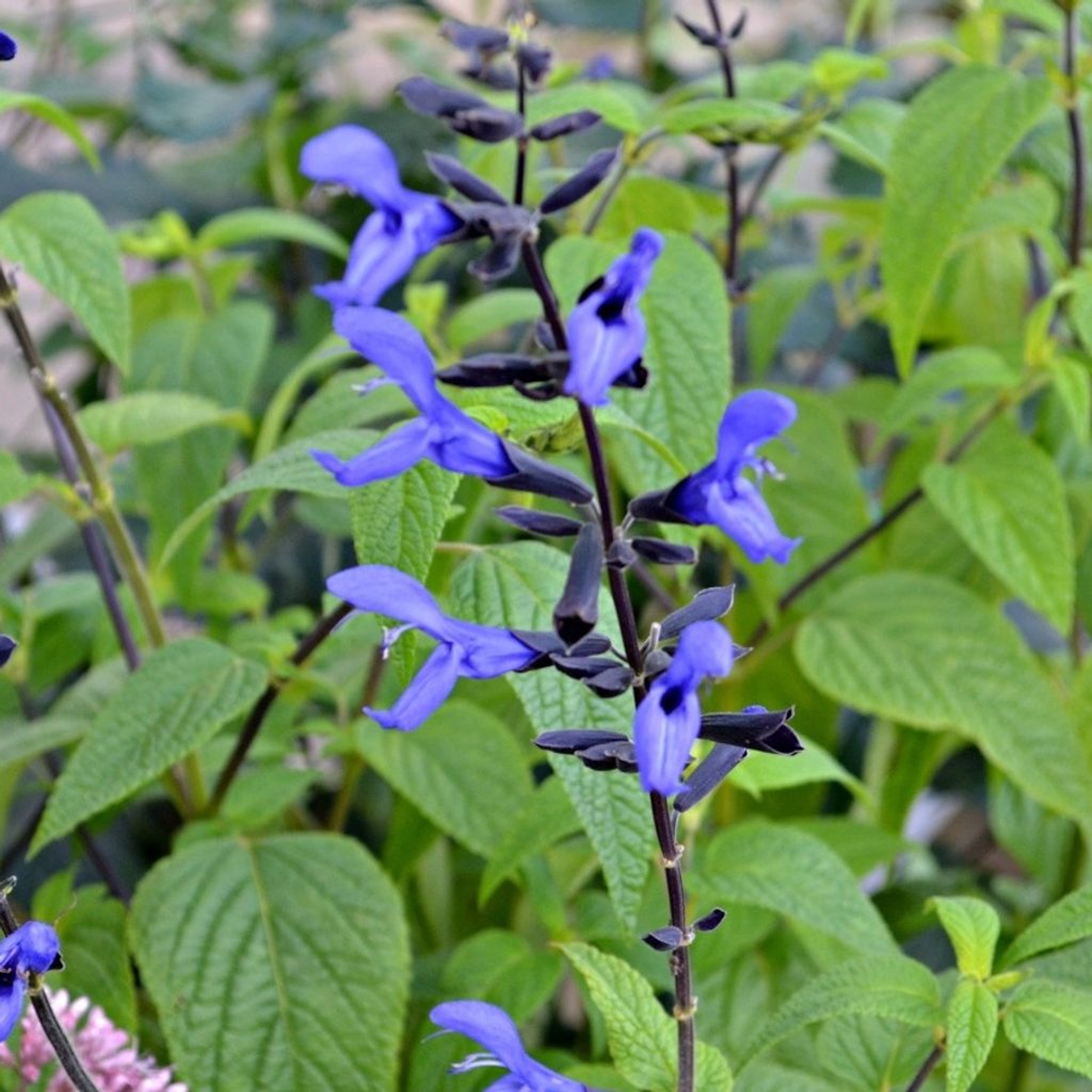
Here are some beautiful black & blue hued annuals that you will find at the Friends 2026 Plant Sale. Won’t they look great in your garden?
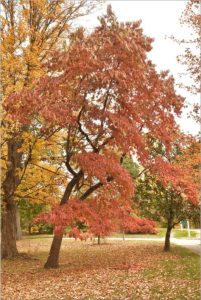
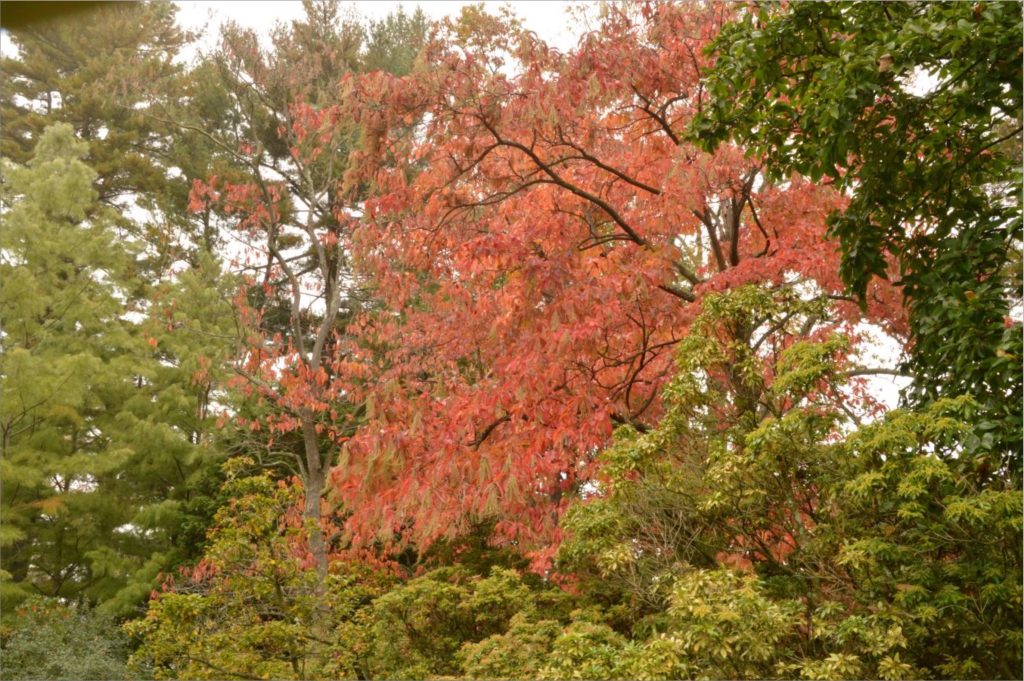
With the onset of November, everyone starts to think about the Holidays and suddenly our focus passes from the colors of autumn to all the Holidays to come. It is unfortunate since November in central New Jersey often features many trees with spectacular fall color. One tree that I consistently find enjoyable for its fall color, yet missing from many a garden is Sourwood, botanically known as Oxydendrum arboreum. A fine specimen at Frelinghuysen Arboretum can be seen at right in October, bedecked in all its autumn glory!
Although Sourwood is rather exotic in appearance, it is actually native to the East Coast of North America, extending from Pennsylvania South to Louisiana. A member of the Ericaceae or Heath Family, it was originally named Andromeda arborea by Carl Linnaeus, since the flowers are deceptively similar to Andromeda polifolia, a plant he discovered in Lapland and initially named in 1732. Sourwood was reclassified as Oxydendrum arboreum in 1839 by the Swiss botanist Augustin Pyramus de Candolle (1778-1841).
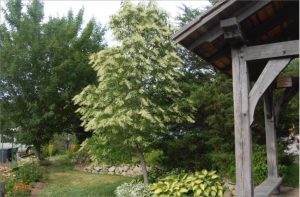
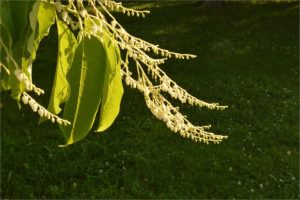
Oxys is Greek for sour, referring to the taste of the foliage which also influenced the common name! Dendron means tree, as in fact does the species epithet of arboreum! Indeed, it is a tree with a pyramidal habit in youth and easily growing to 50’ tall in the wild. However, it grows to a more refined 20-30’ in a garden. The leaves are lanceolate or canoe-shaped, glossy and deep green in color. In June and July many of the branches are tipped with pendulous flower racemes (as seen at left), consisting of clusters of 3 stems stretching to upwards of 10” in length that are covered with small bell-shaped flowers (as seen below right).
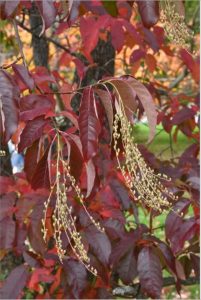
The flowers are white with a faint yet very pleasant scent. As attractive as the summer floral display is to behold, it only gets better come Autumn! In late summer and throughout the fall, the flower structure remains unchanged, but the flowers are replaced by light yellow seed capsules. As fall proceeds, the deep green foliage turns to deep red, providing a dramatic backdrop for the seed capsules. A totally awesome, jaw dropping display as seen below in October!
For the winter, Sourwood also has an interesting branch outline. Unusual to most trees, Oxydendrum does not have terminal buds. Rather, the closest lateral bud to the stem apex assumes the role for developing the leader. This creates a rather interesting zigzag branching habit and an interesting winter outline. The drawback to this stem morphology is the tendency for the tree to develop two or more main leaders, referred to as co-dominant branching. This is an inherently weak branching habit and the removal of one of the leaders should be conducted as soon as this habit becomes evident. For those gardeners who relish interesting bark during the winter months, Sourwood also develops very pronounced and deeply fissured bark, as seen below right. Even people that are not really bark fanciers will be found exclaiming over the deep fissures when first introduced to the bark of a mature tree, as seen below.
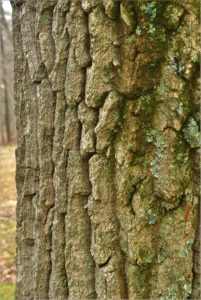
Sourwood is most commonly found along the Appalachian Mountains in soils that are well-drained and gritty, typical of steep mountain slopes or stream banks. In the garden, it is certainly tolerant of average garden soils, but it has proven to be intolerant of moist soils. I have planted Sourwoods in moist locations only to have the plants languish until transplanted to a drier location, reaffirming their desire for good drainage. Typical of Ericaceous plants, Oxydendrum thrives in acidic soils with a pH range of 3.7 and 6.5, making it an ideal companion for Rhododendrons. In fact, one of the closest genetic relatives of Oxydendrum is the afore mentioned Pieris. It is commonly known as Andromeda and is typically seen in gardens in combination with Rhododendrons!
For the garden, this tree is best used as a small to midsize tree. The biggest challenge is the time required by the plant as it ‘decides’ whether it wishes to be a tree or a shrub! The plant will often seem to pause and contemplate its future when it is 3-4’ tall before it ultimately grows into a tree. This is due to its nature of constantly producing a new leader each spring from a lateral bud along the stem. Over a 35-year period at Rutgers Gardens, I watched a plant slowly grow from a rather unimpressive specimen of 4’ while I was a student into a to 25’ tall by 15’ wide showstopper! If given room, the plants will expand into a more globose or rounded habit with time, as seen at Chanticleer Gardens in the image below.
From a design standpoint, in its early years Sourwood is best used where an exclamation point is of need or where a narrow plant is required to soften architectural details. In time, it clearly grows into an attractive broad spreading tree with a rounded crown. For the unknowing gardener, its appearance as a young containerized plant at a Garden Center does not belie its appearance in 20 or 50 years later in the Garden! From a plant lover’s standpoint, its offerings of summer blooms with their attractive fragrance, blazing autumn color with contrasting seedcapsules and the ensuing attractive winter habit, Sourwood is a tree that no garden should be without. Indeed, this ‘Sour’ plant can provide many ‘Sweet’ offerings to the garden and the gardener!
Bruce Crawford
Manager of Horticulture, Morris County Parks Commission
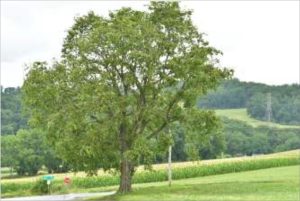
My appreciation for shade trees has certainly changed over the years. Like many gardeners, it was a group of plants I valued yet rarely used in designs or planted! Of course, perspectives changes and I am now a huge proponent of planting shade trees. I have grown especially fond of trees that can tolerate the abuses associated with tough sites and are beneficial to wildlife. Hackberry or Celtis occidentalis was a shade tree I initially learned in school, although I recall it was often maligned as a second-rate tree. Experience has since taught me different! A nice specimen of the tree is seen above amidst farmland in North Hampton County, Pennsylvania.
Celtis is a genus of woody plants with between 60-70 species found in temperate climates throughout the world. It was initially assigned to the Ulmaceae or Elm Family, and the plants certainly bear similarities in both habit and foliage to the American Elm (Ulmus americana). However, in 2009 it was shifted to the Cannabaceae or Hemp Family. The plant was named and described in 1753 by the Swedish botanist and physician Carl Linnaeus (1707-1778). Of Latinorigin, the genus name came from the Roman naturalist and army officer Gaius Plinius Secundus, who was often known as Pliny the Elder (23/24-79). He applied the name to a tree he believed it to be the famed Lotus fruit of Greek Mythology, which would supposedly create drowsiness when eaten. Perhaps owing to the edible fruits of Hackberry or for some reason unknown, Linnaeus assigned the ancient name to this tree! The species epithet means western and without doubt, the plant is certainly native to areas West of Sweden! It is actually native to a broad area of North America, stretching from New Hampshire south to North Carolina and west to North Dakota and Oklahoma. Small populations are also found in the southern reaches of Quebec and Ontario.
Throughout its native range Celtis occidentalis is found growing near streams in moist lowlands or flood plains where they can tolerate several weeks of inundation. They are also found on dry rocky slopes and bluffs. Plants are capable of growing 40-70’+ tall and 50-60’ wide with the larger specimens found where soil and moisture conditions are optimal.
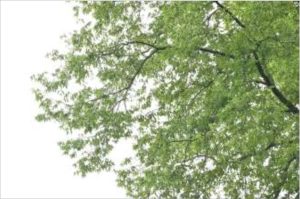
I became aware of its tough constitution when I moved to Warren County NJ where plants are found growing on limestone ledges in very thin soils yet, they also appear near wetlands in far deeper and occasionally flooded soils. It was its ability to thrive under such diverse conditions that sparked my initial interest in the tree. The habit of the tree also caught my attention (as seen in the image above in PA). Although in youth the habit is loosely pyramidal, it develops an attractive globe to arching habit as it matures. Granted, the habit may not rival the beauty of a mature Elm but it is still striking and I appreciate how the small branchlets of the outer canopy drape downward and soften the overall appearance of the plant. The hanging branchlets also allow the individual leaves to be readily observed (as seen above). The foliage is arranged alternately along the stems with each leaf measuring 2-5” long by 3” wide with a characteristically mismatched base where it connects to the petiole. Come autumn, the foliage turns a soft, buttery yellow.
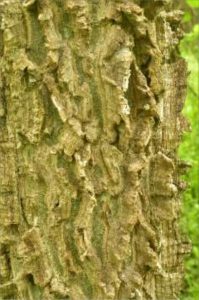
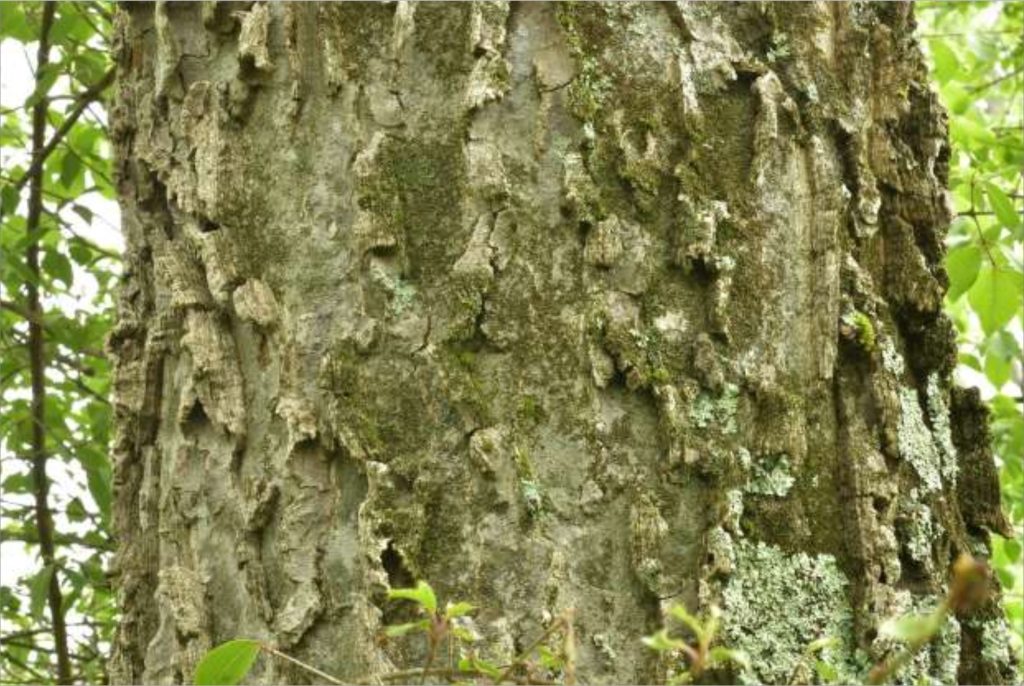
Aside from the habit, the bark is another wonderful attribute (as seen in the image above). In youth, the bark develops very pronounced, corky brown ridges that run vertically along thetrunk. The ridges can rise to 1” tall with the bark located between the ridges displaying a nice green color that is dotted with brown lenticels. Although the ‘elevation’ of the ridges diminishes with age as seen in the closing image, the bark still retains a very interesting platy and ridged appearance, providing interest throughout the winter.
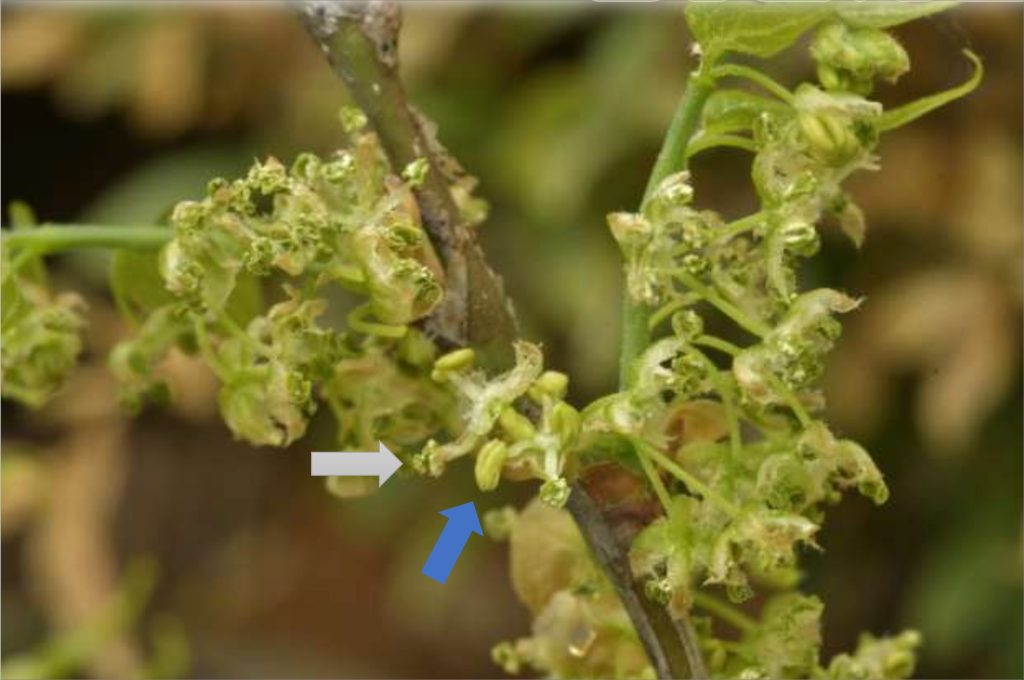
Come spring, the appearance of the light green flowers coincides with the first flush of foliage and as a result, the delicate flowers are often overlooked. The trees are primarily monoecious, meaning they produce both male and female flowers on the same plant. Occasionally, a perfect flower is produced, containing both pistils and stamens. In the image above, the anther at the tip of the blue arrow can be seen splitting open to release the pollen, while the gray arrow highlights an anther whose pollen has been shed! The flowers are ¼” wide with the male flowers appearing in clusters at the base of newly expanding branchlets. The female flowers arise at the tip of the same branchlet and appear singularly or in pairs at the base of the leaf petioles.
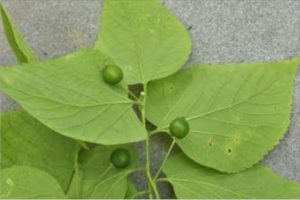
Both sexes are apetalous with only 4-6 green sepals visible around the blooms. Without any alluring petals or fragrance, the abundant pollen relies on the wind for its transfer to the stigma of the female flowers. Within several weeks, ¼” round green fruits can be seen gracing the branches (as seen at left), although they do not mature until fall when they transition to dark maroon. It is these fruits that inspired the common name of Hackberry. The European Bird Cherry (Prunus padus) bears fruit that is beloved by birds and is called Hagberry in Scotland. Noticing the resemblance of the Bird Cherry’s fruit to that of Celtis, the early settlers called the tree Hagberry which gradually transitioned to Hackberry! The fruits are botanically termed a drupe, since they contain one large seed, along with high amounts of carbohydrates, protein and fat. Not only are they eaten by birds, but were also used by numerous Native American communities, including the Apache, Dakota and Omaha who ate them seeds and all when fresh, or made them into jams or rubs to favor meats.
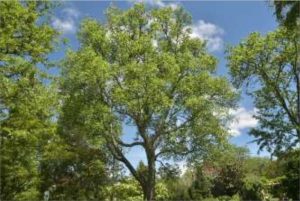
Another species native to Eastern North America is Celtis laevigata, commonly known as Sugarberry (as seen at right at Willowwood Arb). This species was described in 1811 by the German botanist and pharmacist Carl Ludwig Willdenow (1765-1812). The species name is from
the Latin Laevigātus meaning smooth and is in reference to the bark (as seen in the image at right).
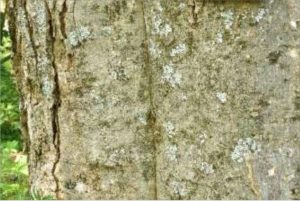
The light gray bark can still have small, wart-like protrusions but by comparison to its cousin, the bark is indeed smooth! Plants are native to Virginia south to Florida and west to Oklahoma and Texas, including some small populations in northern Mexico. The plants are often found growing in clay or silty soils along streams, although it too is occasionally found growing on rocky slopes rich in limestone.
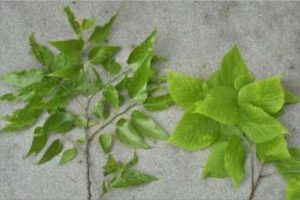
Willowwood Arboretum has a beautiful specimen growing near the parking lot that I admire every time I pull in to park (as seen above). It is very similar to its cousin and aside from the bark, the major differences are the narrower and glossier leaves along with sweeter, juicier fruits that resulted in the common name of Sugarberry! As seen in the image at right, the narrower foliage of Celtis laevigata is on the left, with that of Celtis occidentalis is on the right. Although the size and overall shape of the canopy is similar, the root systems differ between the species, with that of Celtis occidentalis growing to depths of 10-20’ while its cousin has a shallower and more spreading root system. This deeper root system makes Hackberry the preferable candidate around sidewalks and patios that are often lifted by a shallower root system. Both trees make a great addition to the Southwest corner of a home or office where it will help cool the building and reduce the expense of air conditioning. In fact, the USDA Forest Service has estimated a tree in this location will reduce the annual air conditioning expense by 30%.
They are also great candidates for placing near the curb or a patio since the act of looking under and past the canopy and trunk will make the yard appear larger! When used in pairs or lining a drive, the slightly arching canopy shapes the area between into a comforting, cathedral-like space – a concept of shade trees that took me many years to understand!
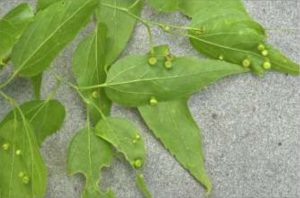
Sugarberry is hardy in zones 6-9 while Hackberry is more cold tolerant, thriving in zone 3-9. Neither are overly bothered by diseases, although both are prone to ¼” long galls formed on the leaves by small winged insects called psyllids. The galls are seen on Celtis laevigata pictured above. As the stationary psyllid nymphs (larva) suck juices out of the leaves, the leaf develops tissue around the nymph and the galls are the visual result. The nymph continues to partake of the plant’s leaf sap throughout the summer, with ¼” long adults emerging in late summer and fall. Once free of the protective leaf, they become a food source for resident and migratory birds! Hackberry is also prone to Witches Brooms, the result of a fungus that causes a proliferation of small branches at the branch tips. Although both can be deemed unsightly, neither is harmful to the tree.
It was actually due to the Witches Brooms and Galls that Celtis occidentalis received a less than
glowing description in my woody plants class. To be honest, even though I have numerous
specimens growing around my home, I rarely notice either ‘deformity’. What I do notice is an
attractive tree growing in the harshest of conditions with some jamming bark, edible fruits and an
ability to support wildlife. Yes, experience is definitely the best teacher and Hackberry has
certainly taught me why this is a first-rate tree for your garden!
Bruce Crawford
Manager of Horticulture, Morris County Parks Commission

Once again, we couldn’t restrain ourselves—we’ve ordered hundreds of plant varieties for the upcoming sale.
You can sort the list using the “Data” menu in Google Sheets, or download it as a PDF (and other formats) by clicking “File” → “Download” at the top of the spreadsheet.
Be sure to check back often—we’re still adding last-minute gems, along with additional details like light requirements, hardiness zones, and more.
For the gardener who craves flowers, I have found late fall into early winter to be the most challenging season for a frost hardy floral display. Every plant with a lick of ‘common sense’ is entering into dormancy in preparation for a long winter’s nap. Only the most ardent of bloomers would consider flowering then! It also proves challenging for garden centers who are hesitant to bring in plants for late season color at a time when no one is thinking of flowering plants. Interestingly, a great solution to this flowering dilemma is not to be found in Asia or the mountains of Europe, but in the Eastern North American woodlands. Hamamelis virginiana or Witch Hazel is a relatively common understory plant to NJ, yet it is surprising how few gardeners have come to recognize its beauty!
Witch Hazels are members of their own family of Hamamelidaceae with 2 or 3 species native to North America, one to Japan and one to China. Hamamelis virginiana is native from Nova Scotia west to Minnesota and south to Florida and eastern Texas. Perhaps some of the hesitation for gardeners stems from the common name; why buy a plant that could be aligned with witches and shaman practices? In reality, the name Witch most likely comes from the Old English wiche or wych, referring to something pliable. The stems of Hamamelis are quite pliable and young forked stems were purportedly used as divining rods in search of water! Hazel refers to the shape of the leaf, which resembles that of Corylus or Hazel. Plants were initially introduced into Europe by Peter Collinson (1694-1768) who was a fabric merchant by profession, but had a strong passion for gardening. He became friends with American plant collectors such as John Bartram (1699-1777) and realizing there was a demand for plants from across the ‘pond’, he helped to fund their plant expeditions. Collinson was also well connected with the European scientific community, including the Swiss botanist Carl Linnaeus (1707-1778) and he most likely passed along samples of Witch Hazel to Linnaeus. In 1753, Linnaeus published both the genus name of Hamamelis and the species of Hamamelis virginiana. Hamamelis was from the Greek hama, meaning together, and mela, meaning fruit. The name was based on how Hamamelis virginiana has seed capsules or ‘fruit’, flowers and next year’s buds all ‘together’ on the stems concurrently. The species epithet is in reference to the enormous colony of Virginia that initially extended north to the Great Lakes! Somewhere within the colony Bartram collected seed of Hamamelis virginiana. This species was well received by European gardeners and was long respected by Native Americans for its medicinal qualities. The oils captured from the steam of boiled stems and bark were used for reducing inflammation. Whether it was for cuts, insect bites, sore muscles, inflammation or even as an aftershave for those lacking dexterity with a razor, Witch Hazel was the cure!
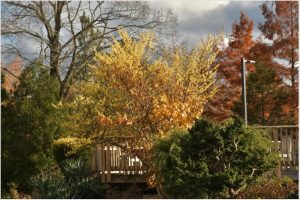
Even considering the odd time of year for bloom or the intriguing shaman reference of the name, the only true excuse a gardener should have for not planting this Witch Hazel is simple unawareness! The multistemmed plants are typically open in appearance when seen in woodlands, often reaching rather demure heights of 10-12’. However, in full sun, the plants grow much denser and taller, often reaching heights of 20’with the gently arching habit far more readily apparent, as seen at right in fall color at Frelinghuysen Arboretum. The appearance of the plant also varies by their native provenance. Those located further north are shorter in stature with larger leaves while those found in southern regions are taller, some reaching to 30’ with smaller foliage.
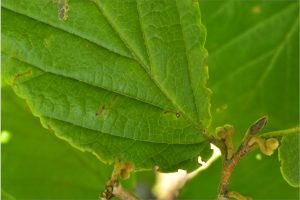
Throughout the growing season, the dark green foliage provides an attractive foil for other plants, as the obovate oregg-shaped leaves grow upwards of 6” long by 2-4” wide. Characteristically, the leaf bases on either side of the leaf petiole are mismatched, with one side shorter than the other (as seen at left). Come autumn, the foliage turns to a buttery yellow, from late October through November in NJ. The flower buds can appear singularly, but they are usually in clusters of up to 4 per floral stem or peduncle, as it is known botanically. Each cluster of buds originates from the base of the leaf, as seen at left, with the yellow flowers beginning to open come late October. They are initially masked by the golden foliage, but gradually become more apparent in November as the leaves fall (the image below shot on November 9th).
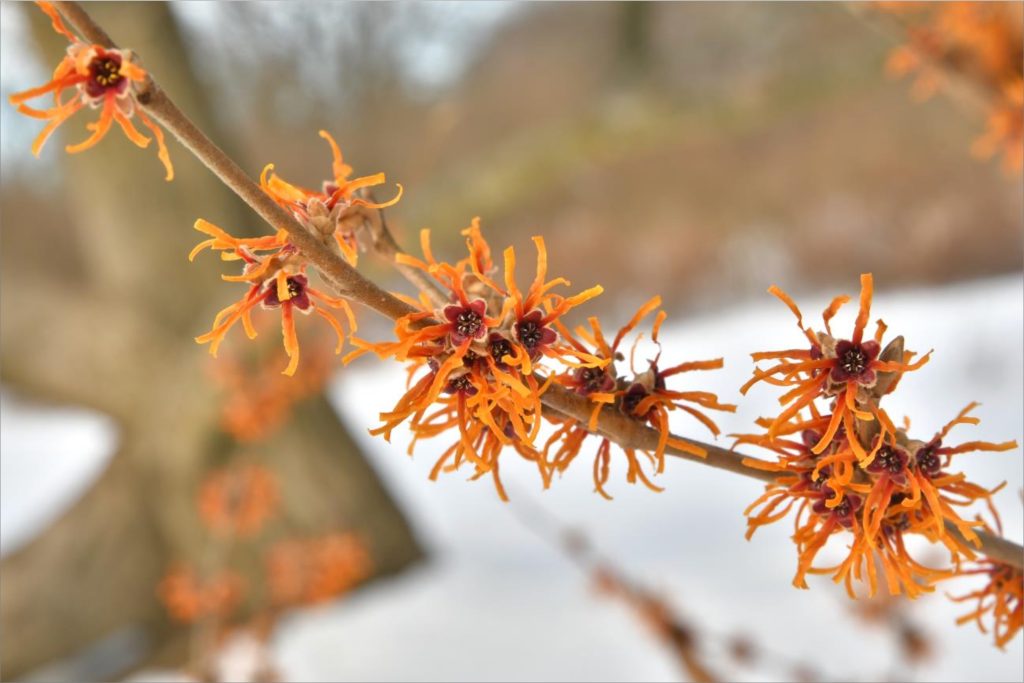
The flowers consist of 4, strap-like petals, as seen below right. Each petal is upwards of ¾” long with a somewhat crinkled appearance. Appearing near the base of the petals and alternating with the petals are 4 short and yellow pollen bearing stamens along with 4 greenish, nectar bearing stamens that are sterile. At the center are 2 highly pubescent or hairy styles that support the stigmas.
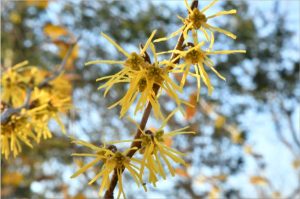
The flowers bloom for 4 weeks or longer depending on the weather conditions and release a slightly spicy fragrance. During cold weather, the petals curl clockwise into the flower in an attempt to protect the floral parts. The flowers are pollinated by gnats and bees that remain active late into the season, feasting off the nectar and sticky pollen. Interestingly, throughout the winter the base of the female carpel containing the ovary and the pollen transferred by an insect remains in a state of suspended animation and the actual act of fertilization does not occur until the following spring. The seeds slowly develop in pods that resemble a pair of puckered lips throughout the summer and fall (pictured below). Each pod holds one or two developing black seeds.
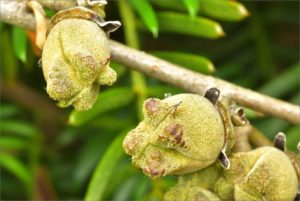
Come October, the seeds are dispersed by a mechanism called Explosive Dehiscence, whereby the seeds are literally shot out of the seed pod to distances of up to 30’! As a teenager tending the garden of one of my first ‘client’s’ , I remember one early November day eating lunch next to a Witch Hazel. The owners German Shephard was patiently sitting by my side in hopes of a handout or belly rub. All the while I kept hearing a very distinctive sound of something hitting the newly fallen leaves. The sound came in sets of two. That memory stuck with me and I know realize I was hearing those ejected seeds!
Hamamelis virginiana is not the only North American Witch Hazel blooming in late fall.
Even less known among the gardening community is the Ozark Witch Hazel. As the name infers, it is native to the Ozarks, growing from Southern Missouri through northwestern Arkansas into eastern Oklahoma. The renowned botanist Charles Sprague Sargent (1841-1927) originally described and named the plant in 1911 as Hamamelis vernalis. Sargent served as the first Director of the Arnold Arboretum, beginning in 1872 and continuing for the next 55 years until his death. He worked with landscape architects, such as the renowned Beatrix Farrand along with many nursery professionals who were all attempting to learn the many new plants coming into commerce from lands abroad. The species epithet indicates how plants can bloom around the spring vernal equinox, although some seedling selections will start to bloom in late fall and early winter. The plant is also commonly referred to as Vernal Witch Hazel. Most references still list it as Hamamelis vernalis, but in December of 2007, Frederick Gustav Meyer (1917-2006), the well-respected Director of the National Arboretum’s Herbarium from 1963-1991 reclassified the plant as Hamamelis virginiana subspecies vernalis. It is interesting to note how the Ozarks are a family meeting grounds since the subspecies and species of Hamamelis virginiana often grow a mere 20’ apart! They manage to sustain their distinct characteristics most likely through the limited overlap of bloom time.
Although rarely seen in home landscapes, I must admit the Vernal Hazel has long been a favorite of mine. A multistemmed shrub growing from 15-18’ tall, the dark green foliage followed by yellow fall color appear very similar to that of its cousin. Of course, there are exceptions and for those plants with more brilliant red or purple flowers, the fall color traditionally features attractive red overtones.
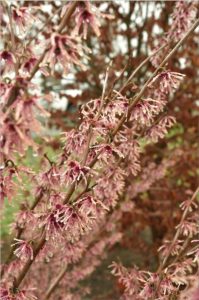
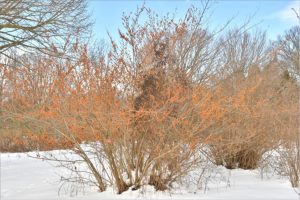
One downside with younger and vigorously growing plants is the tendency to retain the now tan foliage throughout winter. Flowering often persists for up to a month or longer, with a few plants commencing bloom in late fall while others wait until the warmth of spring. The major difference between the species and subspecies is the wonderfully sweet fragrance offered by the Vernal Witch Hazel flowers. On those ‘warm’ 35 to 40-degree days in winter, fragrance can waft a good 30’ away and is known to attract not only gardeners but a bevy of pollinators! The petals vary from red to orange (as seen below), with the occasional plant showcasing yellow or deep purple blooms! Petals are smaller than their cousin, usually ⅓ – ½” in length. However, when set against a snowy backdrop as seen above on a chilly 35° February afternoon, it provides a very impactful and well received winter sight.
The Ozark Witch Hazel has several selections that are available in the trade. ‘Red Imp’ is a readily available form with a somewhat more compact habit, growing to 8-12’ tall. It was named by Peter Dummer and Roy Lancaster at Hilliers Nursery in England in 1996. The fall color is a bright red, followed by reddish orange flowers come late February and March. It does have the annoying habit of retaining the previous year’s foliage that can obscure many of the blossoms. The cultivar ‘Kohankie Red’ was selected by the Henry Kohankie Nursery of Perry Ohio and is another mid-sized plant reaching 8’ tall by 12’ wide. I find the flowers more purple than red, as seen above left, but they are still very attractive and definitely light up the winter garden when back-lite! The flowers area also considerably larger, sporting ¾-1” long petals.
If you are lacking color and fragrance in your late fall and winter garden, these two plants can provide the
solution to your problem. At Rutgers there was a selection of Vernal Witch Hazel that consistently started to bloom at the end of December and was often still in bloom come February (pictured below), while at Frelinghuysen Arboretum a Hamamelis virginiana glows nicely against the mid-November skyline (the initial image). If you are looking for flowers for late fall through winter, look no further than your local woodlands or a trip to the Ozarks via your local garden center. Sometimes great spicy or fragrant flowered solutions really are just under our nose!
Bruce Crawford
Morris County Parks Commission