Category: Plant Sale

Spicy and Fragrant Witch Hazels are Right Under our Nose

For the gardener who craves flowers, I have found late fall into early winter to be the most challenging season for a frost hardy floral display. Every plant with a lick of ‘common sense’ is entering into dormancy in preparation for a long winter’s nap. Only the most ardent of bloomers would consider flowering then! It also proves challenging for garden centers who are hesitant to bring in plants for late season color at a time when no one is thinking of flowering plants. Interestingly, a great solution to this flowering dilemma is not to be found in Asia or the mountains of Europe, but in the Eastern North American woodlands. Hamamelis virginiana or Witch Hazel is a relatively common understory plant to NJ, yet it is surprising how few gardeners have come to recognize its beauty!

Witch Hazels are members of their own family of Hamamelidaceae with 2 or 3 species native to North America, one to Japan and one to China. Hamamelis virginiana is native from Nova Scotia west to Minnesota and south to Florida and eastern Texas. Perhaps some of the hesitation for gardeners stems from the common name; why buy a plant that could be aligned with witches and shaman practices? In reality, the name Witch most likely comes from the Old English wiche or wych, referring to something pliable. The stems of Hamamelis are quite pliable and young forked stems were purportedly used as divining rods in search of water! Hazel refers to the shape of the leaf, which resembles that of Corylus or Hazel. Plants were initially introduced into Europe by Peter Collinson (1694-1768) who was a fabric merchant by profession, but had a strong passion for gardening. He became friends with American plant collectors such as John Bartram (1699-1777) and realizing there was a demand for plants from across the ‘pond’, he helped to fund their plant expeditions. Collinson was also well connected with the European scientific community, including the Swiss botanist Carl Linnaeus (1707-1778) and he most likely passed along samples of Witch Hazel to Linnaeus. In 1753, Linnaeus published both the genus name of Hamamelis and the species of Hamamelis virginianaHamamelis was from the Greek hama, meaning together, and mela, meaning fruit. The name was based on how Hamamelis virginiana has seed capsules or ‘fruit’, flowers and next year’s buds all ‘together’ on the stems concurrently. The species epithet is in reference to the enormous colony of Virginia that initially extended north to the Great Lakes! Somewhere within the colony Bartram collected seed of Hamamelis virginiana. This species was well received by European gardeners and was long respected by Native Americans for its medicinal qualities. The oils captured from the steam of boiled stems and bark were used for reducing inflammation. Whether it was for cuts, insect bites, sore muscles, inflammation or even as an aftershave for those lacking dexterity with a razor, Witch Hazel was the cure!

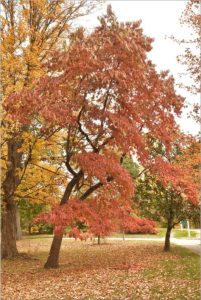
Even considering the odd time of year for bloom or the intriguing shaman reference of the name, the only true excuse a gardener should have for not planting this Witch Hazel is simple unawareness! The multistemmed plants are typically open in appearance when seen in woodlands, often reaching rather demure heights of 10-12’. However, in full sun, the plants grow much denser and taller, often reaching heights of 20’with the gently arching habit far more readily apparent, as seen at right in fall color at Frelinghuysen Arboretum. The appearance of the plant also varies by their native provenance. Those located further north are shorter in stature with larger leaves while those found in southern regions are taller, some reaching to 30’ with smaller foliage.

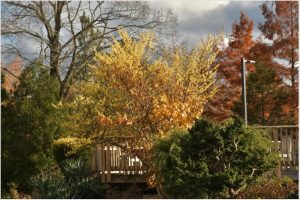
Throughout the growing season, the dark green foliage provides an attractive foil for other plants, as the obovate oregg-shaped leaves grow upwards of 6” long by 2-4” wide. Characteristically, the leaf bases on either side of the leaf petiole are mismatched, with one side shorter than the other (as seen at left). Come autumn, the foliage turns to a buttery yellow, from late October through November in NJ. The flower buds can appear singularly, but they are usually in clusters of up to 4 per floral stem or peduncle, as it is known botanically. Each cluster of buds originates from the base of the leaf, as seen at left, with the yellow flowers beginning to open come late October. They are initially masked by the golden foliage, but gradually become more apparent in November as the leaves fall (the image below shot on November 9th).

The flowers consist of 4, strap-like petals, as seen below right. Each petal is upwards of ¾” long with a somewhat crinkled appearance. Appearing near the base of the petals and alternating with the petals are 4 short and yellow pollen bearing stamens along with 4 greenish, nectar bearing stamens that are sterile. At the center are 2 highly pubescent or hairy styles that support the stigmas.

The flowers bloom for 4 weeks or longer depending on the weather conditions and release a slightly spicy fragrance. During cold weather, the petals curl clockwise into the flower in an attempt to protect the floral parts. The flowers are pollinated by gnats and bees that remain active late into the season, feasting off the nectar and sticky pollen. Interestingly, throughout the winter the base of the female carpel containing the ovary and the pollen transferred by an insect remains in a state of suspended animation and the actual act of fertilization does not occur until the following spring. The seeds slowly develop in pods that resemble a pair of puckered lips throughout the summer and fall (pictured below). Each pod holds one or two developing black seeds.

Come October, the seeds are dispersed by a mechanism called Explosive Dehiscence, whereby the seeds are literally shot out of the seed pod to distances of up to 30’! As a teenager tending the garden of one of my first ‘client’s’ , I remember one early November day eating lunch next to a Witch Hazel. The owners German Shephard was patiently sitting by my side in hopes of a handout or belly rub. All the while I kept hearing a very distinctive sound of something hitting the newly fallen leaves. The sound came in sets of two. That memory stuck with me and I know realize  I was hearing those ejected seeds!

Hamamelis virginiana is not the only North American Witch Hazel blooming in late fall.

Even less known among the gardening community is the Ozark Witch Hazel. As the name infers, it is native to the Ozarks, growing from Southern Missouri through northwestern Arkansas into eastern Oklahoma. The renowned botanist Charles Sprague Sargent (1841-1927) originally described and named the plant in 1911 as Hamamelis vernalis. Sargent served as the first Director of the Arnold Arboretum, beginning in 1872 and continuing for the next 55 years until his death. He worked with landscape architects, such as the renowned Beatrix Farrand along with many nursery professionals who were all attempting to learn the many new plants coming into commerce from lands abroad. The species epithet indicates how plants can bloom around the spring vernal equinox, although some seedling selections will start to bloom in late fall and early winter. The plant is also commonly referred to as Vernal Witch Hazel. Most references still list it as Hamamelis vernalis, but in December of 2007, Frederick Gustav Meyer (1917-2006), the well-respected Director of the National Arboretum’s Herbarium from 1963-1991 reclassified the plant as Hamamelis virginiana subspecies vernalis. It is interesting to note how the Ozarks are a family meeting grounds since the subspecies and species of Hamamelis virginiana often grow a mere 20’ apart! They manage to sustain their distinct characteristics most likely through the limited overlap of bloom time.

Although rarely seen in home landscapes, I must admit the Vernal Hazel has long been a favorite of mine. A multistemmed shrub growing from 15-18’ tall, the dark green foliage followed by yellow fall color appear very similar to that of its cousin. Of course, there are exceptions and for those plants with more brilliant red or purple flowers, the fall color traditionally features attractive red overtones.

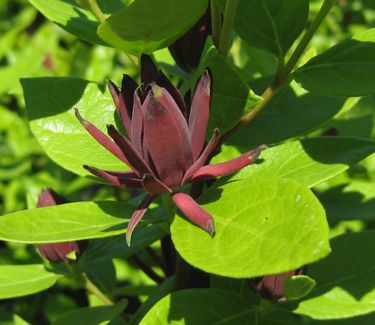
One downside with younger and vigorously growing plants is the tendency to retain the now tan foliage throughout winter. Flowering often persists for up to a month or longer, with a few plants commencing bloom in late fall while others wait until the warmth of spring. The major difference between the species and subspecies is the wonderfully sweet fragrance offered by the Vernal Witch Hazel flowers. On those ‘warm’ 35 to 40-degree days in winter, fragrance can waft a good 30’ away and is known to attract not only gardeners but a bevy of pollinators! The petals vary from red to orange (as seen below), with the occasional plant showcasing yellow or deep purple blooms! Petals are smaller than their cousin, usually ⅓ – ½” in length. However, when set against a snowy backdrop as seen above on a chilly 35° February afternoon, it provides a very impactful and well received winter sight.

The Ozark Witch Hazel has several selections that are available in the trade. ‘Red Imp’ is a readily available form with a somewhat more compact habit, growing to 8-12’ tall. It was named by Peter Dummer and Roy Lancaster at Hilliers Nursery in England in 1996. The fall color is a bright red, followed by reddish orange flowers come late February and March. It does have the annoying habit of retaining the previous year’s foliage that can obscure many of the blossoms. The cultivar ‘Kohankie Red’ was selected by the Henry Kohankie Nursery of Perry Ohio and is another mid-sized plant reaching 8’ tall by 12’ wide. I find the flowers more purple than red, as seen above left, but they are still very attractive and definitely light up the winter garden when back-lite! The flowers area also considerably larger, sporting ¾-1” long petals.

If you are lacking color and fragrance in your late fall and winter garden, these two plants can provide the
solution to your problem. At Rutgers there was a selection of Vernal Witch Hazel that consistently started to bloom at the end of December and was often still in bloom come February (pictured below), while at Frelinghuysen Arboretum a Hamamelis virginiana glows nicely against the mid-November skyline (the initial image). If you are looking for flowers for late fall through winter, look no further than your local woodlands or a trip to the Ozarks via your local garden center. Sometimes great spicy or fragrant flowered solutions really are just under our nose!

Bruce Crawford

Morris County Parks Commission

Introduction

One of the benefits of membership in the Friends of The Frelinghuysen Arboretum is an annual plant dividend for each of our members. The selections for this year are described below and will be available for pickup at the Plant Sale Members Only Preview Party on Friday, May 1st (click the link for more information and to register for the Preview Party), as well as at the public Plant Sale on Saturday May 2nd and Sunday May 3rd.

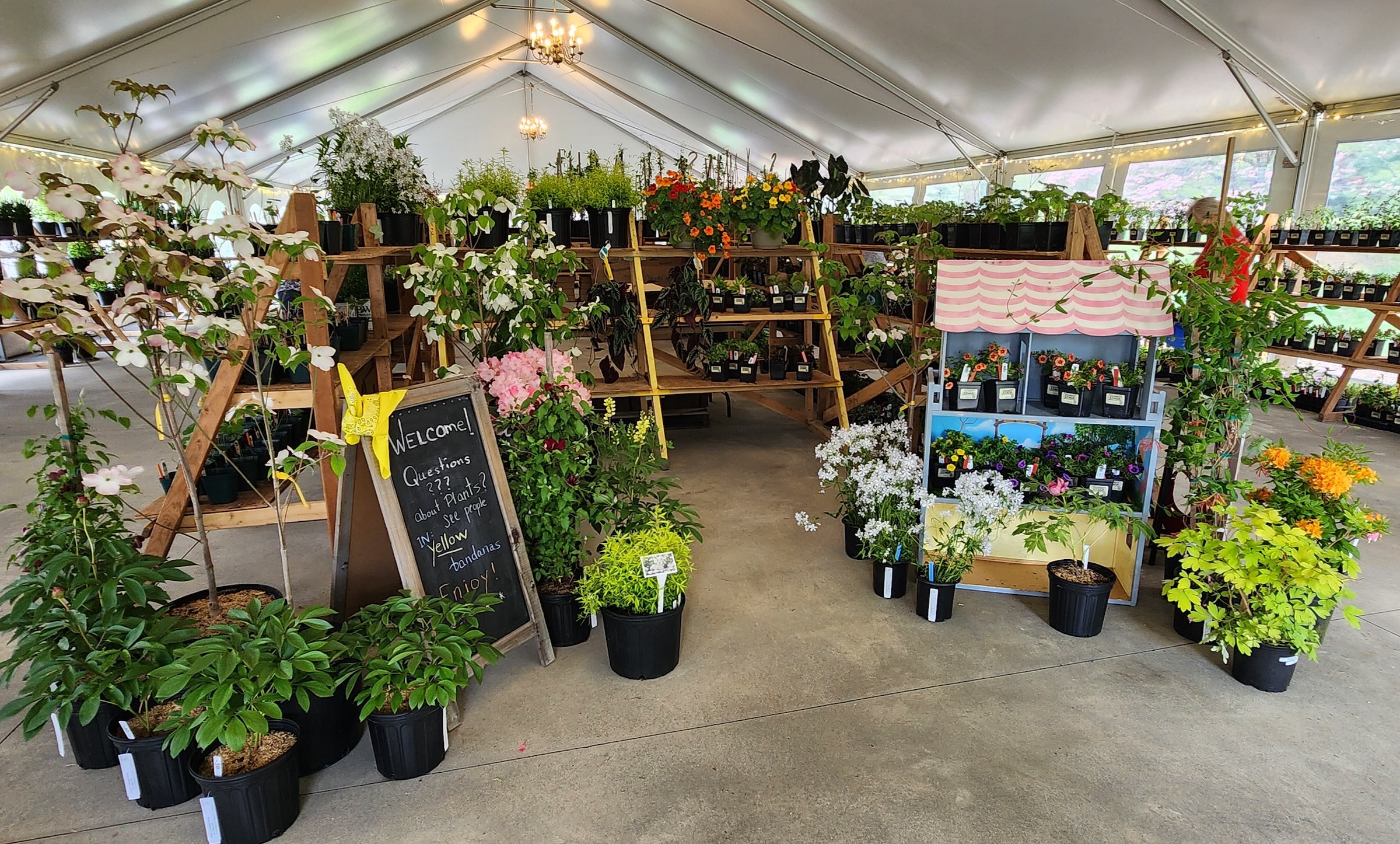
You can make your choice at the Landscape Plug tables in the tent which will, of course, be subject to availability at the time of selection. In addition to serving as the source for member dividends, all landscape plugs will also be available for purchase.

This year the Friends will be selling two hard-to-find, but higher priced plants as landscape plugs. They may be purchased at a reasonable cost at the plugs table but will not be part of the Plant Dividend distribution.


This Year’s Selections
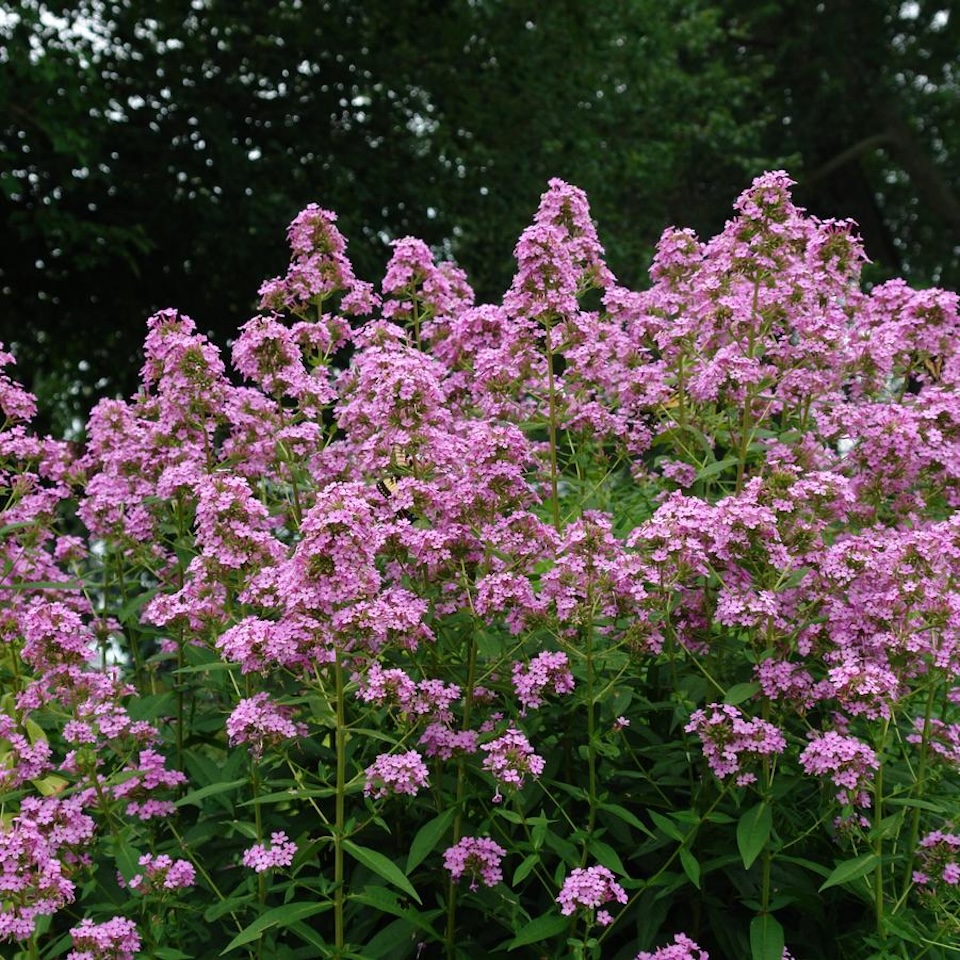
Phlox paniculata ‘Jeana’

Phlox paniculata ‘Jeana’

Garden Phlox

Found by and named after Jeana Prewitt of Nashville, TN, this selection possesses outstanding mildew resistance with varying shades of sweetly scented, lavender-pink flowers, vibrant midsummer through early autumn. Foliage remains clean green while flower clusters create a tiered effect along upright, multi-stemmed branches. Expect a flurry of pollinator activity!  Native.

4-5’tall, 2-3’wide
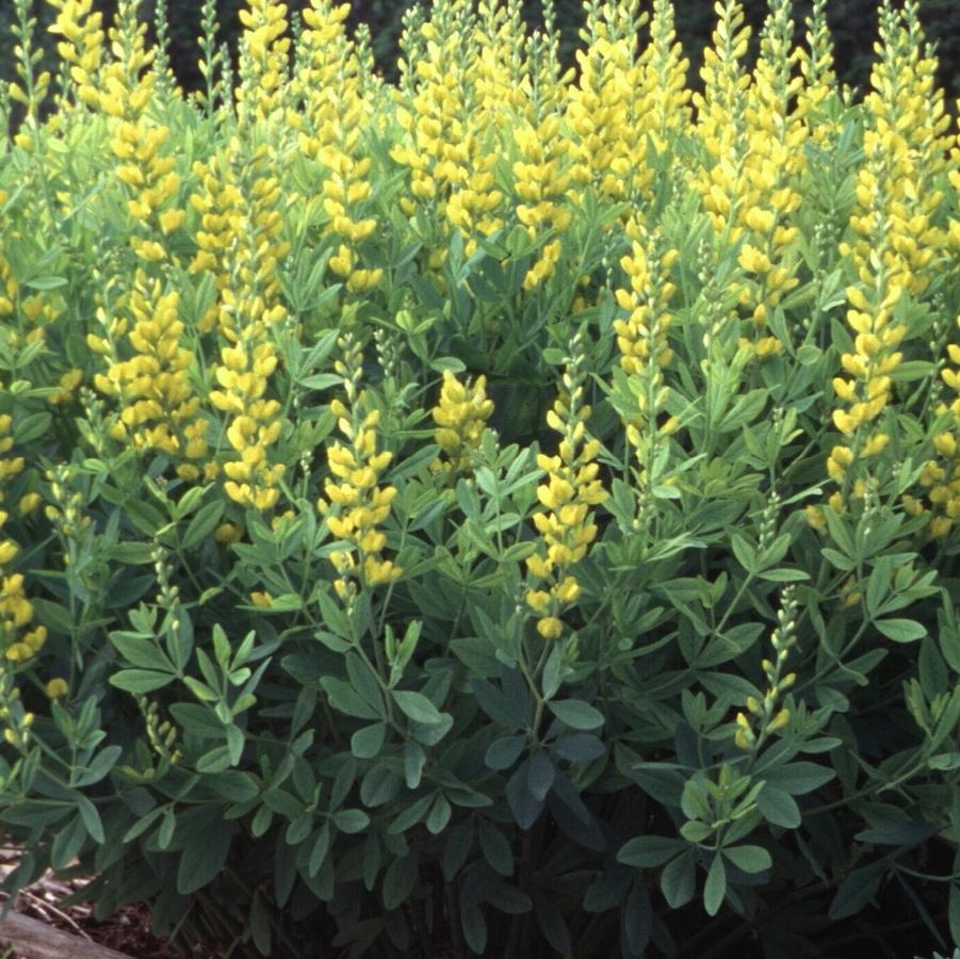
Baptisia sphaerocarpa

Baptisia sphaerocarpa

Yellow Wild Indigo

A sturdy, drought-resistant garden plant with striking spikes of pea flowers that range from butter yellow to gleaming gold. Native to Southern US. Full sun. Deer resistant. Drought and poor soil tolerant.

2—3’ tall. 2—3’ wide
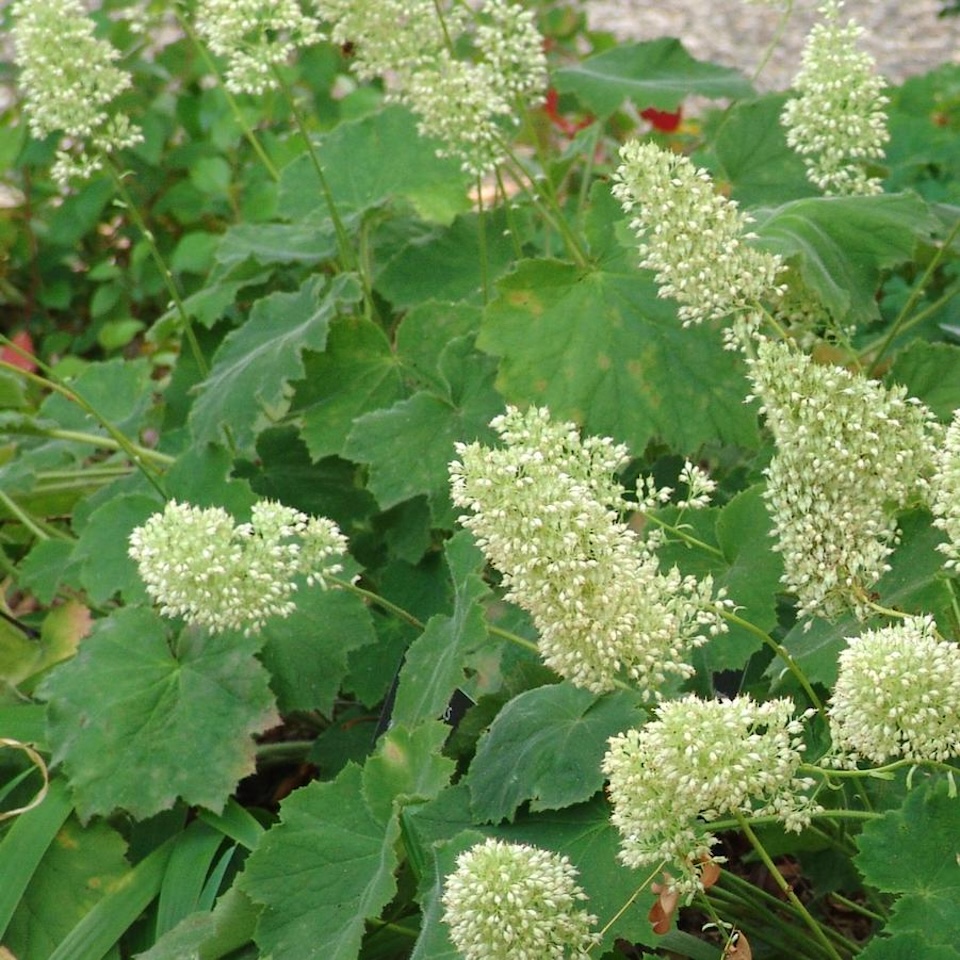
Heuchera villosa ‘Autumn Bride’

Heuchera villosa ‘Autumn Bride’

Alumroot, Coral Bells

Fuzzy, chartreuse to lime green, nearly evergreen foliage erupts in September with white fountains of pure white flowers continuing until frost. A very easy-care plant tolerant of dry shade and a wide variety of conditions. A good, tough exciting meat-and-potatoes groundcover that doubles as a cut flower! Great for moist shade.  US native. 

2’ tall, 3’ wide
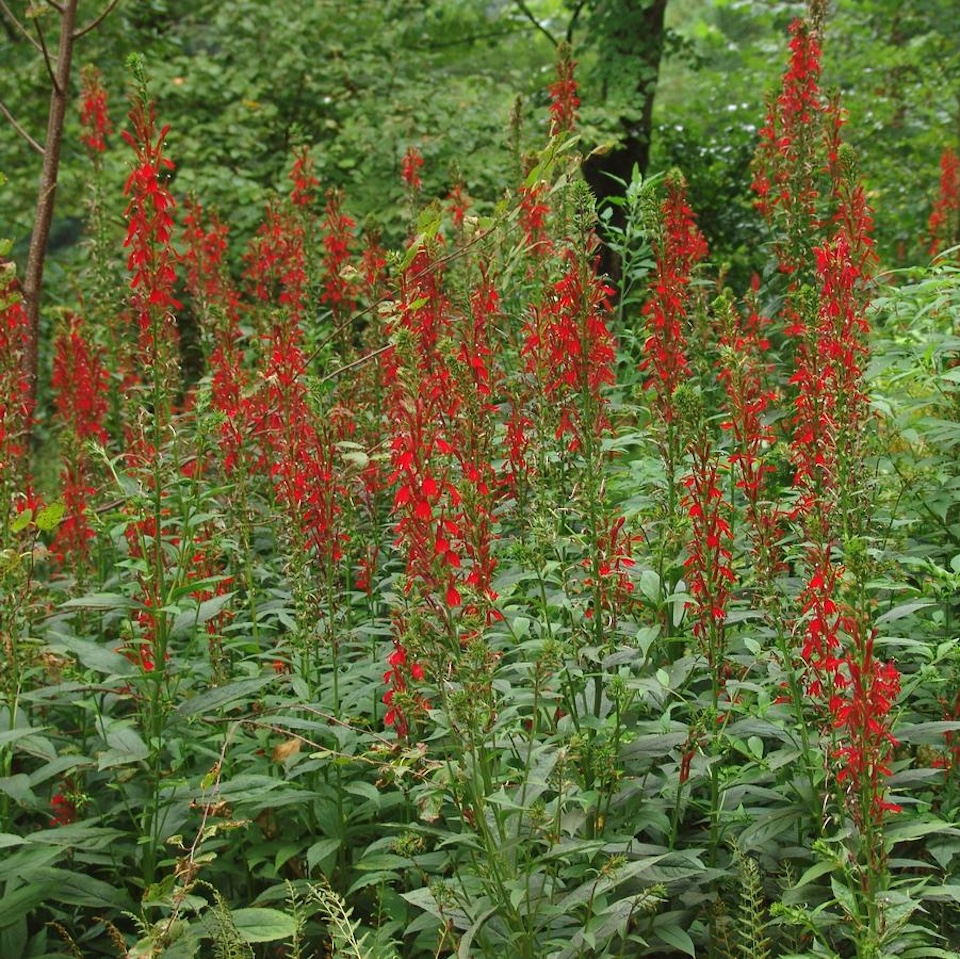
Lobelia cardinalis

Lobelia cardinalis

Cardinal Flower

Clump-forming habit with brilliant red flower spikes set against green and purple-bronze colored foliage. Each individual spike of scarlet flowers open from bottom to top and stays in bloom for several weeks. A favorite of hummingbirds. Makes an excellent cut flower. A real show stopper! Wet site tolerant.

2-4’ tall. 2’ wide
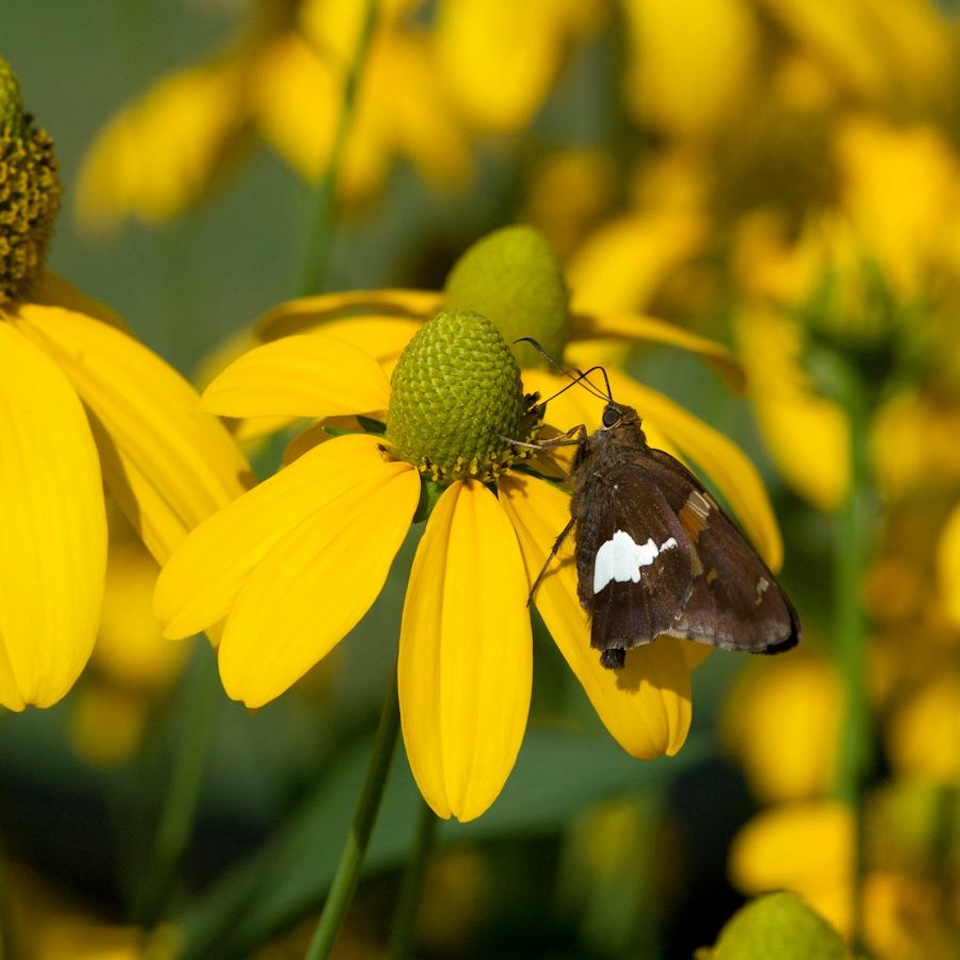
Rudbeckia laciniata ‘Autumn Sun’.

Rudbeckia laciniata ‘Autumn Sun’

Cutleaf Coneflower

This long-blooming butterfly (especially monarch) magnet has large, glossy, deep green, deeply cut leaves along the stems and loose clusters of clear yellow ray flowers with large green cones that darken with age. Blooms for 8+ weeks in mid to late summer. Very cold hardy. 

5-6’ tall, 3-4’ wide
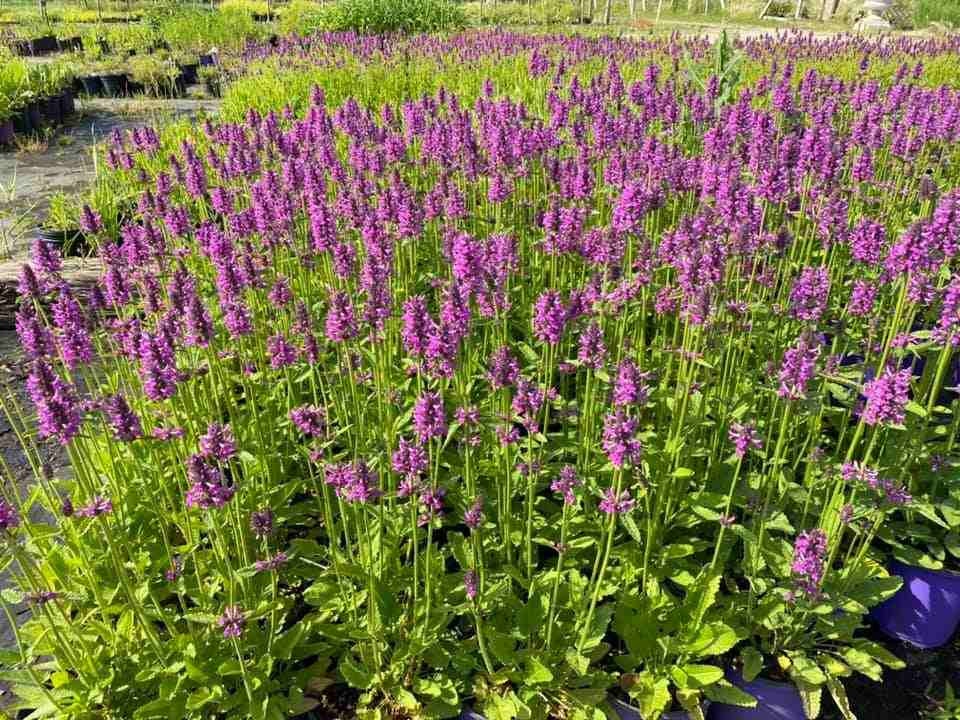
Stachys ‘Summer Romance’

Stachys x ‘Summer Romance’ (FOR PURCHASE ONLY)

Betony

A Brandywine Cottage selection.
‘Summer Romance’ has a summer display of wand-like inflorescences with violet flowers that stand up to 2 feet above dense, green foliage. Can be used as a groundcover, or along the edge of a bed, and will spread over time to fill in an area. 

Deer resistant
Schizachyrium scoparium ‘Standing Ovation’.

Schizachyrium scoparium ‘Standing Ovation’

Little Bluestem

A North Creek discovery worthy of applause.  It keeps a tight, upright habit throughout the entire season. A warm season grass that does well in poor, dry soils.  Spikey bluish-green stems and leaves transition to oranges, reds, yellows, and purplish-browns in the autumn.  

3-4’ tall, 12-18” wide
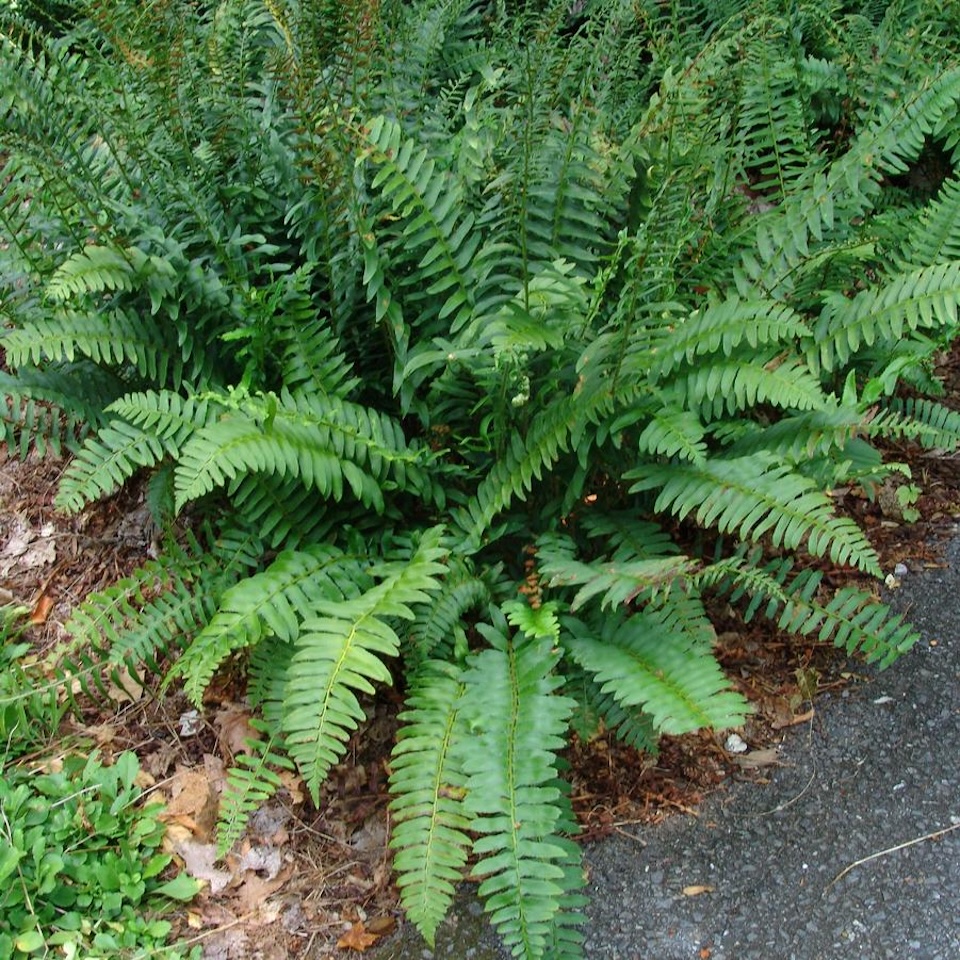
Polystichum acrostichoides

Polystichum acrostichoides (FOR PURCHASE ONLY)

Christmas fern

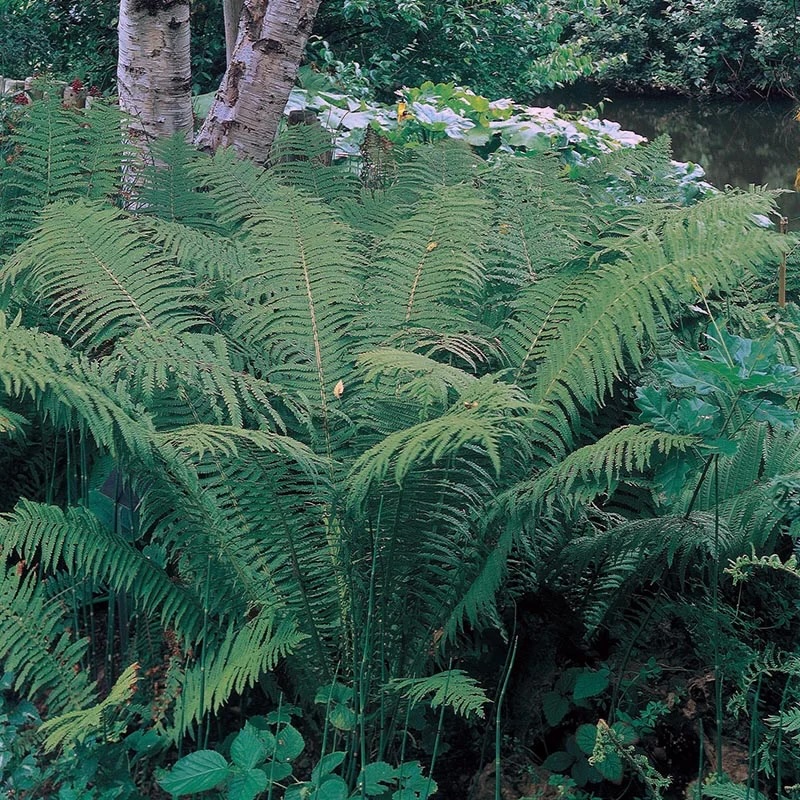
While not as showy as some others, this fern makes up for it with its neat habit, easy culture, and its lustrous, nearly evergreen leaves. Often used in Christmas floral arrangements because it is still attractive in December. It is a wonderful companion for spring blooming bulbs. Found in acidic to neutral soils on shaded slopes and well drained flats.
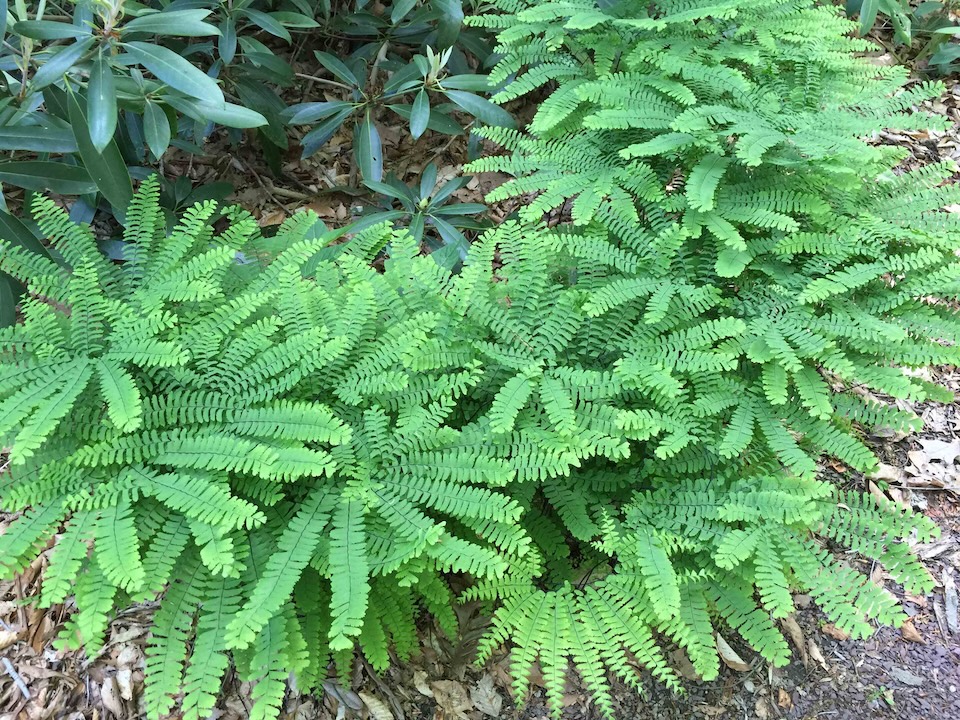
Adiantum pedatum

Adiantum pedatum

Northern Maidenhair Fern

Dainty, bright green fronds are held on shiny black stems, creating a light, airy texture in the woodland garden. In rich soil and bright shade it will spread by shallow rhizomes to form a dense groundcover. Found in the humus-rich woodlands and moist woods of Eastern North America. Likes loose, rich soil. 

12—24” tall, 12—18” wide
MEMBERS receive early plant sale access, discounted program pricing and other exclusive benefits. JOIN TODAY!

The Friends of the Frelinghuysen Arboretum invite you to our Annual Plant Sale on the first weekend in May.

Go GREEN while you shop — bring your own trays, boxes, or carts.

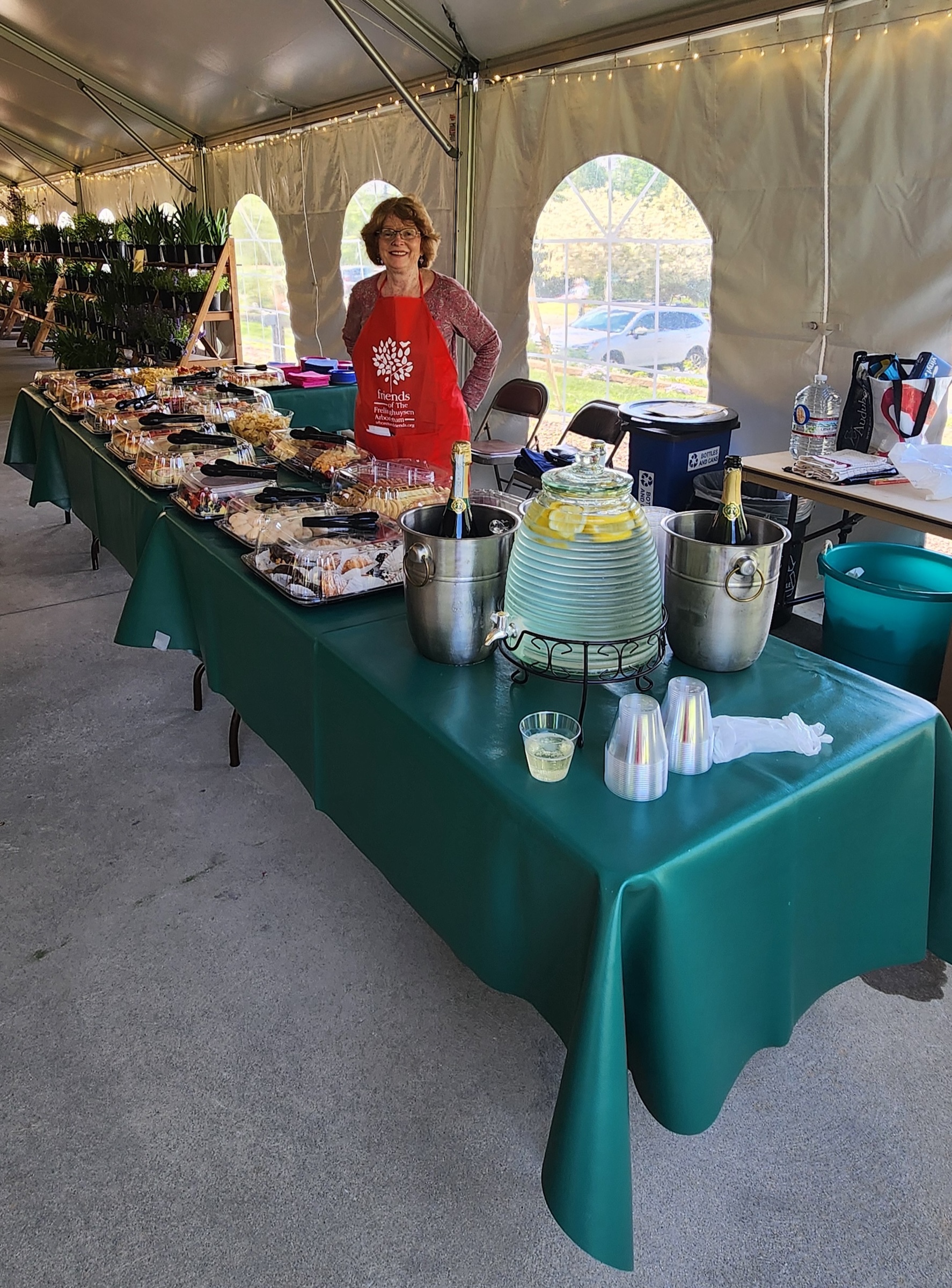
As in past years, there will be special early shopping — plus refreshments, door prizes and a plant dividend — for Members Only on Friday evening May 1st from 4:00 PM to 7:00 PM. Reservations are required; for more information and to reserve a spot, see our Members-only Preview Party Events page. Registration closes at noon on May 1st.

Click here for details about the 2026 Members’ Plant Dividends.

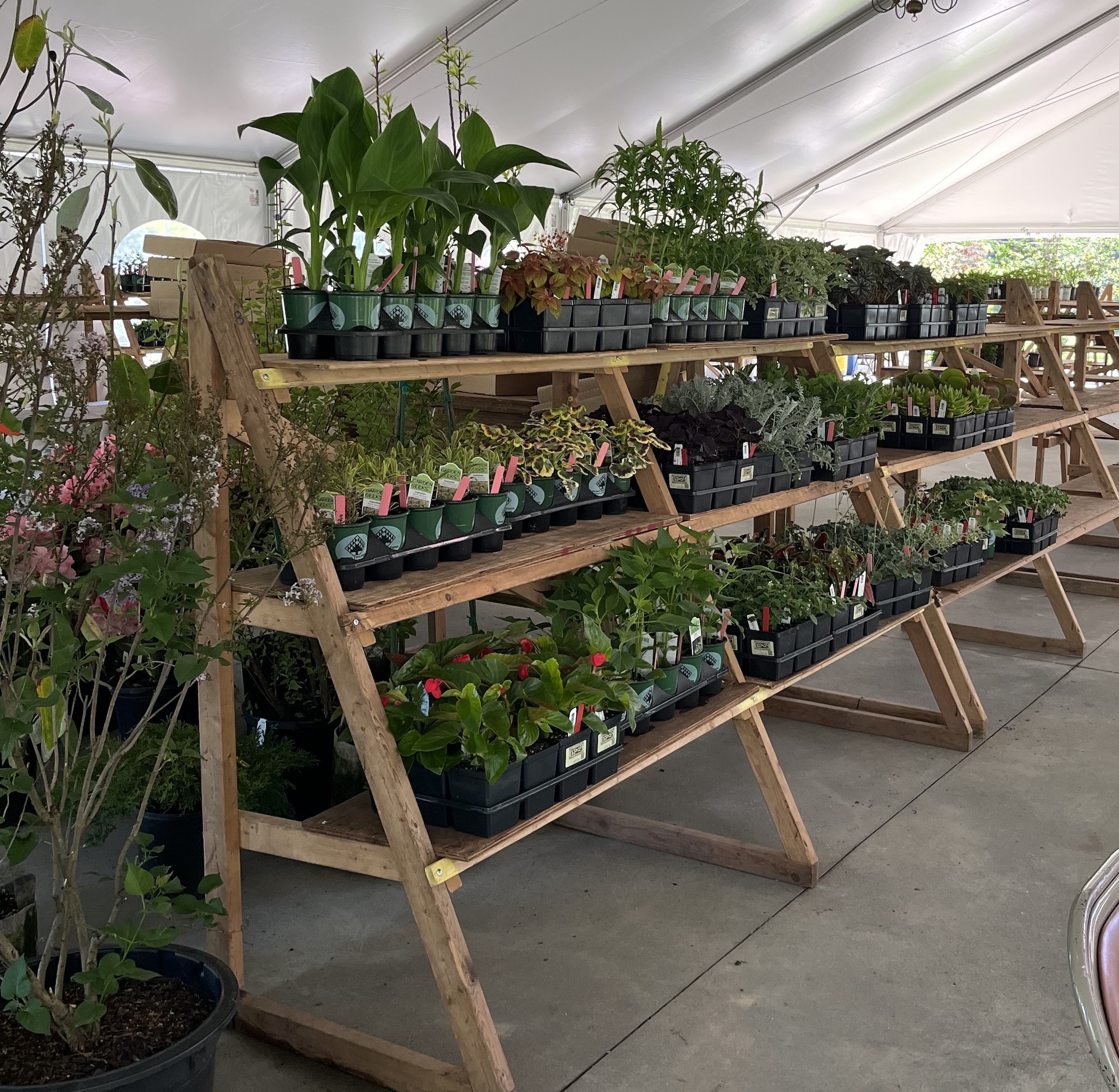
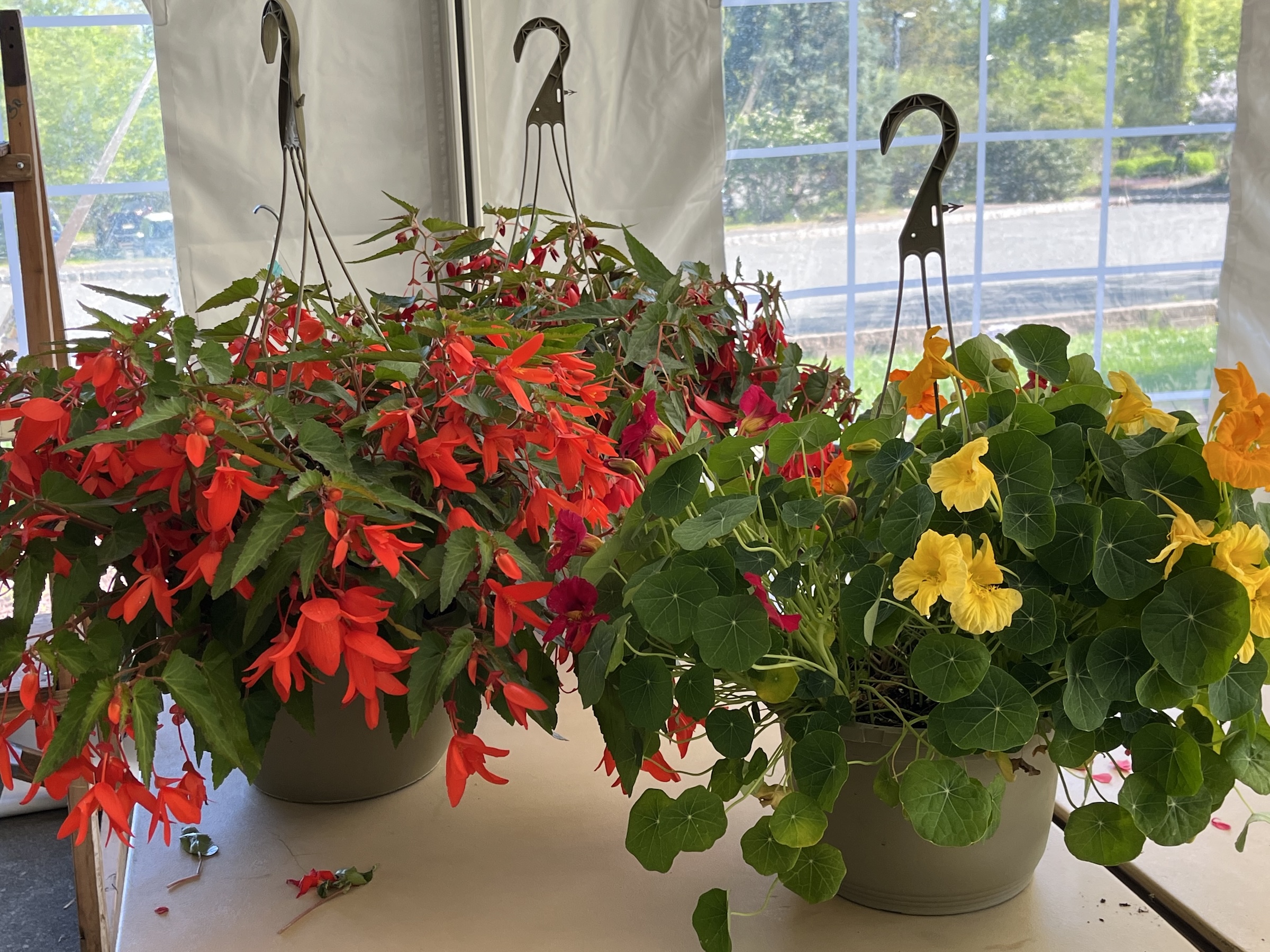
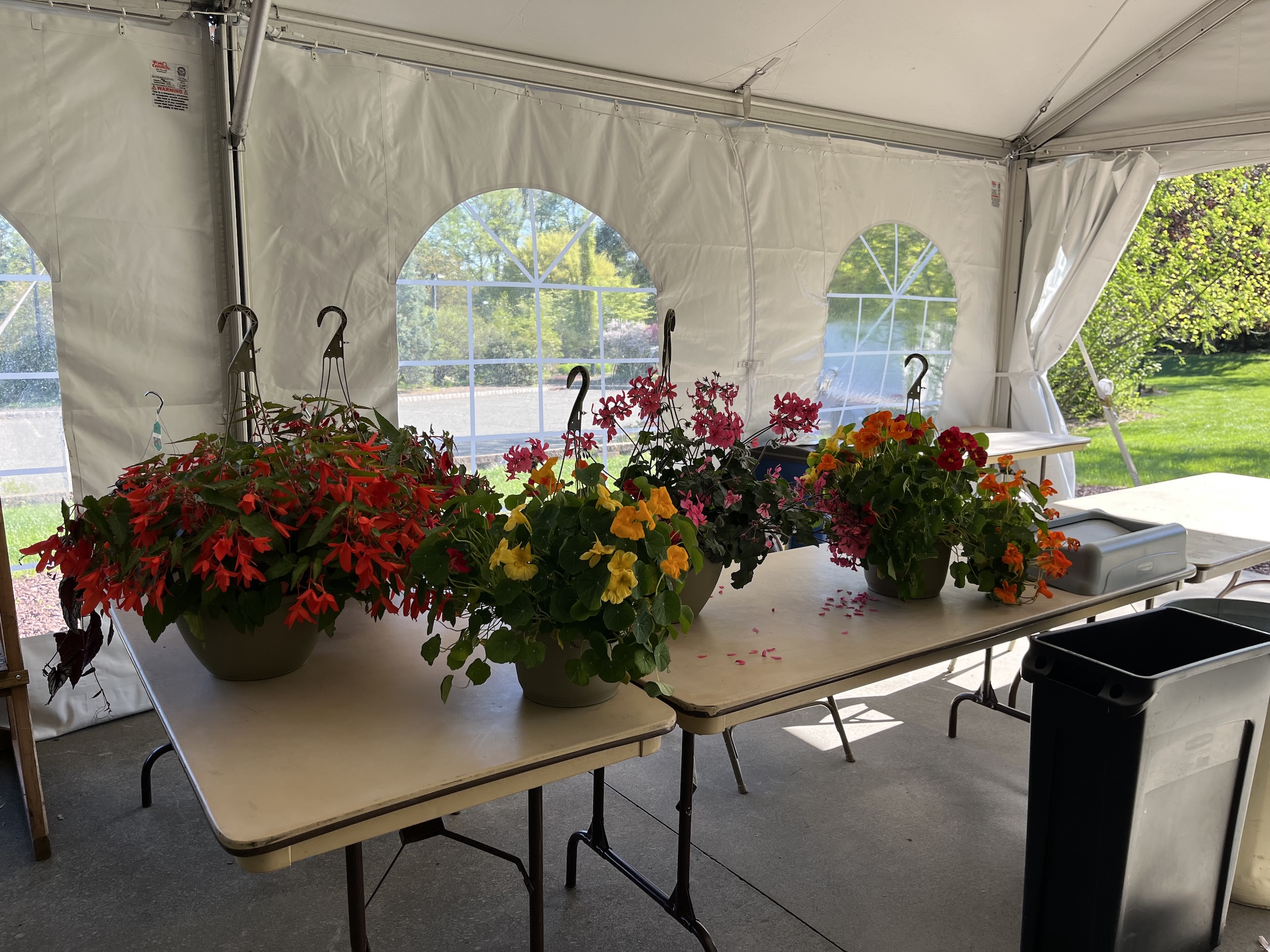
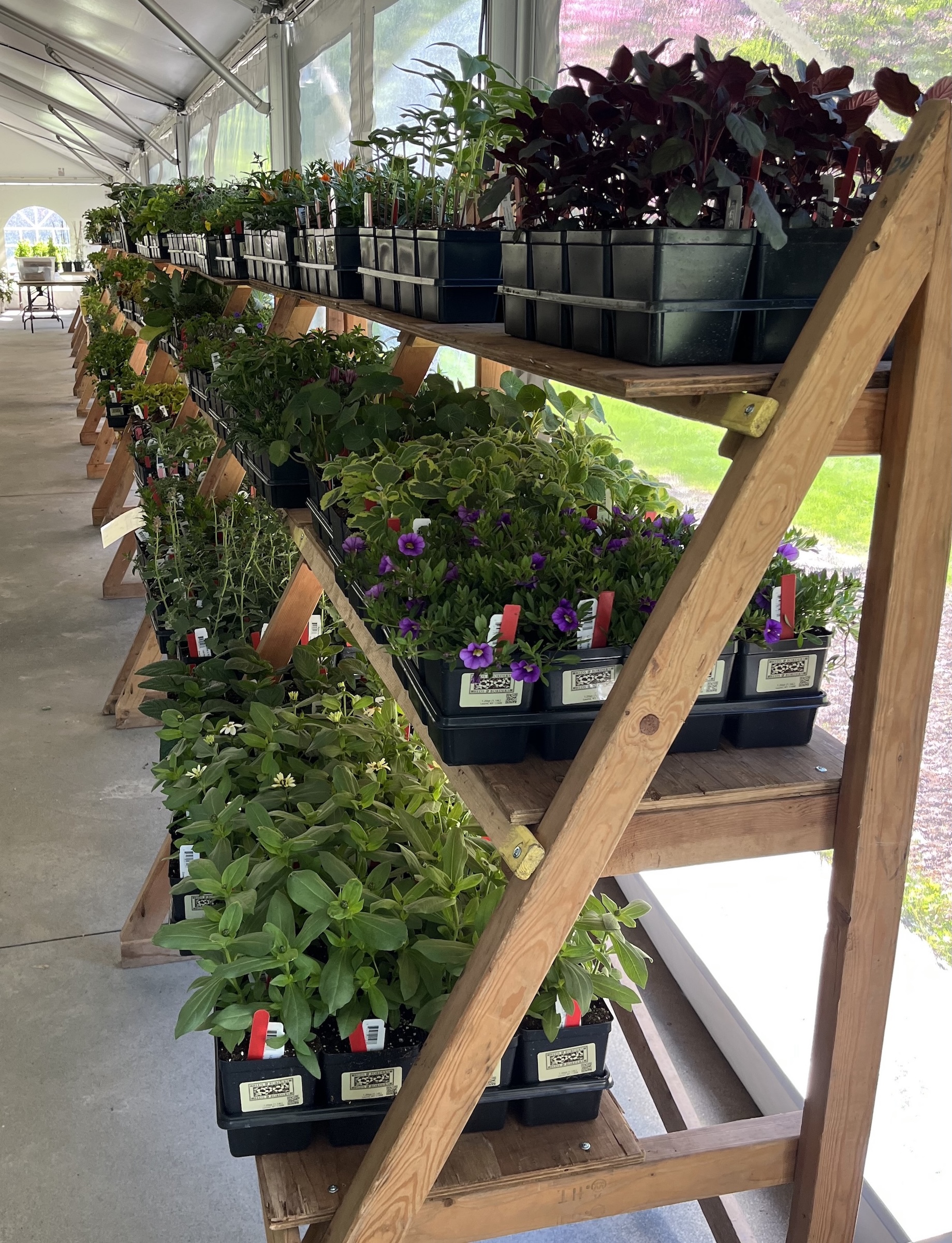
Throughout the sale you’ll be able to get advice from local plant experts and to select from a huge variety of houseplants, annuals, perennials, shrubs, and trees. Don’t miss our lecture featuring ‘Native Plants for the Home Landscape’ with David Culp. Details on our Events Page.

Volunteer Opportunities

Want to get involved and learn more about the plants at the sale?  Volunteer to help us set up April 25 – May 1 and during the sale May 2-3.  The 2026 Plant Sale Volunteer Opportunities and sign ups are available here.


  • Additional Garden Gifts Available for Purchase

    In addition to the gift items mentioned in last week’s eblast, you will also have the opportunity to purchase Womanswork Arm Saver Gloves, Green Gorilla Tubs and Marseilles Grapefruit Mini Soap. Remember Mother’s Day is coming!
    Read more...


  • A Few More Plants to Tempt You at the Plant Sale

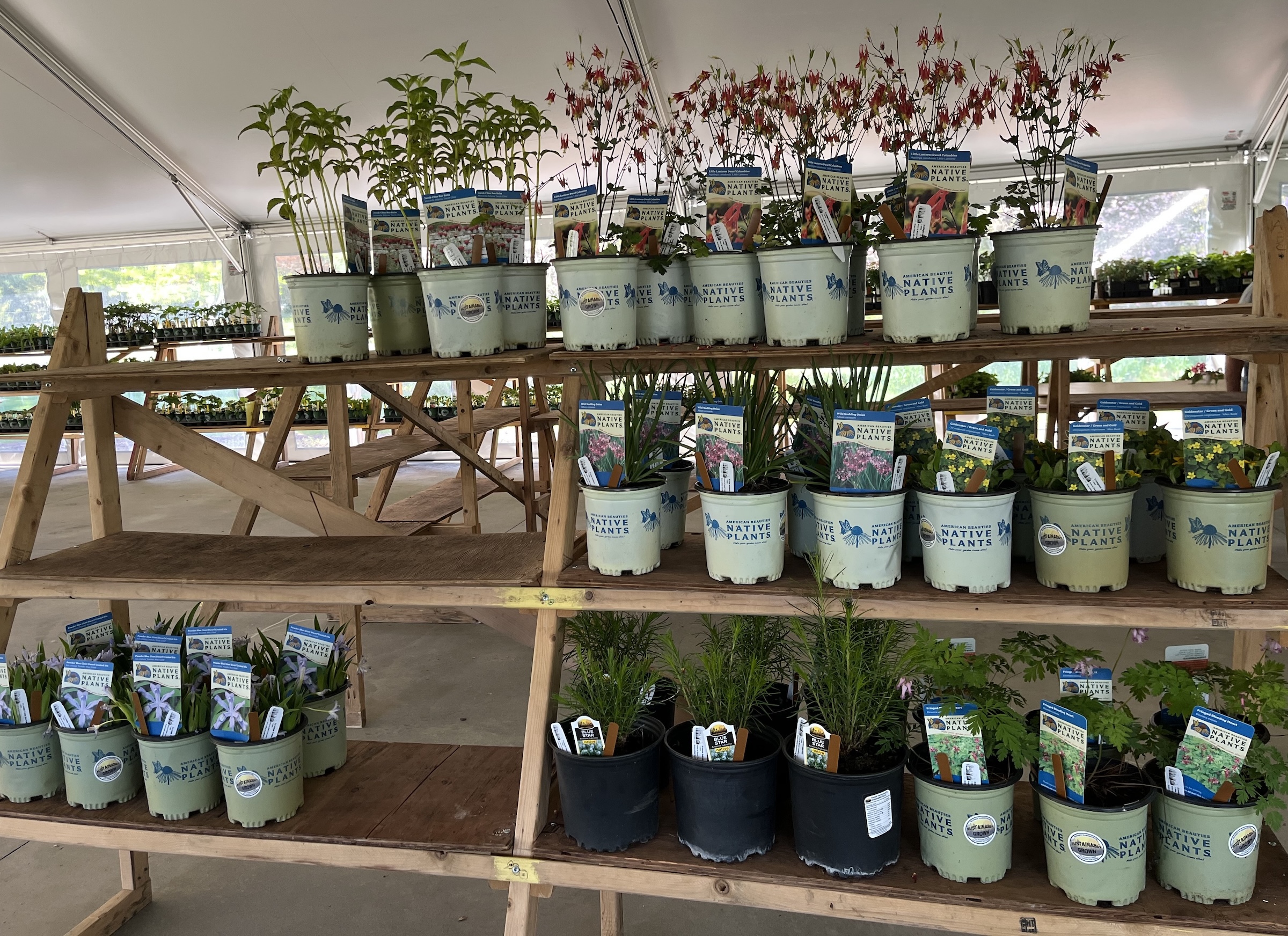
    Aesculus pavia (Red Buckeye), a species of deciduous, flowering small tree native to the eastern parts of the United states. Aquilegia canadensis ‘Little Lanterns’ (Little Lanterns Columbine), a dwarf selection of our native Columbine with downward facing red and yellow flowers, great for a shade or woodland garden and attracts hummingbirds! Last, but not least, Phlox subulata ...
    Read more...


  • Purchase Garden Gifts at the Plant Sale

    A variety of gardening related gifts will be available for purchase at the Plant Sale, i.e., Womanswork Pink Weeder Gloves, Womanswork Plant Snips in green or pink, Gorilla Tubs medium or large, Very Dirty Hands Soap etc. These make wonderful Mother’s Day gifts or gifts for any lucky gardener!
    Read more...


  • Lavenders Landing at the Plant Sale

    Selected for their vigor, adaptability and superior cold hardiness, this group of English lavender and hybrid (x intermedia) lavenders always need good drainage. Drought tolerant and deer resistant. Our intermedia hybrids were bred by Lloyd Travern from Peace Tree Farm, a vendor at the Friends’ plant sale for years. Here’s a preview of these lovelies: Lavandula angustifolia ‘Munstead’, Lavandula ...
    Read more...


  • The Rare And Unusual At The Friends’ Plant Sale Under The Tent

    Here’s a preview of some of the rare and unusual beauties that will be available at this year’s Plant Sale: Bletilla Yokohama (Ground Orchid) sports some lovely star shaped lavender flowers; Caryopteris x clandonensis ‘White Surprise’ (White Surprise False Blue Spirea) with lovely white edged leaves and small blue flowers; Fragaria variegata (Variegated Alpine Strawberry), ...
    Read more...


  • Fantastic Foliage Plants At Our Plant Sale

    Most of these are tender perennials, so they will look great in containers and/or as house plants: Abutilon savitzii (Variegated Flowering Maple), Alternanthera ficoidea ‘Party Time’ (Joseph’s coat). Farfugium japonicum var. giganteum (Giant Leopard Plant), Pelargonium ‘Mr. Henry Cox’ (Henry Cox Geranium), Rodgersia pinnata ‘Superba’ (Rodger’s Flower) and Alocasia cuprea ‘Red Secret’ (Elephant Ear). All of ...
    Read more...


  • Some Black & Blue Hued Annuals at the Friends Plant Sale

    Here are some beautiful black & blue hued annuals that you will find at the Friends 2026 Plant Sale. Won’t they look great in your garden?
    Read more...


  • Sweet Offerings for the Garden!

    Sweet Offerings for the Garden!
    With the onset of November, everyone starts to think about the Holidays and suddenly our focus passes from the colors of autumn to all the Holidays to come. It is unfortunate since November in central New Jersey often features many trees with spectacular fall color. One tree that I consistently find enjoyable for its fall ...
    Read more...


  • Experience is the Best Teacher

    Experience is the Best Teacher
    My appreciation for shade trees has certainly changed over the years. Like many gardeners, it was a group of plants I valued yet rarely used in designs or planted! Of course, perspectives changes and I am now a huge proponent of planting shade trees. I have grown especially fond of trees that can tolerate ...
    Read more...


  • 2026 Plant List

    2026 Plant List
    So many plants and so little time! The plant list on Google Sheets can be found here. Once again, we couldn’t restrain ourselves—we’ve ordered hundreds of plant varieties for the upcoming sale. You can sort the list using the “Data” menu in Google Sheets, or download it as a PDF (and other formats) by clicking “File” → ...
    Read more...


  • plantsale.php

    Pictures from the 2025 Plant Sale

    As we get material ready for posting on this year’s Plant Sale page, we thought you would enjoy these pictures from last year at the Plant Sale.

    2025 Clematis, Vines & Climbers

    This year’s Friends of The Frelinghuysen Arboretum Plant Sale will have a big array of plants covering all types of garden needs. Here are some of the spectacular Clematis, Vines and Climbers we’ve got for your gardening pleasure. Click on the images to enlarge them.

    Clematis Henryi
    Clematis Henryi

    Clematis Henryi

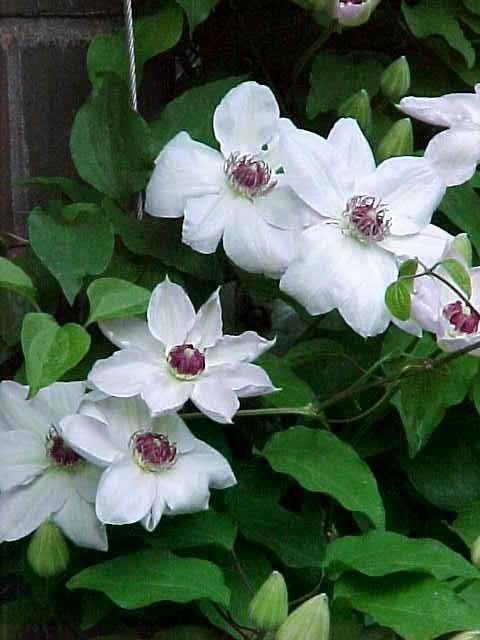
    ‘Henryi’ features profuse, showy, eight-sepaled, 6-8″ in diameter, white flowers with purplish brown anthers that cover this vine. Henryi is a garden pleasure with its elegant 6 to 7-inch white blooms in summer. A classic, award-winning selection! Bloom on this cultivar comes primarily from the previous year’s stems in early summer, but also occurs in a second flush later in the summer on the current year’s growth.

    Clematis Madame Julia Correvon
    Clematis Madame Julia Correvon

    Clematis Madame Julia Correvon

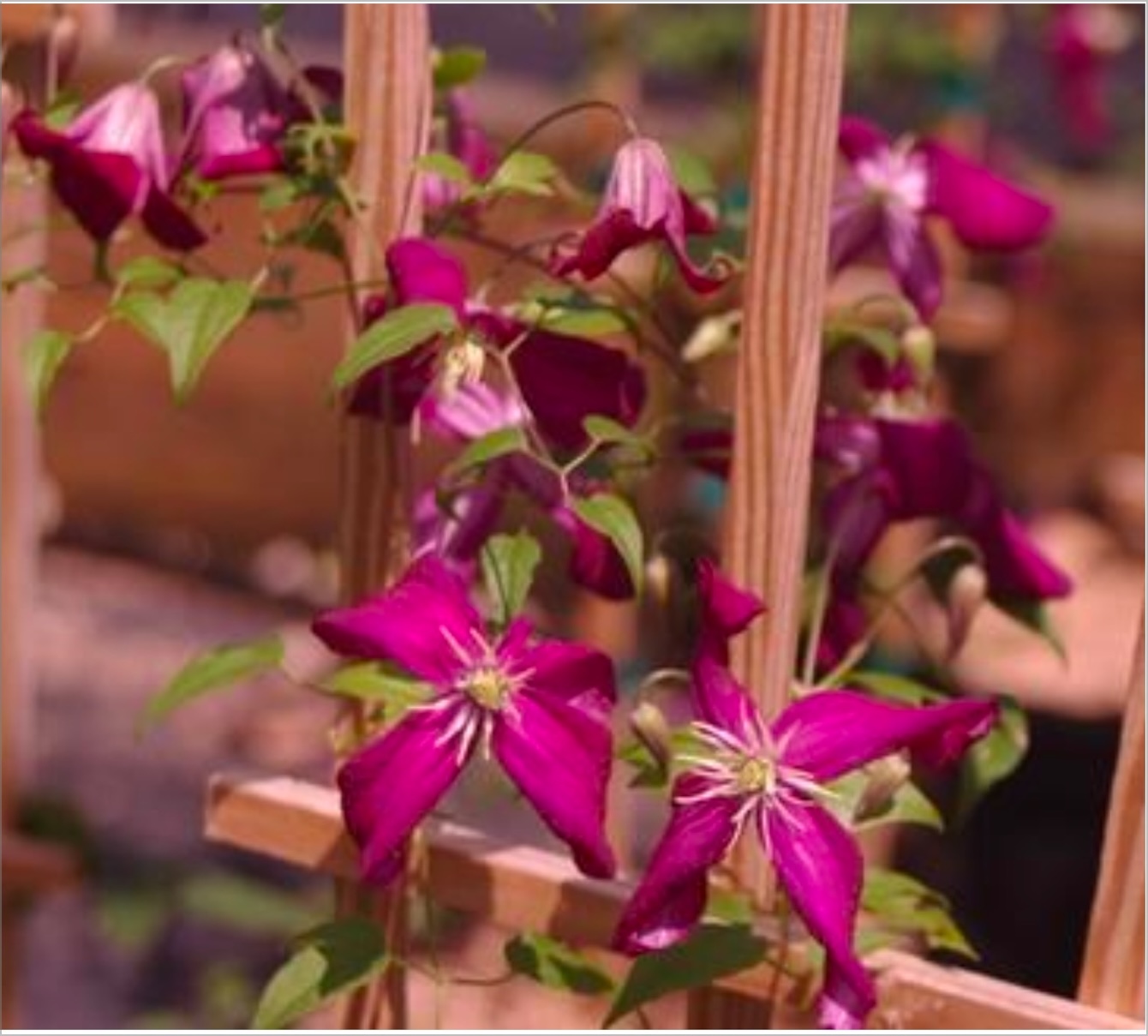
    Italian Clematis blooms for a prolonged period from late June to September, producing a large quantity of 3″ bright reddish wine flowers with yellow stamens. The viticella Clematis types flower on new growth, so they do well with a hard pruning in late winter to early spring. The roots are happiest in cool shade and the tops prefer full sun.

    Clematis Nelly Moser
    Clematis Nelly Moser

    Clematis Nelly Moser

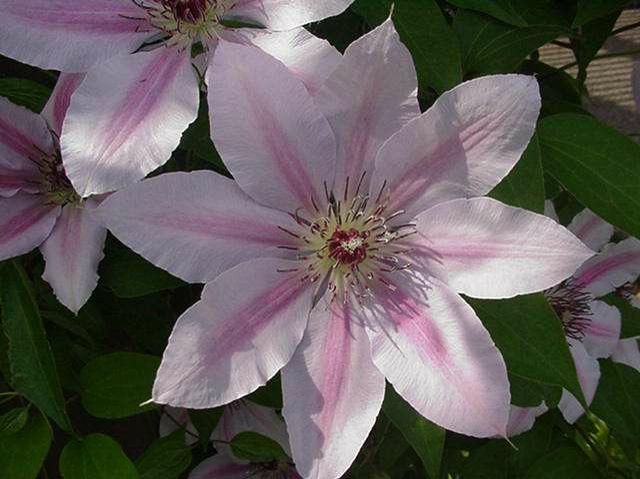
    ‘Nelly Moser’ features profuse, showy, eight-sepaled, 6-8″ diameter, pale mauve pink flowers (sepals have reddish pink center stripes) with purplish brown anthers that cover this vine in summer. Bloom on this cultivar comes primarily from the previous year’s stems in late spring, but also occurs in a second flush later in the summer on the new (current year’s) growth.

    Flowers give way to attractive seed heads.

    Clematis Nubia
    Clematis Nubia

    Clematis Nubia

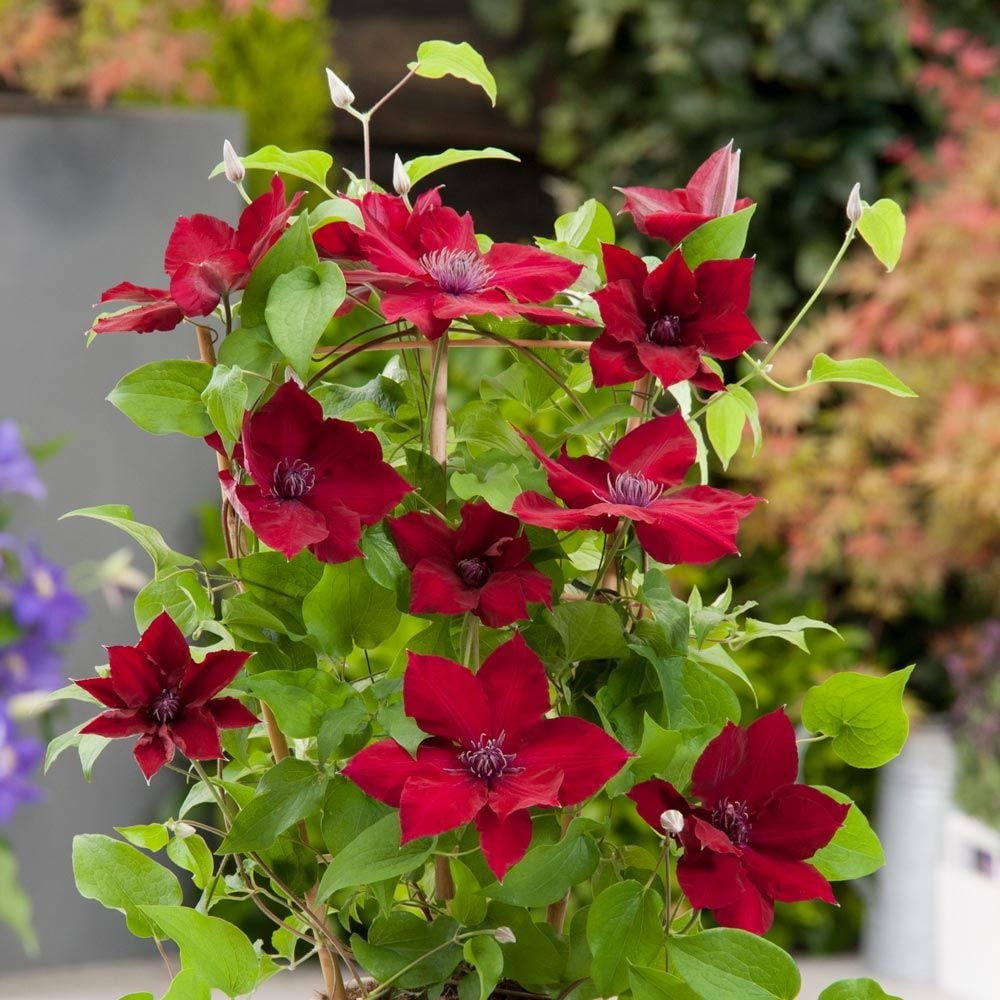
    Free-flowering and hardy, this exceptionally dark red, compact, reblooming clematis is excellent for large planters or as an entryway accent. Blooms prolifically from both leaf axils and stems, resulting in flowers from the ground up.

    Clematis Sapphire Indigo
    Clematis Sapphire Indigo

    Clematis Sapphire Indigo

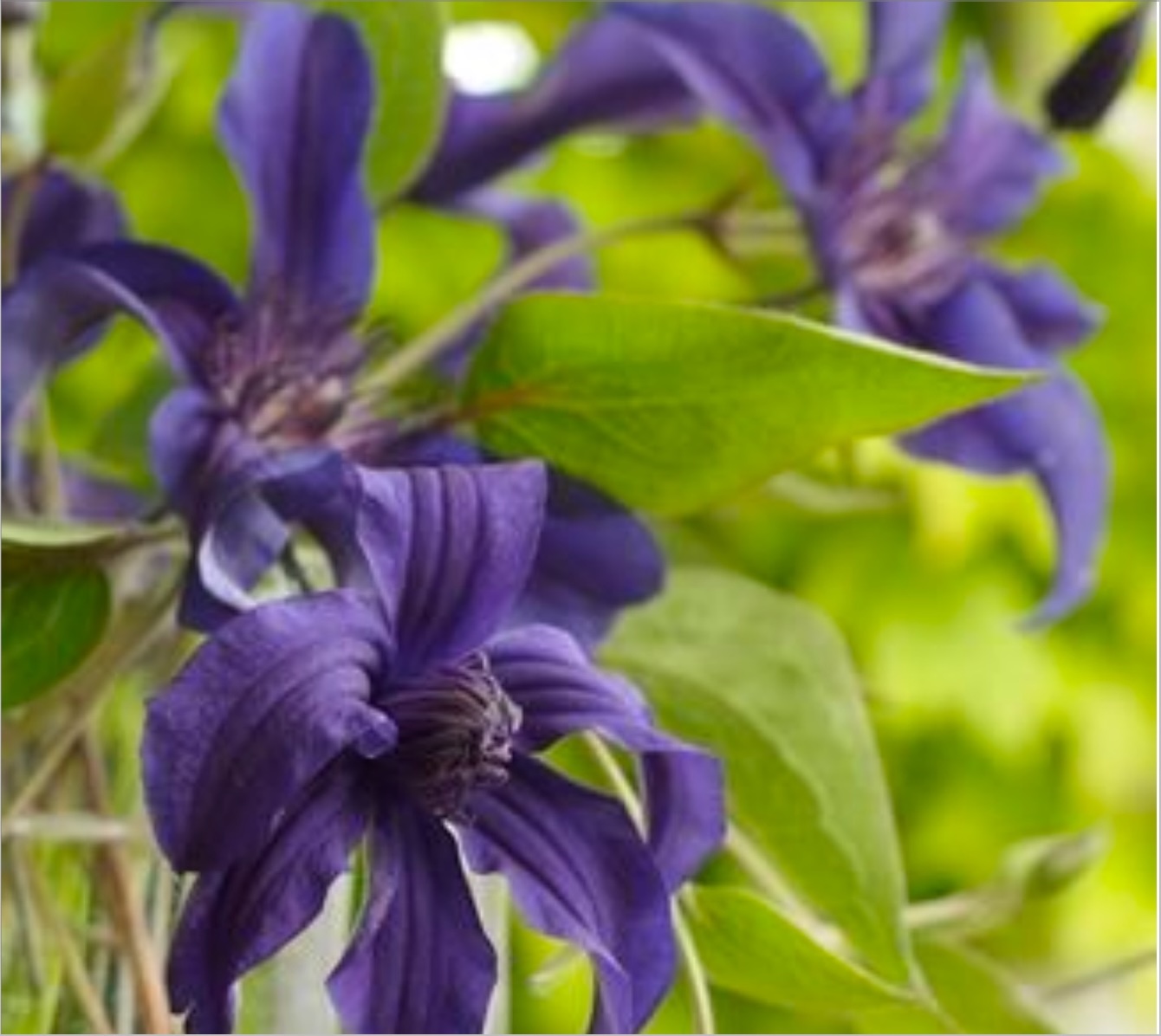
    A short, non-clinging vine with gorgeous purple-blue flowers in June and July. It can be used as a loose open groundcover, but it works even better if allowed to twine up through small shrubs and sturdy perennials. The 4″ blooms open as an open-faced purple and mature to a beautiful sapphire blue.

    A long blooming sprawler, excellent when used in mixed borders.

    Lonicera sempervirens 'Major Wheeler'
    Lonicera sempervirens ‘Major Wheeler’

    Lonicera s. Major Wheeler

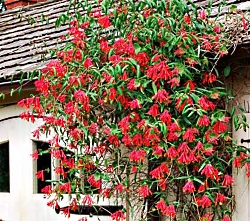
    Hummingbird favorite: Lonicera sempervirens ‘Major Wheeler’ produces a blanket of tubular, reddish orange to coral flowers from late spring through summer. Later, the vines’ red berries attract goldfinches and robins. It’s a selection of our native Honeysuckle species, Lonicera sempervirens, and plants are both carefree and noninvasive. They bloom on the previous year’s growth as well as new growth. Regular pruning is not required—any pruning to shape the vine can be done once flowering is over for the season. Do provide a trellis, fence, or post with wire grid for support.

    Gelsemium s. Margarita
    Gelsemium s. Margarita

    Gelsemium s. Margarita

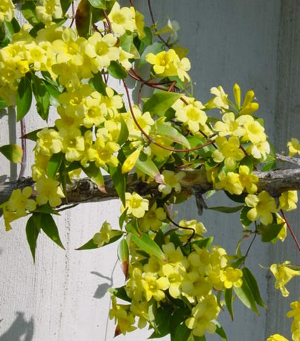
    Carolina jessamine. A reliable zone 6 Gelsemium! A profuse display of clear yellow trumpet flowers in early summer with semievergreen foliage. ‘Margarita’ is a superior seedling selected by Don Jacobs of Eco Gardens in Decatur, Georgia. With its much larger, more prominent flowers, it was superior in every way to common seedlings, so Jacobs named it for his wife. He had no idea that it would survive winters to minus 25 F as it has in New Jersey. Gelsemium ‘Margarita’ is a Gold Medal Award winner from the Pennsylvania Horticultural Society.

    Clematis texensis Princess Diana
    Clematis texensis Princess Diana

    Clematis texensis Princess Diana

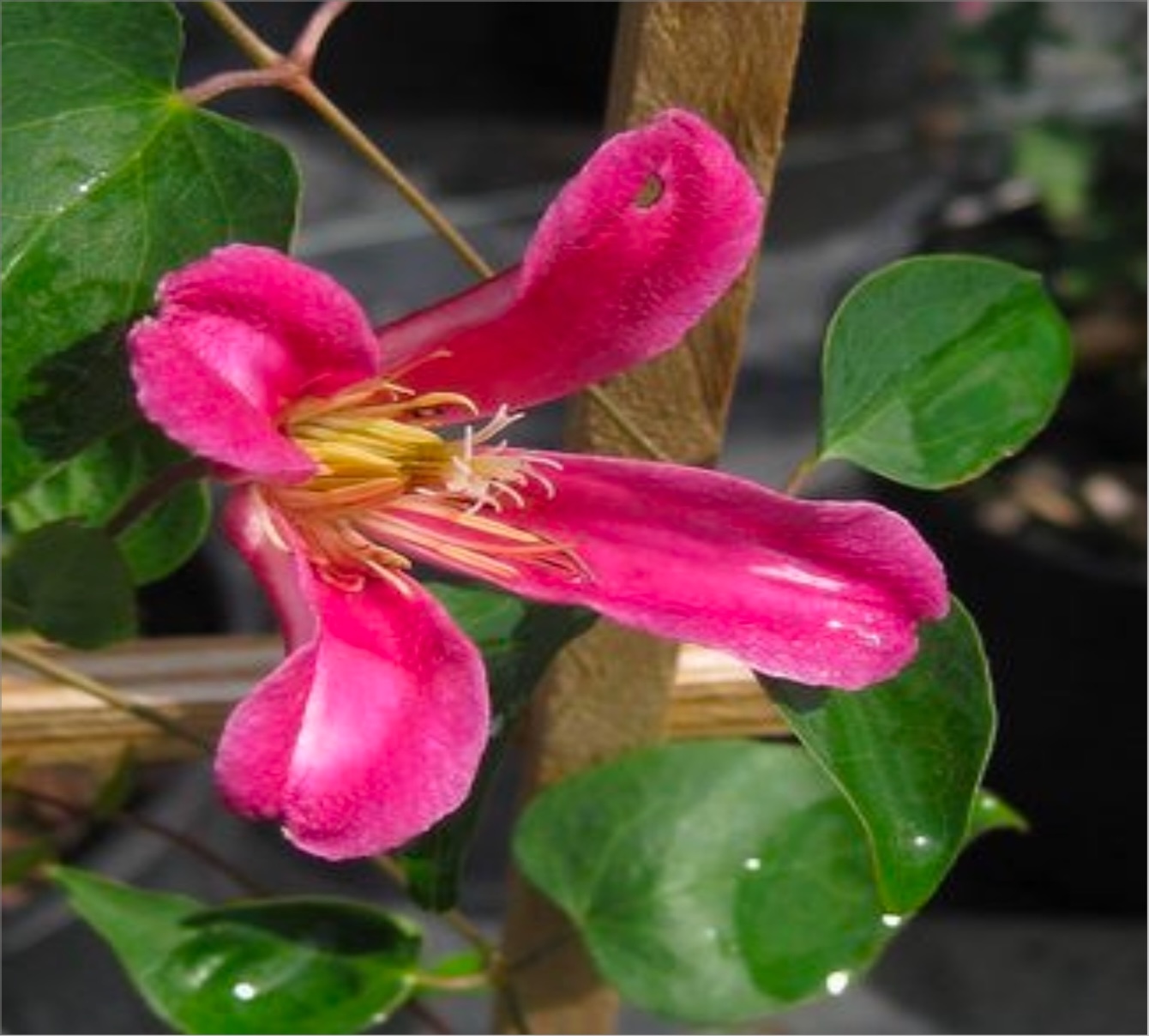
    Scarlet clematis. Beautiful tulip-shaped flowers in June and July, with consistent reblooming in early fall. The up-facing blooms are soft pink on the outsides and dark-rose pink on the insides, making a lovely two-toned effect. The habit is scrambling, and needs some support.

    PRN favorite: Unique tulip-shaped deep pink flowers followed by silky seed heads.

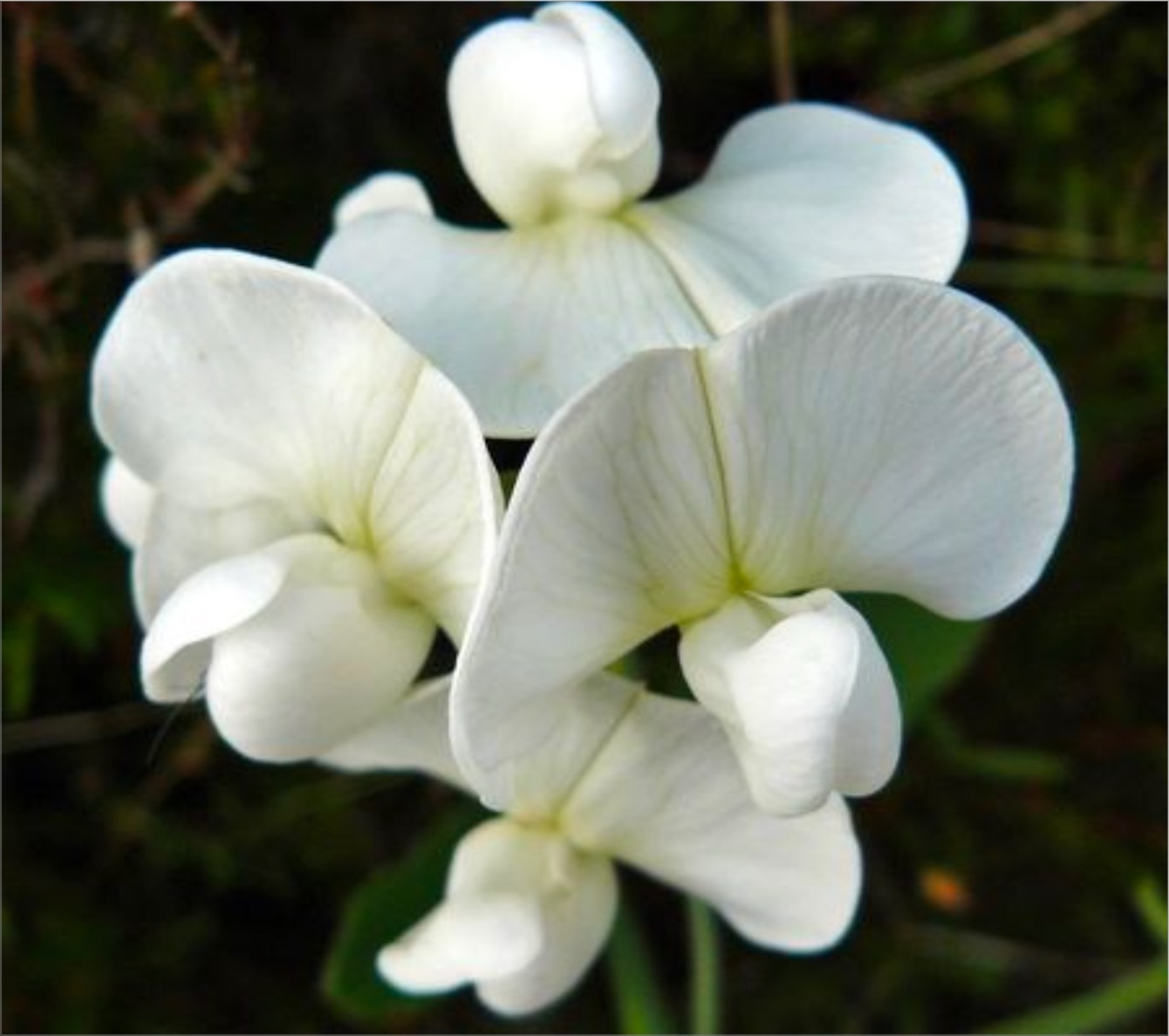
    Lathyrus odoratus Mammoth White
    Lathyrus odoratus Mammoth White

    Lathyrus odoratus Mammoth White

    Annual. This large sweet pea variety climbs to around 8 feet tall and produces masses of large flowers in white. Very fragrant. Good for beds, borders, trellis, rockeries and cottage gardens. Can be grown in containers. Early flowering.

    Great variety for cut flowers.

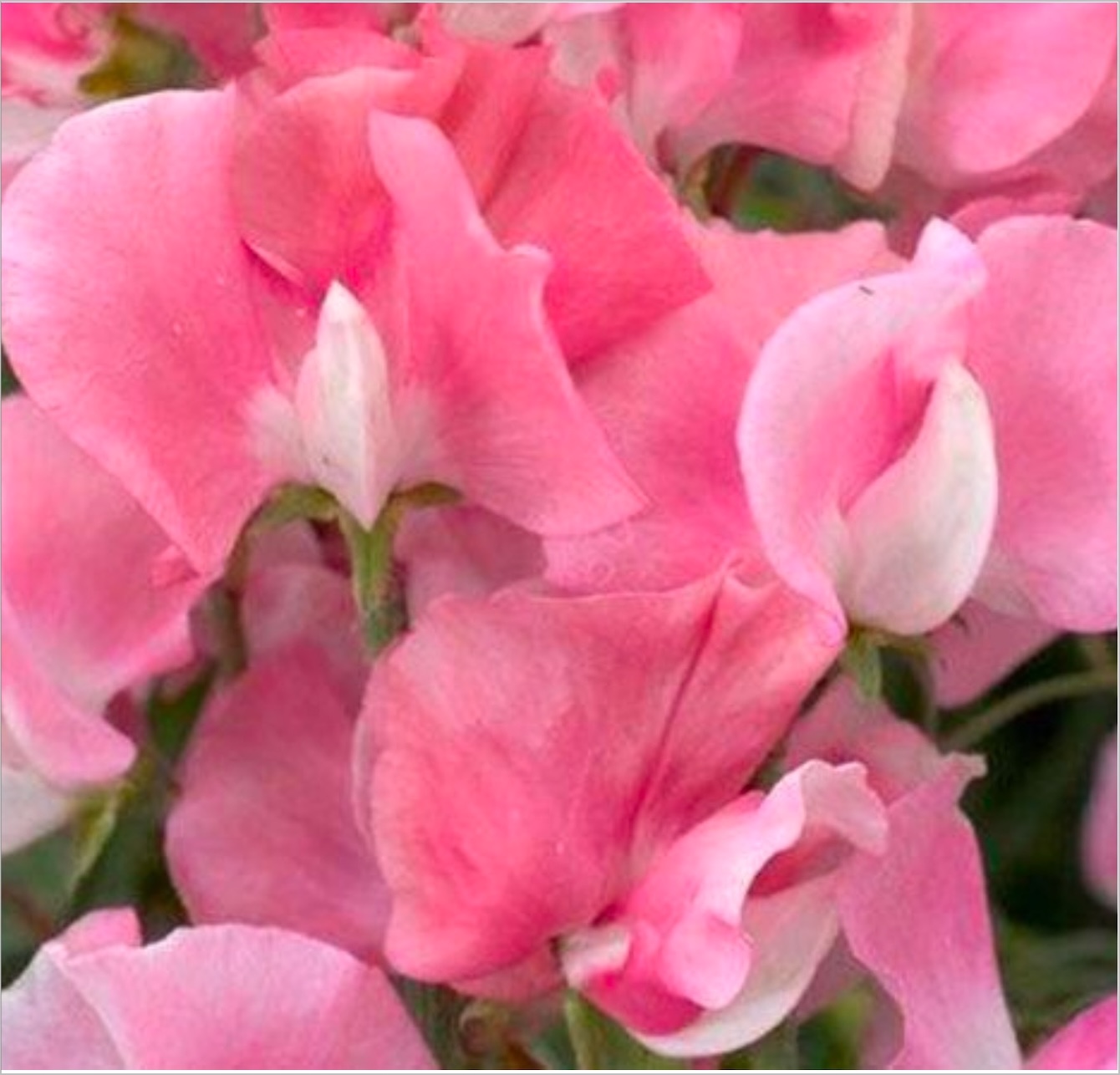
    Lathyrus odoratus Mammoth Rose Pink
    Lathyrus odoratus Mammoth Rose Pink

    Lathyrus odoratus Mammoth Rose Pink

    Annual sweet pea. One of the most popular and reliable full-sized varieties available. With long stems and voluptuous rose-pink flowers….this one’s a beauty.

    Provide trellis or support for sweet peas to grow up when they have grown to around 6 inches.

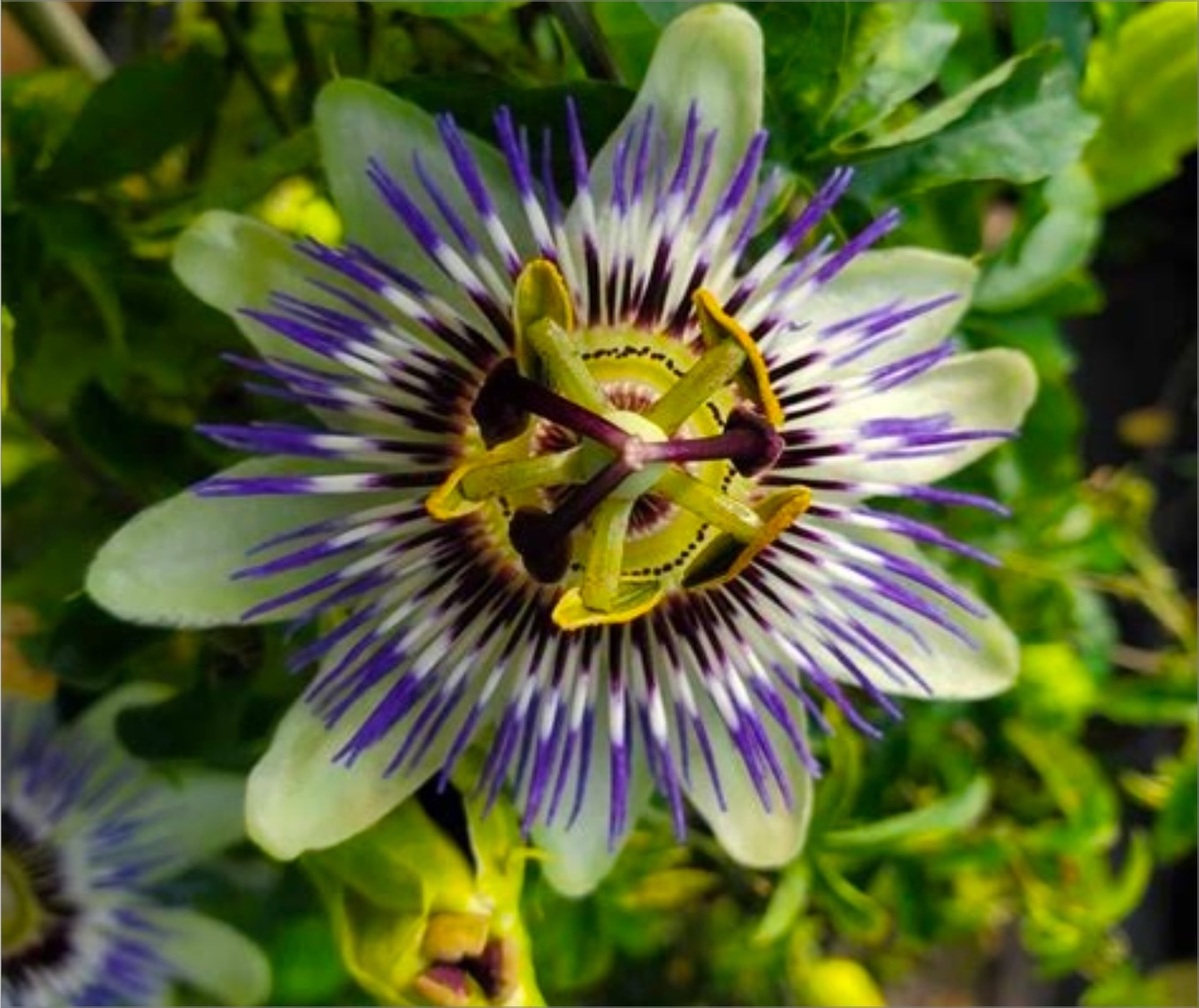
    Passiflora caerulea Blue Bahama
    Passiflora caerulea Blue Bahama

    Passiflora caerulea Blue Bahama

    Passionflower. A tender perennial in zones 7-9, usually grown as an annual in New Jersey. This passionflower is a beautiful and vigorous free flowering selection of Passiflora caerulea, with all its hardiness and reliability. The nectar rich flowers are adored by larger bees and the foliage is a host to a variety of butterflies.

    Veggie Seedlings from Grow It Green

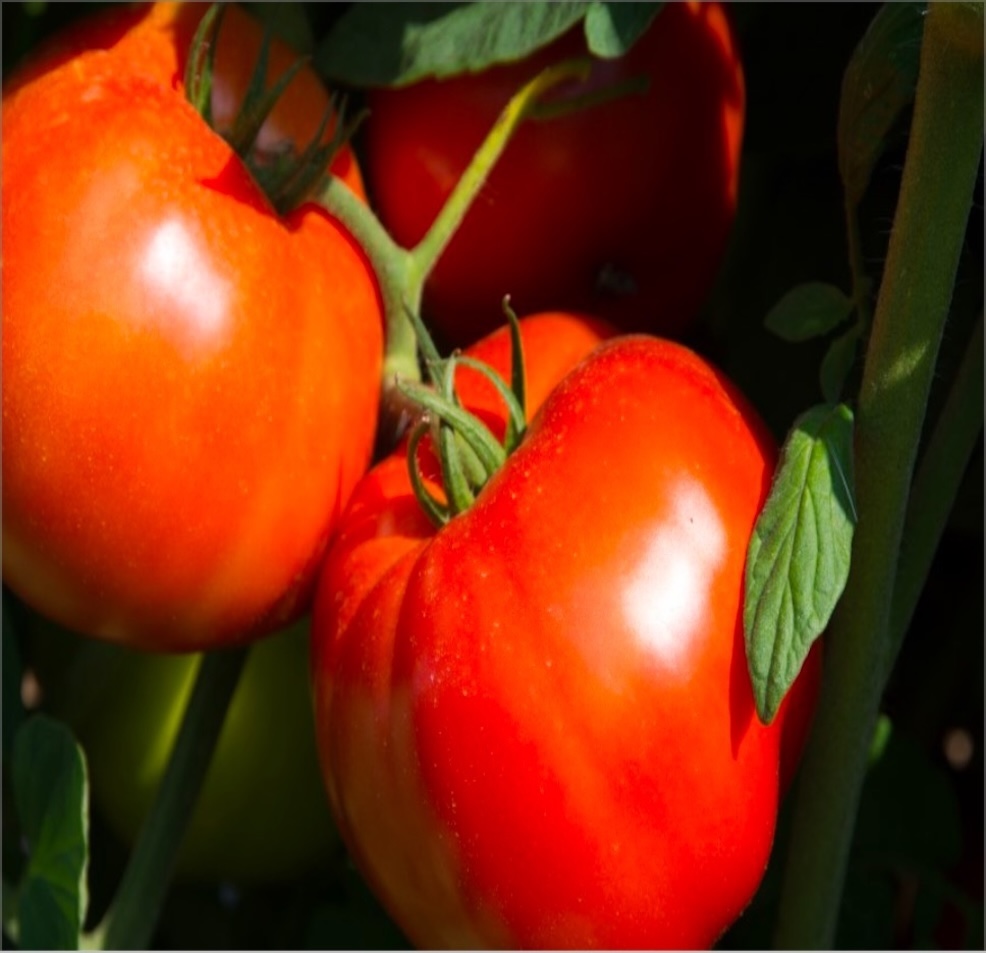
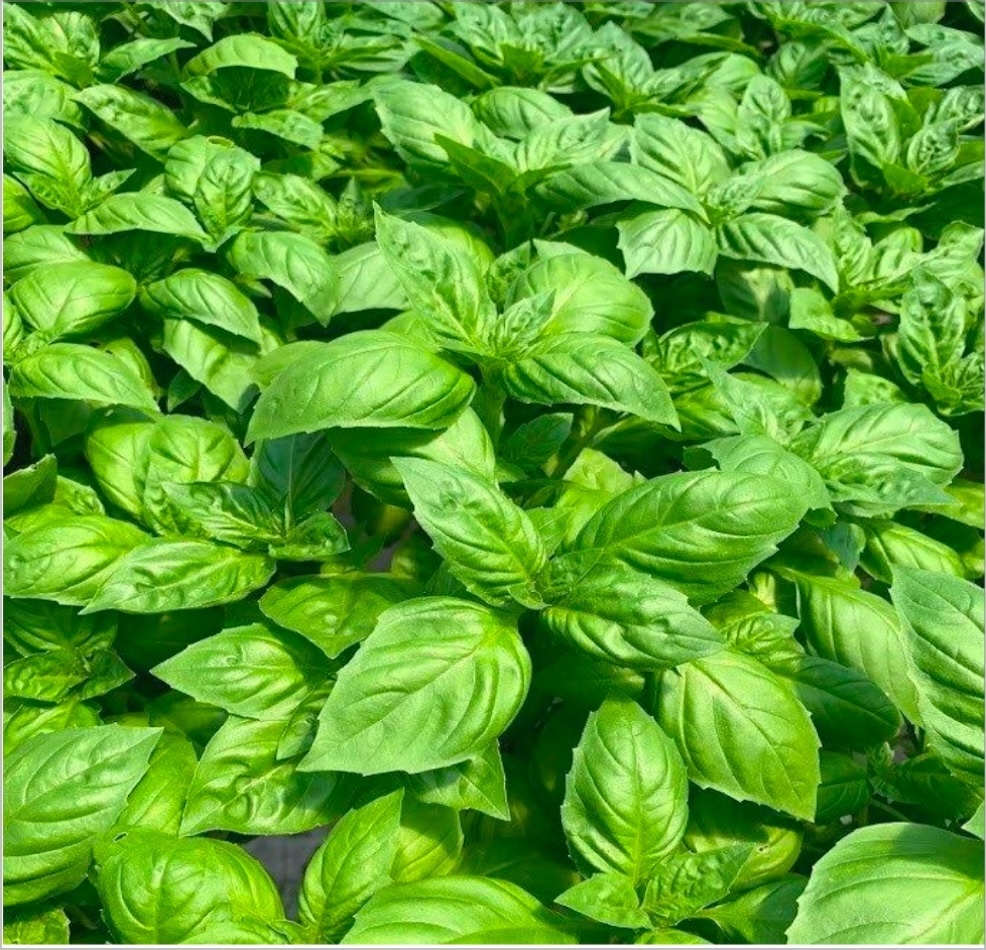
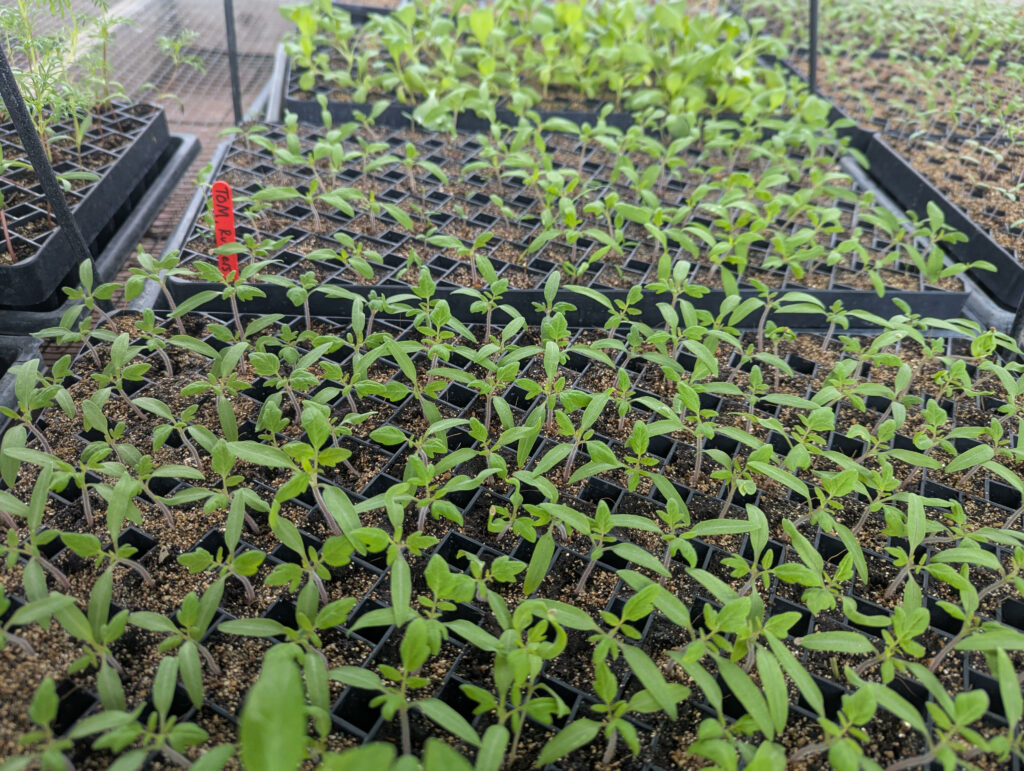
    Many thanks to Farmer Shaun from Grow It Green Morristown who is growing Rutgers tomato seedlings for our 2025 Plant Sale. The following tomatoes will be available: ‘Rutgers 250’ and ‘Rutgers Scarlet Sunrise’ as well as Basil Devotion which is downy mildew resistant. Here are some details.

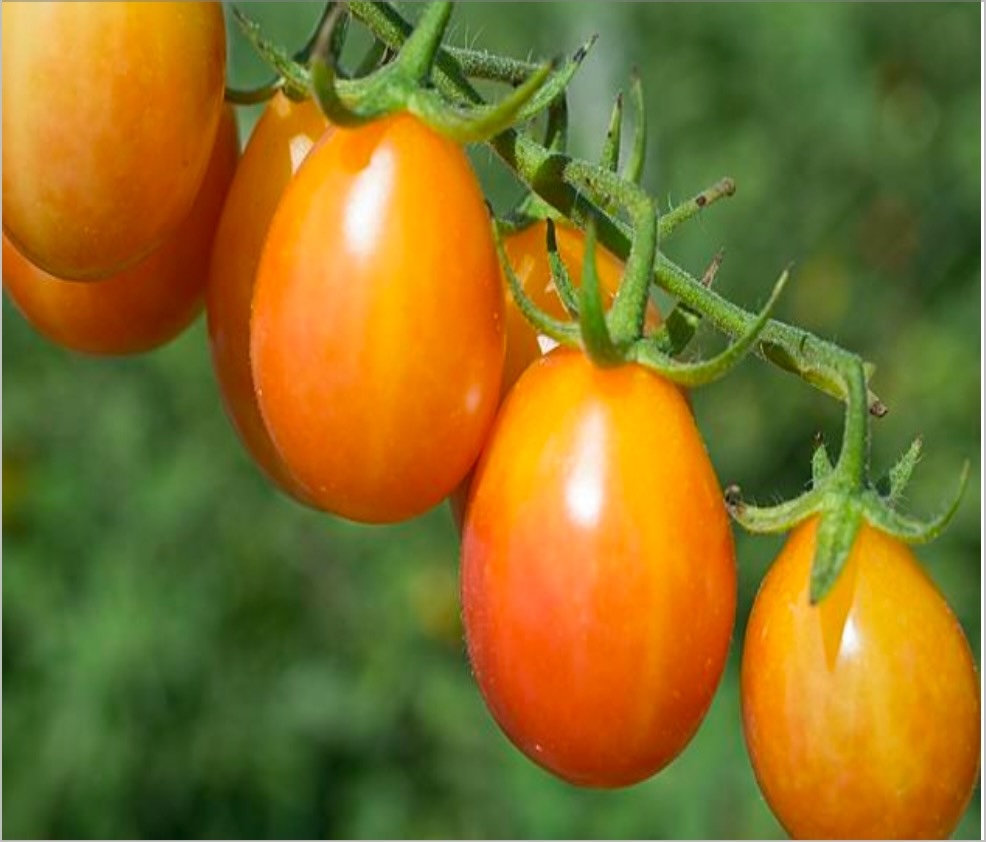
    Rutgers Scarlet Sunrise tomato
    Rutgers Scarlet Sunrise tomato

    Rutgers ‘Scarlet Sunrise’ tomato

    Released in 2020 by the Rutgers New Jersey Agricultural Experiment Station from work done by Pete Nitzsche and Thomas Orton Bicolor grape tomato with intense sweet Flavor and moderate acidity.

    Indeterminate, late-season, high yielding. Red and yellow crack resistant skins. Open pollinated. 70 days to maturity

    Rutgers 250 tomato
    Rutgers 250 tomato

    ‘Rutgers 250’ tomato

    A reinvention of the tomato industry’s most significant variety, the ‘250 ‘was named in honor of the 250th anniversary of the founding of Rutgers University.

    Improved version of the classic Rutgers tomato that defined the flavor of the ‘Jersey Tomato’.

    Rutgers Devotion basil
    Rutgers Devotion basil

    ‘Rutgers Devotion DMR’ basil

    From the breeding program of Dr. James Simon, Rutgers Department of Plant Biology & Pathology, and Dr. Andy Wyenandt at the Rutgers Agricultural Research and Extension Center.

    Downy mildew resistant Genovese type basil. Uniform, upright growth and dome or cup-shaped leaf.

    This final photo shows the many happy little tomato seedlings growing just for you!

    Farmer Shaun Tomato Seedlings
    Farmer Shaun Tomato Seedlings

    Good Things Come in Three

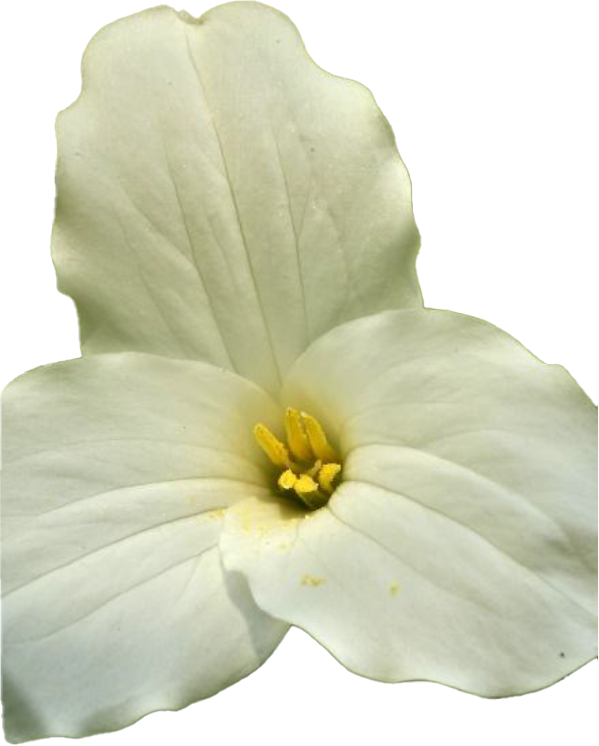
    The Friends are happy to bring you several articles about plants at this year’s plant sale by Bruce Crawford, Manager of Horticulture for the Morris County Park Commission. This article focuses the genus, Trilium (common name, Wakerobin or Toadshade), and talks about several of the beautiful species we can grow here.

    Read Bruce’s opening paragraph, and click on the link below to open the full article in a PDF.

    Trillium, Bruce Crawford
    Trillium, Bruce Crawford

    There is an old saying that good things come in three. Supposedly, it stems from an ncient belief that three of something is complete and ideal. Hence, ‘third time is the charm’ and, should you have the good fortune of finding a Genie, you will be the beneficiary of three wishes! Even in the world of gardening, arranging plants in groups of three makes them look more natural. One plant that certainly embodies the beauty of three is the genus of Trillium! Commonly called Wakerobin or Toadshade based on whether the flower has a floral stem or is sessile, these April bloomers add a beautiful touch of 3’s to the woodland garden! Trillium grandiflorum is pictured at right.

    Click here to open the PDF.

    The Beauty of Bloodroot

    Bruce Crawford, Manager of Horticulture for the Morris County Park Commission, has written another article for us. He uses Sanguinaria canadensis (common name, Bloodroot), to talk about early spring bulbs in general, but with a focus on this beautiful example.

    Read the first paragraph, below, and click on the link below to open the full PDF.

    Sanguinaria canadensis, Bruce Crawford
    Sanguinaria canadensis, Bruce Crawford

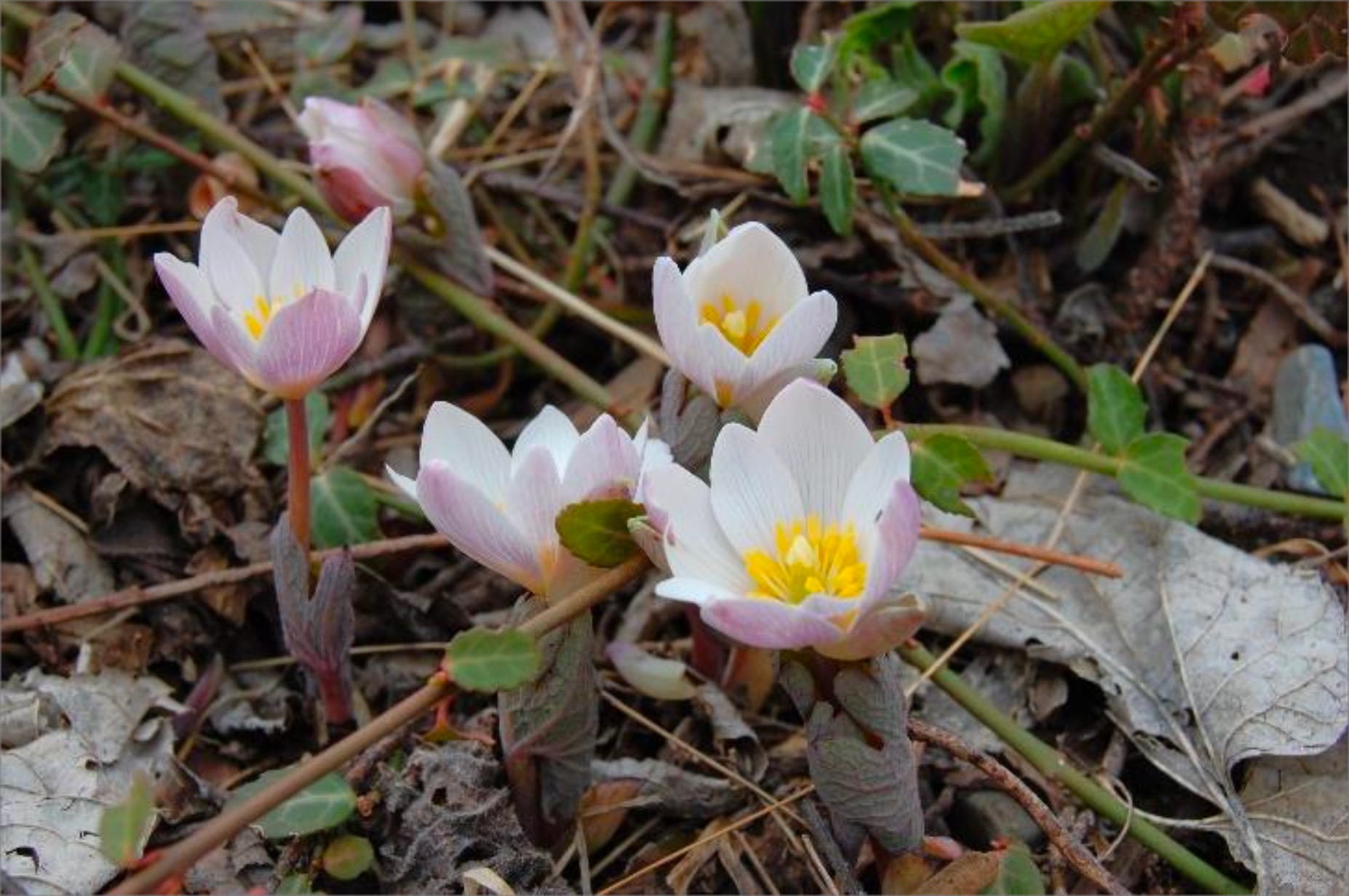
    The garden truly awakens during the month of April. The once bare earth suddenly comes alive with a bevy of flowering bulbs and perhaps even a few spring ephemerals. Most gardeners understand how to effectively work bulbs into a garden, but many remain puzzled over the use of spring ephemerals. By definition, this group of plants emerge in early spring, flower, set seed and enter into dormancy by the start of summer, very similar to most bulbs. Their strategy is to complete their annual life cycle before the tree canopy is fully leafed-out and competition for sunlight and water becomes more intense. Unlike most bulbs, this group of plants can be more challenging to work into the garden since the declining foliage can be more of a distraction to the beauty of the late spring garden. Fortunately, some ephemerals retain their foliage well into summer when there are ample floral distractions. Sanguinaria canadensis, commonly known as Bloodroot is just such a plant! A beautiful wildflower that erupts into color in March and April (as seen at right in early April in Northern NJ), it quietly enters into dormancy during the middle of summer.

    Click here to open the full article.

    Jeffersonia diphylla

    Bruce Crawford, Manager of Horticulture for the Morris County Park Commission, writes in this article about Jeffersonia diphylla (common name, Twinleaf), elaborating about its description and history as well as using it as a primer on botanic naming.

    After reading the first paragraph, below, you can click on the link to open the full PDF.

    Jeffersonia diphylla, Bruce Crawford
    Jeffersonia diphylla, Bruce Crawford

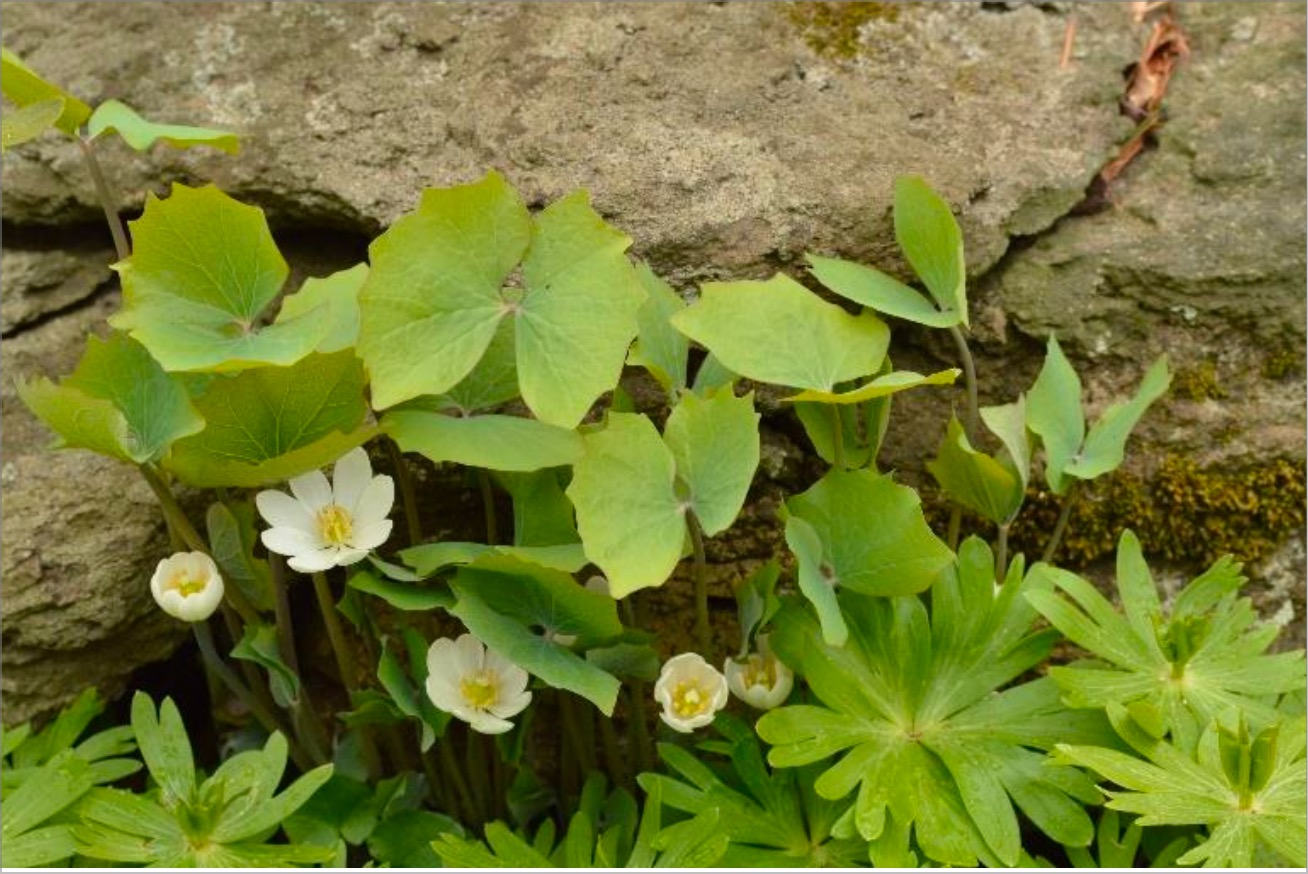
    Botanical plant names often prove to be a stumbling block for gardeners. They are meant to impart descriptive details about the plant, yet understanding the Latin or Greek roots of the names can prove troublesome. To add to the confusion, in some instances the botanical name honors individuals who were important in horticulture. This can be equally as mystifying since many of these honored individuals lack widespread recognition. However, one plant that should instinctually draw recognition for the honoree is Jeffersonia diphylla, commonly called Twinleaf. The name pays tribute to Thomas Jefferson, the third president of the US and the principal author of the Declaration of Independence.

    Click Read More to open the PDF.

    Verified by MonsterInsights